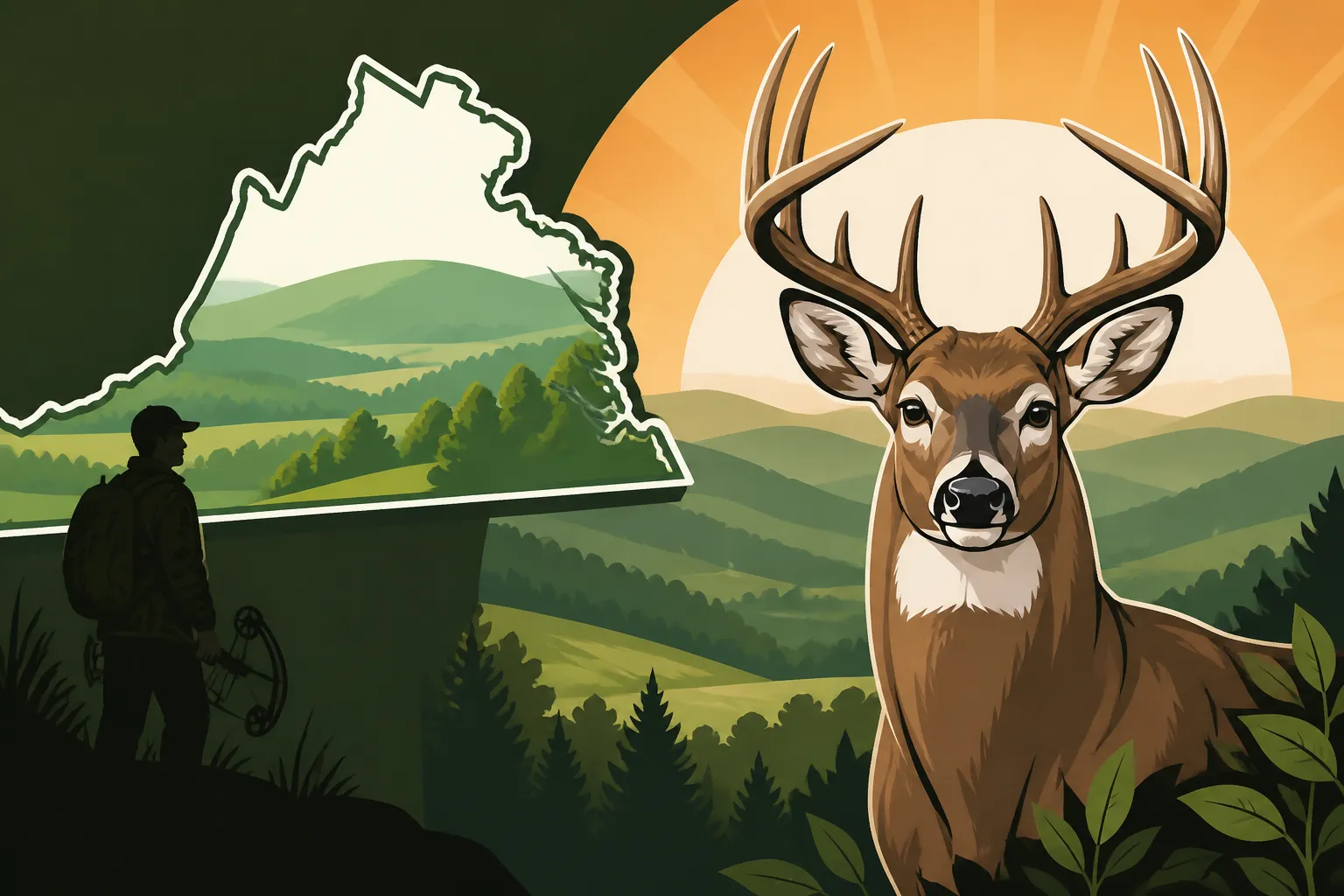
Why the Piedmont Grows Big Bucks
Many hunters dream of consistently seeing and harvesting mature bucks, and for folks hunting in Virginia, the Blue Ridge Mountains often get all the glory for their rugged beauty and challenging terrain. But if your goal is truly chasing big deer – the kind with heavy antlers and a lifetime of wisdom in their eyes – you might be overlooking one of the state's most consistently productive regions: the Piedmont. It's a common frustration to think all the best deer are deep in the mountains, but I'm here to tell you why the rolling hills and agricultural patchwork of Virginia's Piedmont region are actually a consistent powerhouse for growing trophy-caliber whitetails, and how you can tap into that potential.
The Piedmont's Nutritional Goldmine for Deer
When we talk about big bucks, it's easy to focus on genetics or age, but the absolute cornerstone for antler growth and overall body size is nutrition. Without a consistent, high-quality food supply, even the best genetics won't produce a Boone & Crockett contender. The Piedmont region of Virginia is an absolute buffet for deer, providing them with everything they need to thrive from fawn to mature buck. This isn't just a seasonal thing; it's a year-round nutritional advantage that sets the Piedmont apart.
Agricultural Abundance Fuels Antler Growth
One of the biggest factors contributing to the Piedmont's big buck reputation is its vast agricultural landscape. Unlike the sparse, rocky soils of the mountains, the Piedmont features fertile ground perfect for farming. You'll find expansive fields of corn, soybeans, and even peanuts throughout the region, particularly in counties like Brunswick, Southampton, and Pittsylvania. These crops are a deer's dream. During the summer and early fall, these fields provide an endless supply of high-protein forage, essential for body growth and the rapid development of antlers. Imagine a young buck browsing on lush soybean plants or an older buck gorging on mature corn kernels; this sustained intake of nutrients allows them to maximize their genetic potential. When winter hits, the leftover waste grain in harvested fields continues to provide crucial calories, helping deer maintain body condition when other food sources are scarce. This isn't just about survival; it's about providing the excess energy needed for impressive antler development year after year.
Diverse Timber and Mast Crops Provide Variety
Beyond the row crops, the Piedmont also boasts a rich tapestry of timber stands, providing a critical complement to agricultural forage. Mixed hardwood forests, often bordering crop fields or lining creek bottoms, are laden with mast-producing trees. White oaks, red oaks, and various hickories drop acorns – a primary fall food source that is incredibly high in carbohydrates and fats. A hunter scouting for deer sign in October will quickly tell you that finding a productive oak flat is often the key to finding deer. But it's not just acorns; deer also browse on a variety of soft mast, like persimmons, wild grapes, and honeysuckle, which provide additional vitamins and minerals. This diversity ensures that even if one food source has a bad year, deer still have plenty of options. This consistent access to diverse, high-energy foods, both cultivated and wild, is a significant reason why the Piedmont's deer herd, and particularly its bucks, consistently show larger body weights and antler mass.
Consistent Water Sources for Healthy Herds
It's easy to overlook, but access to reliable water is just as vital as food for a healthy deer herd. While Virginia is generally a well-watered state, the Piedmont offers a fantastic network of natural water sources that further contribute to the deer's well-being. Numerous rivers like the James and the Appomattox, along with countless smaller creeks, streams, and farm ponds, crisscross the landscape. This means deer rarely have to travel far for a drink, reducing stress and energy expenditure. Consider a warm archery season day; a buck that can browse in a soybean field and then slip into a nearby creek bottom for water and shade is a deer that conserves energy for growth. This abundance of water, combined with plentiful food, creates an environment where deer are not merely surviving, but truly thriving, leading to larger, healthier animals and ultimately, bigger bucks.
Deer Management and Hunter Influence
While nutrition lays the groundwork, it's the interplay of management practices and hunter behavior that truly sculpts a big buck population. The Piedmont benefits from a combination of factors that allow bucks to reach older age classes, where antler growth truly explodes. It's not just about what they eat, but how long they're allowed to eat it.
Age Structure and Hunter Pressure Dynamics
One of the most critical elements in growing big bucks is allowing them to reach maturity. A buck's antler growth typically peaks between 4.5 and 7.5 years old. In areas with intense hunting pressure on young bucks, very few animals make it past their second or third year, meaning the potential for truly massive antlers is rarely realized. The Virginia Department of Wildlife Resources (DWR) data consistently shows that the Piedmont region generally has a healthier age structure among its buck population compared to some other parts of the state. This doesn't mean there aren't hunters, but rather that the pressure is often distributed differently, and many hunters are choosing to let younger bucks walk. This shift in hunter mindset, coupled with the sheer amount of private land, contributes to a larger percentage of bucks reaching an age where they can develop impressive headgear. For those looking to target a mature animal, understanding Virginia Deer Population Estimate and studying local harvest trends through DWR reports can be invaluable. It really helps to see how many bucks are being taken in different age classes in your hunting area.
Genetics and Herd Health
While environment and age are paramount, strong genetics certainly play a role in a buck's potential for growing impressive antlers. Virginia's whitetail population, particularly in the Piedmont, generally benefits from a diverse genetic base. This isn't necessarily about "super deer" genetics, but rather a healthy, naturally selected population that has adapted well to the region's abundant resources. The DWR works diligently to monitor herd health, and while Chronic Wasting Disease (CWD) is a concern in certain parts of the state, its prevalence has historically been lower in the core Piedmont counties compared to the Shenandoah Valley, for instance. A healthy, disease-free herd is better able to utilize available nutrients for growth. This means less stress on individual animals and more energy directed towards developing robust bodies and substantial antlers. Regular monitoring and thoughtful management by the DWR help maintain this overall herd vitality, which translates directly into healthier, bigger deer for hunters. If you're keen on seeing the details, browsing the Virginia Deer Harvest Records can reveal interesting trends in buck quality.
Piedmont's Landscape and Optimal Cover
Beyond food and age, the physical layout of the land itself plays a huge role in supporting a healthy, mature deer population. The Piedmont offers a unique blend of open spaces and dense cover that provides deer with both abundant resources and crucial security. It's a landscape designed for deer to thrive and evade predators, including hunters.
Fragmented Woodlots and Thick Sanctuary
Imagine a classic Piedmont landscape: rolling crop fields interspersed with fingers of timber, dense brushy draws, and thick clear-cuts. This fragmented habitat is a deer's paradise. Instead of vast, unbroken forests where deer might have to travel long distances for food or water, the Piedmont provides everything in close proximity. A buck can feed in a cornfield at night, then slip into a secluded five-acre woodlot or a thick patch of honeysuckle for bedding during the day, all within a quarter-mile. These "patchwork" landscapes create natural sanctuaries where deer feel safe from human intrusion. The thick, often thorny, regrowth in old clear-cuts or along fencerows provides impenetrable cover, allowing mature bucks to grow old and wise. They learn where to hide, often choosing bedding areas that are challenging for hunters to access quietly or effectively. This mosaic of food and cover allows bucks to avoid pressure, conserve energy, and reach those coveted older age classes. When you're Reading Aerial Photos for Piedmont Deer on a platform like GoHunt, you'll immediately notice these small, irregular patches of cover that are prime bedding areas.
Topography and Travel Corridors
While not as dramatic as the Blue Ridge Mountains, the Piedmont certainly isn't flat. Its rolling hills, gradual slopes, and numerous creek bottoms create excellent topography for deer movement. These features naturally form travel corridors and funnels that deer use consistently. A creek bottom might be lined with dense thickets, offering a protected route between two feeding areas. A subtle ridge line might provide an elevated vantage point for a buck to survey his surroundings before entering a field. These natural terrain features allow deer to move efficiently and often undetected. For hunters, learning to identify these key travel routes and pinch points is crucial for success. Consider how a mature buck might use a gentle swell in the land to move from a bedding area to a food source without being seen from a road, or how he might follow the edge of a timber block along a creek. Understanding these patterns is fundamental to Setting Up on a Piedmont Field Edge or any stand location. The landscape naturally offers both ease of movement and significant concealment, making it an ideal environment for deer to flourish.
Human Impact and Hunter Culture in the Piedmont
The success of big bucks in the Piedmont isn't just about what nature provides; it's also heavily influenced by how people manage the land and how hunters approach their craft. The prevalence of private land and a growing trend towards quality deer management play a pivotal role.
Private Land Holdings and QDM Practices
A significant portion of Virginia's Piedmont region is privately owned, often by farmers, timber companies, or individual landowners. This distinction is crucial because private landowners have the autonomy to implement their own deer management strategies. Many private land managers in the Piedmont are adopting Quality Deer Management (QDM) principles, whether formally or informally. This often involves reducing pressure on young bucks, managing doe populations to balance the herd with the habitat, and creating optimal food sources through food plots or careful timber management. When landowners actively choose to pass on younger bucks, the result is a higher percentage of deer reaching maturity, which directly leads to larger antlers. This culture of "letting them grow" has profoundly impacted the trophy potential of the region. Hunting Small Private Tracts in Virginia with QDM in place can be incredibly rewarding, offering a stark contrast to more heavily pressured public lands. These dedicated efforts create sanctuaries where bucks can live out their full potential, often unseen by the casual hunter.
Lower Public Land Pressure and Access Challenges
While there are some fantastic public lands in the Piedmont, such as specific Wildlife Management Areas, the overall hunting pressure on public ground tends to be less intense than in the more famous mountain regions of Virginia. This isn't to say public land in the Piedmont is easy, but the sheer volume of private holdings means that hunter distribution is often different. Furthermore, accessing some of the most productive private lands can be challenging, meaning fewer hunters are putting pressure on the deer in those areas. This combination of lower public land pressure and limited access to some private tracts creates pockets where deer, especially mature bucks, can live relatively undisturbed. This contributes to their ability to grow older, develop larger antlers, and become the elusive, wary animals that experienced hunters covet. This is a double-edged sword: great for the deer, but tough for hunters without private land access.
Comparing the Piedmont to Other Virginia Hunting Regions
To truly appreciate the Piedmont's big buck potential, it helps to put it into context with Virginia's other diverse hunting landscapes. Each region has its unique challenges and rewards, but for consistent antler growth, the Piedmont often stands out.
Mountain Challenges and Unique Hunting Styles
The George Washington and Jefferson National Forests, which dominate much of Western Virginia, are undeniably beautiful and offer vast tracts of public land. However, hunting these mountain regions presents a different set of challenges that impact deer size and antler growth. Food sources in the mountains, while abundant in mast during good years, can be more sporadic and less consistently rich in protein than the agricultural fields of the Piedmont. Deer often have to expend more energy traversing steep, rugged terrain, which can divert resources away from antler growth. While hunters in the mountains can still find incredible deer, the average body size and antler mass tend to be smaller than in the Piedmont. Hunting styles also differ significantly; a typical mountain hunt might involve extensive scouting and still-hunting vast acreage, or perhaps Deer Drives on Virginia Public Land. In contrast, Piedmont hunting often revolves around field edges, smaller woodlots, and focused stand placement, which can be seen in our guide to Hunting West of the Blue Ridge compared to the Piedmont.
Eastern Shore Differences and Distinct Habitat
Virginia's Eastern Shore, a narrow peninsula bordered by the Chesapeake Bay and the Atlantic Ocean, offers another unique hunting experience. While the Eastern Shore also boasts agricultural fields and a strong deer population, its habitat is distinctly different from the Piedmont. The terrain is largely flat, often characterized by pine forests, coastal swamps, and marshy areas. Deer on the Eastern Shore have access to different food sources, with coastal plants and specific crops like sweet potatoes influencing their diet. Hunting pressure can be quite high in some areas, and the focus for many hunters is often on filling tags rather than specifically targeting trophy bucks. While big deer certainly come from the Eastern Shore, the overall consistency for truly massive antlers might lean towards the Piedmont due to its broader combination of rich nutrition, diverse cover, and established QDM trends. For those interested in this coastal environment, our guide on Hunting the Eastern Shore Peninsula provides more detail.
To give you a clearer picture, here's a quick comparison of key factors influencing big buck potential across Virginia's main deer hunting regions:
| Factor | Piedmont Region | Mountain Region (GW/Jefferson) | Eastern Shore Region |
|---|---|---|---|
| Primary Food Source | Ag crops (corn, soybeans), diverse mast | Hard mast (oak/hickory), browse | Ag crops, coastal vegetation, pine browse |
| Nutritional Value | High, consistent, varied | Variable, can be less consistent | Good, but different nutrient profile |
| Age Structure | Often older bucks due to QDM & private land | Younger bucks more common due to pressure | Mixed, can be heavily hunted |
| Hunting Pressure | Moderate to high on public land, lower on private | High on public land | Moderate to high |
| Cover Type | Fragmented woodlots, thickets, fencerows | Vast timber, dense laurel thickets, steep hollows | Pine thickets, swamps, marsh edges |
| Terrain | Rolling hills, gentle slopes, creek bottoms | Steep mountains, deep hollows, rugged | Flat, coastal, marshy |
| Trophy Potential | High and consistent | Moderate to good, but often lower average size | Good, but more specialized areas |
This table really highlights why the Piedmont, with its rich food sources and favorable management dynamics, creates such a strong foundation for big deer.
Tapping into the Piedmont's Trophy Potential
So, how do you capitalize on this knowledge? It's not always about having thousands of acres to hunt, but about smart scouting, understanding deer behavior, and respecting the land. You can find success here, even if it feels daunting at first.
Scouting for Success in the Piedmont
Effective scouting in the Piedmont is all about identifying those critical intersections of food, water, and cover. Start by using detailed maps, like those available on the GoHunt platform, to identify agricultural fields, connecting woodlots, and creek drainages. Look for those smaller, overlooked pockets of thick cover that might serve as bedding areas close to prime food sources. Don't just focus on the obvious; sometimes the biggest bucks are hiding in a small, gnarly thicket that most hunters walk past. Look for natural funnels – a narrow strip of woods between two fields, a pinch point along a creek, or a saddle on a gentle ridge. These are the places where deer movement is concentrated. Pay close attention to recent sign: fresh tracks, rub lines, and especially scrape lines along logging roads or field edges can tell you a lot about local buck activity, particularly as you approach Hunting the Virginia Rut in November. Scouting year-round, not just a week before the season, will give you invaluable insights into how deer use the landscape in different conditions.
Strategic Stand Placement for Mature Deer
Once you've identified potential hot spots, strategic stand placement becomes paramount. Remember, mature Piedmont bucks are survivors; they've learned to avoid danger. Your entry and exit routes to your stand should be as quiet and concealed as possible, ideally using natural features like creek beds or fencerows to mask your approach. Pay close attention to wind direction, as a mature buck's nose is his primary defense. Always try to set your stand so the prevailing wind carries your scent away from where you expect deer to approach. Consider the time of day and how deer might move between bedding and feeding areas. A morning stand might be closer to a bedding thicket, while an evening stand might be overlooking a prime food source like a standing cornfield. For those hunting smaller tracts, understanding how to Brushing In a Blind on a Field Edge effectively can also be a game-changer. Don't be afraid to move your stand if the sign tells you deer patterns have shifted; flexibility is key to consistent success.
Patience and Persistence Pay Off
Hunting big bucks in the Piedmont, or anywhere for that matter, requires a generous dose of patience and persistence. You might see plenty of does and younger bucks, but waiting for that mature, trophy-class animal often means enduring long, uneventful sits. It also means committing to your scouting, even when it's hot and buggy, and hunting through varied conditions. Understand that mature bucks are incredibly wary, and a single mistake – a loud noise, a whiff of human scent, an ill-placed stand – can send them nocturnal or out of your area entirely. Learning Virginia Deer Antler Growth Timeline can also help set realistic expectations for the age and size of bucks you might encounter. Trust your instincts, be disciplined in your approach, and never underestimate the cunning of a truly old whitetail. The satisfaction of finally putting all the pieces together and harvesting a mature Piedmont giant is a reward well worth the effort.
Disclaimer
Please note that hunting regulations, seasons, and land access rules can change. Always consult the most current Virginia Department of Wildlife Resources (DWR) regulations before planning any hunting activity. This guide is for informational purposes only and does not supersede official DWR publications.