Why Piedmont Hogs Reproduce So Fast
The rapid proliferation of feral hogs in Virginia's Piedmont region presents a significant challenge for landowners, farmers, and wildlife managers alike. These highly adaptable animals are a constant source of frustration, from tearing up fields and damaging crops to competing with native wildlife for food resources and altering sensitive ecosystems. Understanding why Piedmont hogs reproduce so quickly is the first step toward developing more effective management strategies to mitigate their widespread impact across the Commonwealth.
Biological Factors Driving Rapid Reproduction
Feral hogs are not just prolific; they are biological machines designed for rapid population expansion. Their reproductive capabilities far outstrip those of most native game species, making them incredibly difficult to control once established. This biological advantage is the cornerstone of their success in areas like Virginia's Piedmont.
Early Sexual Maturity in Sows
One of the most astounding biological traits contributing to the swift increase in hog numbers is the early sexual maturity of sows. Unlike white-tailed deer, where does typically breed at one-and-a-half to two years old, a female feral hog can become sexually mature and produce her first litter as young as six to eight months of age. This means that a piglet born in the spring can potentially be a mother herself before the year is out, adding another generation to the population much faster than many other animals.
This accelerated timeline drastically shortens the generational interval, allowing populations to rebound incredibly quickly even after significant removal efforts. It's a key reason why simply "hunting them hard" during traditional seasons often isn't enough to make a dent in their overall numbers. Every individual sow reaching maturity and breeding contributes exponentially to the problem.
Multiple Litters Annually
Another critical factor in the Piedmont's exploding hog population is the ability of sows to produce multiple litters within a single year. While native species like deer are restricted to one breeding cycle per year, a healthy, well-fed sow can easily farrow two litters annually, and under ideal conditions, sometimes even three. This means that instead of adding a single set of offspring to the population, she could be adding two or three within the same 12-month period.
This continuous breeding cycle, often starting as early as February and extending through the fall, means there's rarely a time when new piglets aren't being born. The mild climate and abundant food in the Piedmont certainly contribute to these optimal conditions, allowing sows to recover quickly between farrowing events and re-enter the breeding cycle. This relentless reproductive pace ensures a constant influx of new individuals into the population.
Large Litter Sizes
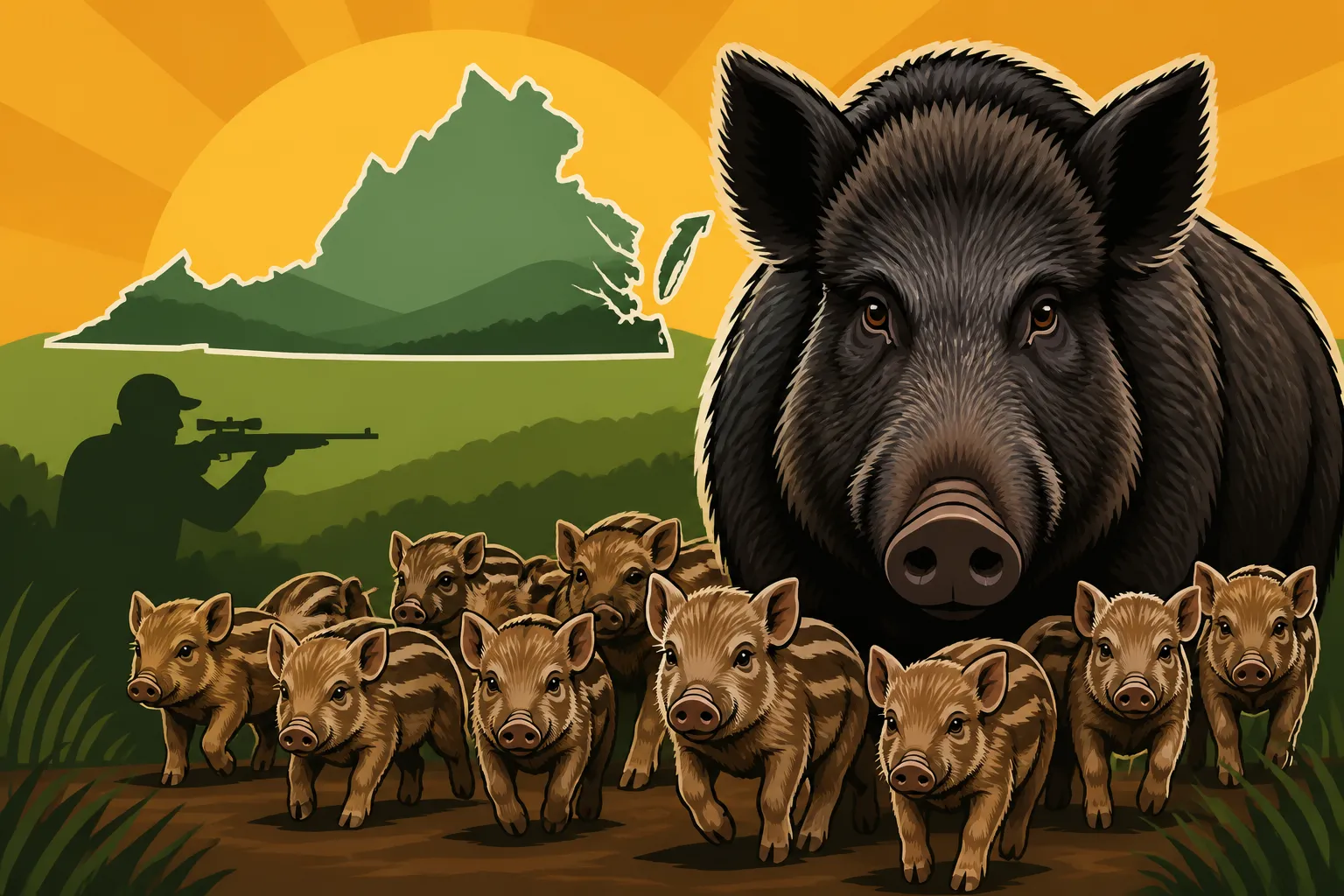
Beyond the frequency of litters, the sheer size of each litter is a major contributor to their rapid population growth. While a white-tailed doe might typically have one or two fawns, a feral hog sow can give birth to an average of four to six piglets per litter, and often up to eight or even more. When you combine this large litter size with the potential for multiple litters per year and early sexual maturity, the numbers quickly become staggering.
Imagine a single sow having two litters of six piglets each in a year. That's twelve new hogs from one female. If even half of those survive to sexual maturity, and half of those are females, the compounding effect on population growth is exponential. This incredible fecundity is why How Wild Hogs Spread Across Virginia has become such a serious concern.
Environmental and Habitat Advantages in the Piedmont
The Piedmont region of Virginia provides a near-perfect environment for feral hogs to thrive and reproduce unchecked. From food availability to ideal cover, the landscape offers everything these adaptable animals need to sustain their rapid population growth.
Abundant and Diverse Food Sources
The rich agricultural landscape of the Virginia Piedmont is a veritable buffet for feral hogs. Unlike more pristine wilderness areas, the mix of cultivated fields, pastures, and hardwood forests provides an incredibly diverse and year-round food supply. Hogs feast on corn, soybeans, peanuts, and other row crops, causing immense Crop Damage Hogs Cause in Virginia. They also readily consume acorns, hickory nuts, and other mast crops from the forests, which are particularly abundant in good years.
Beyond agricultural products and mast, hogs are opportunistic omnivores. They root for tubers, bulbs, and invertebrates; prey on ground-nesting bird eggs, fawns, and small rodents; and even scavenge carrion. This flexible diet means they are rarely limited by food scarcity, allowing sows to maintain peak physical condition, which directly correlates with their ability to produce large, healthy litters multiple times a year. This consistent nutritional intake fuels their high reproductive output.
Favorable Climate and Ample Cover
Virginia's Piedmont experiences a relatively mild climate compared to more northern states, with moderate winters that are less challenging for hog survival. This means fewer piglets and adults succumb to harsh weather conditions, boosting overall survival rates. Beyond temperature, the region's varied terrain offers abundant cover for hogs to escape detection and safely raise their young.
Dense thickets, creek bottoms, overgrown fencerows, and large tracts of timber provide excellent bedding and farrowing habitat. These areas offer protection from predators, hunters, and the elements, giving young piglets a crucial head start. The interspersion of these cover types with agricultural fields creates an ideal mosaic where hogs can forage in the open under the cloak of darkness and retreat to impenetrable cover during the day. Hunters often use tools like GoHunt to scout these diverse habitat types.
Lack of Significant Natural Predators
In their native ranges, feral hogs have a suite of natural predators that help keep their numbers in check. However, in Virginia, adult feral hogs have very few effective natural predators. While coyotes might occasionally take a very young piglet, they are generally not large or numerous enough to exert significant control over adult hog populations, especially robust sows. Bears may occasionally opportunistically prey on piglets, but again, this is not a consistent, widespread population control factor.
This absence of natural checks and balances means that once a hog reaches a certain size, its chances of survival are incredibly high. Without significant predation pressure on breeding-age individuals, more sows survive to produce multiple litters, and more piglets grow to become breeders themselves. This critical ecological void allows their numbers to swell virtually unhindered by nature itself.
Behavioral and Social Aspects of Feral Hog Reproduction
Feral hogs are not just reproductively gifted; their social structures and inherent intelligence also play a crucial role in their ability to sustain such rapid population growth, even in the face of human control efforts.
Social Structure and Group Dynamics
Feral hogs typically live in family groups called "sounders," which consist of one or more adult sows and their offspring, often spanning several generations. This matriarchal social structure provides several advantages for reproduction and piglet survival. Older, experienced sows often guide the group to the best food sources and safest bedding areas, increasing the overall health and well-being of the sounder.
Furthermore, within these sounders, there's a collective defense against threats. While an individual piglet might be vulnerable, a group of sows can aggressively protect their young from predators. The presence of multiple generations means that younger sows learn survival and parenting skills from their elders, contributing to higher piglet survival rates. This social cohesion is a powerful factor in maintaining reproductive success and overall population health. When considering control efforts like Trapping Virginia Feral Hogs, understanding these sounder dynamics is paramount.
Adaptability and Intelligence
Feral hogs are remarkably intelligent and highly adaptable creatures. This cognitive ability plays a subtle yet significant role in their reproductive success by allowing them to quickly learn and adjust to human pressure. When faced with hunting pressure, they can become increasingly nocturnal, making them harder to hunt during daylight hours. This allows more individuals to survive to breeding age and continue reproducing. Hunters might use GoHunt to study satellite imagery and identify dense cover where hogs might retreat during the day.
They learn to avoid baited traps that have been sprung, becoming "trap shy," and they quickly associate vehicles, human scent, or specific sounds with danger. This wariness means that conventional hunting methods often only remove the less wary individuals, leaving the more intelligent, harder-to-catch hogs to continue their prolific breeding. Their ability to adapt makes sustained, comprehensive control efforts incredibly challenging, allowing their rapid reproduction to continue largely unabated.
Management Challenges and Their Impact on Population Control
The sheer reproductive capacity of Piedmont hogs, coupled with their environmental advantages and behavioral traits, creates immense challenges for effective population control. This means traditional hunting methods often fall short of making a real difference.
Continuous Breeding Cycle Complicates Control Efforts
Because feral hogs can breed year-round and produce multiple litters, there's never an "off-season" for their reproduction. This continuous cycle means that even if hunters remove a significant number of hogs during a specific period, the population can quickly replenish itself. For instance, removing a sow that is already pregnant might seem like one animal gone, but it effectively removes a whole future litter. However, if she's already had her litter, those piglets are still out there, growing and contributing to the problem.
This reality makes it incredibly difficult for management efforts to keep pace with their growth. To effectively reduce hog populations, removal rates must significantly exceed their reproductive rate, which is a monumental task given their high fecundity. Without a sustained, high-intensity removal strategy, any gains made are often quickly erased by the never-ending cycle of new births.
Elusive Nature and Nocturnal Habits
Feral hogs, particularly those that have experienced hunting pressure, quickly learn to become incredibly elusive. They often convert to primarily nocturnal habits, moving and feeding under the cover of darkness. This makes them significantly harder for hunters to target during legal hunting hours. This nocturnal shift directly impacts the ability to reduce breeding-age animals, as fewer mature sows are removed, and therefore, more continue to reproduce.
Even with methods like Night Hunting Hogs With Lights on Private Land where permitted, their keen senses and intelligence make them challenging quarry. They utilize dense cover, often becoming nearly invisible in thickets and swamps. This elusive nature reduces the efficacy of general hunting, allowing a larger percentage of the population to reach sexual maturity and contribute to the cycle of rapid reproduction. Using a tool like GoHunt might assist hunters in understanding property boundaries and access points for legal night hunting operations.
Ecological Impact and Disease Risk
The unchecked reproduction of feral hogs in the Piedmont has far-reaching ecological consequences. Their constant rooting disturbs soil, destroys native vegetation, and contaminates water sources. This damage impacts numerous native species by destroying their habitat and food sources. They compete directly with white-tailed deer, wild turkeys, and other game species for acorns and other mast, putting pressure on native populations.
Beyond direct habitat destruction, feral hogs are known carriers of various diseases that can be transmitted to livestock, wildlife, and even humans. The more hogs that are present, the higher the risk of disease transmission. This adds another layer of urgency to population control efforts, as the rapid reproduction means a constant potential for disease spread. It’s a sobering reminder that their fast breeding isn't just an agricultural nuisance; it's a significant threat to Virginia's natural resources and public health, reinforcing why understanding Feral Hogs Across Virginia is so important.
Comparison: Feral Hog vs. White-Tailed Deer Reproduction
To truly grasp why feral hog populations explode, it's helpful to compare their reproductive metrics to a familiar native game animal like the white-tailed deer.
| Characteristic | White-Tailed Deer (Virginia) | Feral Hog (Virginia Piedmont) | Implications for Population Growth |
|---|---|---|---|
| Age at First Litter | 1.5 – 2 years | 6 – 12 months | Hogs breed much earlier, faster generational turnover. |
| Litters per Year | 1 | 2 (sometimes 3) | Hogs produce offspring twice as frequently. |
| Average Litter Size | 1-2 fawns | 4-6 piglets (up to 8-10) | Hogs have significantly more offspring per litter. |
| Gestation Period | ~200 days (6.5 months) | ~115 days (3.8 months) | Hogs have shorter pregnancies, allowing more litters annually. |
This table clearly illustrates the massive biological advantage feral hogs possess in terms of reproduction. Every single factor listed points to a species designed for rapid population expansion, which is precisely what we observe in the Virginia Piedmont.
Disclaimer
This article is for general informational purposes only and does not constitute professional advice. Laws, prices and regulations vary by location and change over time. Consult a qualified professional for guidance on your specific situation.