Which Virginia Counties Have the Most Hogs
For many Virginia hunters, the mention of feral hogs conjures up images of elusive, destructive creatures that seem to appear out of nowhere, tearing up fields and competing with our beloved deer and turkeys. It's a real frustration when you're trying to manage your hunting grounds or even just enjoy a peaceful hike, only to find the landscape ravaged by rooting. This guide will help you understand which areas of Virginia are currently experiencing the most significant feral hog activity, why these populations persist, and what that means for hunters.
Understanding Feral Hog Invasions in Virginia
Feral hogs are a true challenge in the Commonwealth. They aren't native, and their presence causes considerable ecological damage and economic losses to agriculture. Unlike deer or turkeys, which have regulated seasons and bag limits, feral hogs are considered an invasive species, and Virginia actively encourages their removal. But knowing where to focus your efforts can feel like a guessing game if you don't know where these populations are most concentrated.
The Southeast Virginia Hotspot
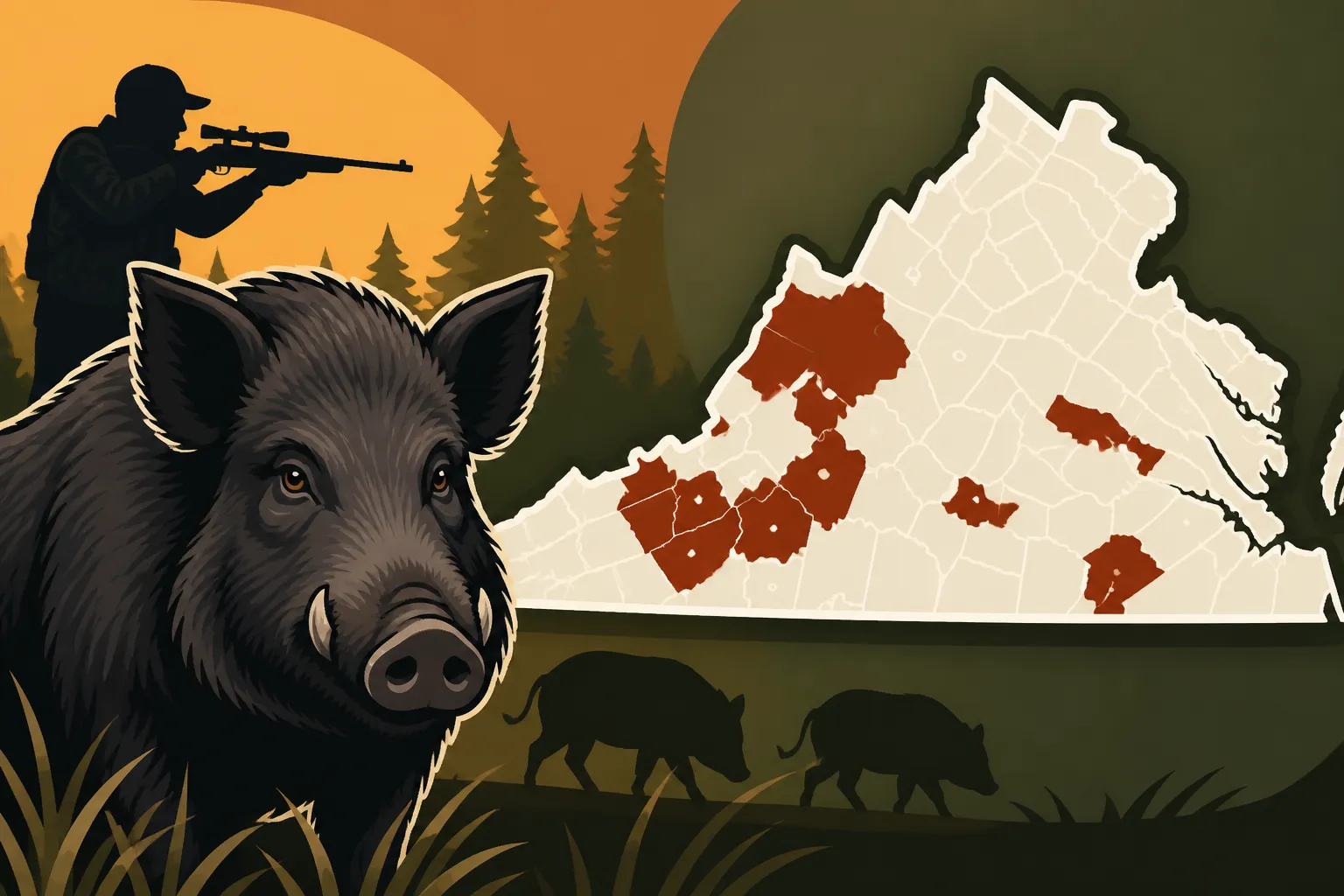
When we talk about the highest concentrations of feral hogs in Virginia, our eyes immediately turn to the southeastern part of the state. This region, often characterized by its extensive river systems, swampy lowlands, and rich agricultural fields, provides an almost perfect storm for these prolific breeders. Counties like Southampton, Sussex, Surry, and Isle of Wight, among others, consistently report significant hog activity. These areas offer dense cover in swamps and timber, a constant water source from rivers and creeks, and abundant food from crops like corn, soybeans, and peanuts. It's an ideal environment where hogs can hide, feed, and reproduce with alarming efficiency.
Imagine walking through a peanut field in Southampton County, freshly planted or nearing harvest, and you stumble upon a patch of ground that looks like it's been rototilled. That's classic hog rooting right there. They're not just grazing; they're digging deep for tubers, roots, and invertebrates, turning productive farmland into a muddy, uneven mess. The sheer scale of the damage can be heartbreaking for landowners, and it highlights why these animals are such a menace. Virginia's Year-Round Hog Rule on Private Land aims to give landowners and hunters the tools to combat this spread.
Piedmont River Corridors and Agricultural Belts
While the southeast takes the top spot, the Piedmont region, particularly along its major river systems and within its agricultural strongholds, also sees substantial feral hog activity. River corridors like the Nottoway, Blackwater, and James act as natural highways for hogs, allowing them to travel, find water, and exploit food sources far from their initial points of introduction. These areas often blend dense timber, river bottoms, and expansive farm fields, mirroring some of the conditions found in the southeast.
Picture a long river bottom in Brunswick County, choked with tangled privet and cane. A sounder of hogs can melt into that cover, unseen, only to emerge at night to raid a nearby cornfield. The mixture of cover and agricultural bounty is exactly what allows them to thrive and expand their range. It's not always a continuous presence; sometimes it's pockets of activity that pop up, perhaps from a few individuals dispersing from a larger population. Scouting these river systems, especially where they intersect with crop fields, becomes paramount for hunters looking to make an impact. Utilizing mapping tools like those found on GoHunt can help you identify these specific habitat types and potential travel corridors.
Why Hogs Thrive and Spread So Quickly
Understanding where the hogs are most prevalent often leads to the question of why. It's not just a matter of available food and water; several biological and behavioral factors contribute to their rapid colonization of new areas and the sustained high populations in existing ones.
Reproductive Prolificacy
Feral hogs are perhaps best known for their incredible reproductive rates. Unlike deer, which typically have one fawn a year, a sow can start breeding as young as six months old and can have two litters of four to ten piglets annually. Sometimes, under ideal conditions, they might even have three litters. This means a single sow can contribute a staggering number of offspring to the population each year, creating an exponential growth curve that is almost impossible to keep up with through hunting alone.
Consider a scenario where you have a small sounder of five hogs, including a couple of breeding sows. Within a year or two, that small group can explode into dozens, especially if they have access to consistent food sources and good cover. This rapid reproduction is why even aggressive hunting efforts often feel like they're just scratching the surface. It’s a constant battle, and it illustrates why hunters and landowners are encouraged to remove as many hogs as possible, whenever possible.
Adaptability and Omnivorous Diet
Feral hogs are incredibly adaptable creatures, capable of surviving in a wide variety of habitats, from dense swamps to dry pine forests to suburban fringes. Their omnivorous diet is a huge part of this success. They will eat almost anything: acorns, roots, tubers, mushrooms, berries, insects, snakes, bird eggs, fawns, small mammals, and, of course, agricultural crops. This flexibility means they are rarely limited by food availability, allowing them to persist even when one food source becomes scarce.
Think about a lean mast year in the mountains. Deer and bear populations might suffer, but feral hogs can simply switch to rooting for grubs or raiding a farmer's soybean field. This broad dietary preference makes them incredibly resilient to environmental changes and puts immense pressure on native wildlife by competing for food resources and directly preying on vulnerable species like ground-nesting birds or newborn fawns. Feral Swine Sightings in Southwest Virginia confirms that their adaptability allows them to pop up in unexpected places.
Hunting Strategies for High-Activity Areas
Hunting feral hogs in Virginia, especially in the counties with high populations, requires a different mindset and approach compared to traditional deer or turkey hunting. Given their intelligence, nocturnal habits, and dense cover preferences, it can be a significant challenge, but a rewarding one.
Scouting and Trail Camera Usage
Effective hog hunting starts with meticulous scouting. Hogs leave unmistakable sign: rooting, wallows, rubs on trees, and tracks. In areas with high populations, you'll often find these signs in abundance. Look for areas where dense cover meets food sources, especially agricultural fields or oak flats. Creek bottoms and swamp edges are also prime locations where they travel and bed. Using trail cameras can be incredibly effective for determining hog movement patterns, preferred feeding times, and the size of sounders. Place cameras along suspected travel routes, near water sources, or on the edges of fields where rooting is evident.
When you're sifting through hundreds of acres of potential hog habitat, a good mapping application like GoHunt can be invaluable. You can mark areas of rooting, identify dense cover blocks, and pinpoint water sources directly on a satellite map. This allows you to build a comprehensive picture of hog movement and habitat use, helping you place your cameras and plan your hunts more strategically. It's not just about finding a hog; it's about understanding the pattern of the sounder.
Still-Hunting and Stand Hunting Tactics
Both still-hunting and stand hunting can be successful in high-activity hog areas, though each has its nuances. Still-hunting involves slowly and quietly moving through an area, looking for fresh sign or hogs themselves. This works particularly well in dense cover where hogs might be bedded or feeding during daylight hours. Pay close attention to wind direction, as hogs have an excellent sense of smell.
For stand hunting, setting up over a known travel corridor, a fresh rooting area, or a water source can be very productive. Hogs are often most active at dawn and dusk, but they can be found at any time, especially if undisturbed. Since they are often nocturnal, hunting over bait (where legal and if you have the appropriate permits for private land) can also be effective. Remember, your goal is often to remove multiple hogs, so be prepared for quick follow-up shots if a sounder presents itself. Night Hunting Hogs With Lights on Private Land outlines tactics specifically for those low-light opportunities.
Trapping as a Management Tool
While hunting is an important component, trapping is often the most effective method for significantly reducing feral hog populations, particularly in high-activity areas. Traps, such as corral traps, can capture multiple hogs from an entire sounder at once, which is crucial given their rapid reproduction. Trapping requires dedication and specific equipment, but it yields results that hunting alone rarely can.
If you're dealing with persistent hog problems on private land, especially in those southeastern counties, exploring trapping options is highly recommended. It involves pre-baiting an area to habituate hogs to a food source, then setting a large trap designed to hold an entire sounder. This systematic approach tackles the problem at its root, helping to remove a significant number of breeding animals and their offspring. For anyone serious about long-term hog control, understanding and implementing trapping methods is key. Trapping Virginia Feral Hogs provides more detail on this critical management strategy.
Legal and Management Considerations
Hunting and managing feral hogs in Virginia come with specific rules and recommendations from the Virginia Department of Wildlife Resources (DWR). It's crucial to be aware of these to ensure you're hunting legally and contributing effectively to hog control.
Year-Round Hunting and Special Rules
One of the most significant differences between hog hunting and other game species in Virginia is that feral hogs can be hunted year-round, day or night, with no bag limits, on private land with landowner permission. On public lands, however, standard hunting seasons and regulations for other game animals usually apply. This means if you're hunting deer on a WMA during rifle season, and you encounter a hog, you can take it, but you can't go specifically hog hunting on that WMA outside of established deer or bear seasons using methods not permitted for those species.
It's also important to note that feeding bans related to Virginia's Twenty-Five-Mile Feeding Ban around CWD-affected areas might impact baiting strategies, even for hogs. Always check current DWR regulations and any specific WMA rules before heading afield. The goal is always eradication, or at least control, rather than sustaining a population.
| Region of Virginia | Key Counties for Hog Activity | Primary Habitat Types | Impact on Land |
|---|---|---|---|
| Southeast Virginia | Southampton, Sussex, Surry, Isle of Wight | River bottoms, swamps, agricultural fields (corn, peanuts) | Severe crop damage, habitat degradation |
| Southern Piedmont | Brunswick, Greensville, Prince George, Dinwiddie | River corridors, mixed timber, agricultural fields | Moderate to severe crop damage, occasional habitat disturbance |
| Central Piedmont | Goochland, Powhatan, Amelia (pockets) | River floodplains, private timber tracts, fragmented agriculture | Localized crop damage, competition with native species |
Disease Risks and Carcass Handling
Feral hogs are known carriers of various diseases, some of which can be transmitted to livestock, wildlife, and even humans. While the risk of CWD is generally associated with deer, hogs can carry diseases like brucellosis, leptospirosis, and pseudo-rabies. This is why proper carcass handling is extremely important. Always wear gloves when field dressing a hog, and avoid direct contact with blood and organs, especially if you have open cuts. Thoroughly cook any wild hog meat.
After harvesting a hog, if you're in an area with known disease concerns, it's wise to contact your local DWR office for any specific instructions regarding testing or disposal. Don't just dump carcasses where other animals can scavenge them; this can help spread diseases. Responsible disposal is a critical part of being a good steward of Virginia's natural resources and is especially vital in counties where hog populations are dense and disease prevalence might be higher.
Disclaimer
This article is for general informational purposes only and does not constitute professional advice. Laws, prices and regulations vary by location and change over time. Consult a qualified professional for guidance on your specific situation.