Resident Goose Problems Near Virginia Beach
If you live anywhere near the coast in Virginia, especially around the Virginia Beach area, you've probably noticed it: the ever-present population of Canada geese that seem to have completely forgotten how to migrate. They’re no longer just passing through; these resident geese have settled in, and while they look majestic flying overhead, their sheer numbers are creating some significant headaches for homeowners, businesses, and even local ecosystems. This guide will walk you through why these geese are thriving, the problems they cause, and most importantly, what can actually be done to manage their growing presence, including the critical role hunting plays in maintaining balance.
The Growing Challenge of Resident Geese in Coastal Virginia
It’s easy to admire the sight of Canada geese, with their striking black necks and familiar honk, especially when they're flying in their classic V-formation. But for many residents of coastal Virginia, particularly around Virginia Beach, that admiration often turns into frustration. Unlike their migratory cousins who travel thousands of miles, these are "resident" geese – birds that have foregone the long journeys and instead chosen to live year-round in our parks, golf courses, retention ponds, and suburban neighborhoods. And they are everywhere.
Property Damage and Nuisance
The most immediate and visible problem caused by large flocks of resident geese is the sheer amount of damage and nuisance they create. Imagine meticulously maintaining a beautiful lawn, only to find it covered in goose droppings that not only look unsightly but also kill grass. Golf courses in areas like Virginia Beach spend significant resources trying to deter geese from fairways and greens, where their waste becomes a biohazard and their grazing habits can devastate turf. Public parks, meant for picnics and play, can quickly become unusable due to widespread fecal contamination.
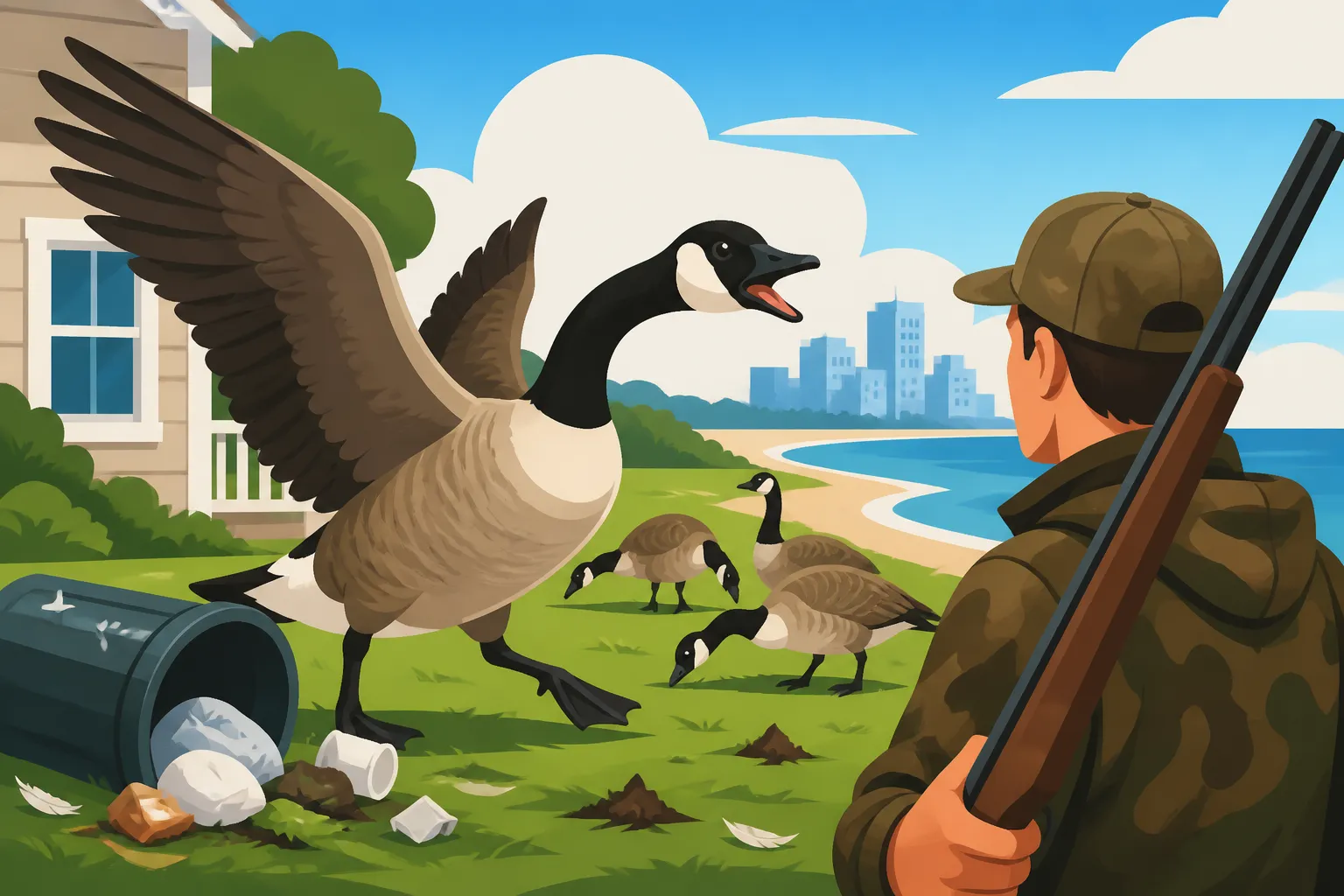
Beyond the mess, geese can become quite bold and even aggressive, particularly during their nesting season. If you've ever walked too close to a goose protecting its nest, you know the feeling of being hissed at or even charged by a bird much larger and more formidable than you might expect. This aggressive behavior can be particularly frightening for children and pets, turning what should be a pleasant outdoor experience into a tense encounter.
Health Concerns and Water Quality
Perhaps less visible but equally, if not more, concerning are the public health implications of an unchecked resident goose population. A single goose can produce a pound or more of droppings per day. Multiply that by dozens or even hundreds of birds in a concentrated area, and you're looking at a serious accumulation of waste. This fecal matter is rich in bacteria like E. coli and other pathogens, which can easily wash into local waterways, ponds, and even the Chesapeake Bay.
For swimming beaches and recreational ponds, this contamination can lead to elevated bacterial counts, making the water unsafe for humans and pets. Local health departments often monitor water quality, and high goose populations can be a direct contributor to advisories or closures. Nobody wants to swim in water contaminated by goose waste, and the potential for illness from contact with these pathogens is a legitimate concern for our communities.
Ecological Impact on Local Habitats
While geese are a natural part of many ecosystems, when their numbers become disproportionately high, they can throw local habitats out of whack. Resident geese are voracious grazers, and large flocks can quickly overgraze an area, stripping vegetation down to the soil. This overgrazing can lead to soil erosion, especially near water bodies, and can destroy native plant communities that other wildlife rely on for food and cover.
They also compete with native waterfowl and other bird species for food and nesting sites. With their larger size and aggressive nature, Canada geese can displace smaller, more sensitive species, reducing biodiversity in local parks and wetlands. It's a classic case of too much of a good thing turning into an ecological burden, pushing out other valuable wildlife that also call Virginia home.
Understanding Virginia Beach's Resident Goose Population
To truly tackle the problems associated with resident geese, we first need to understand why they've become such a dominant force in places like Virginia Beach. It’s not just happenstance; there’s a combination of factors at play that makes our coastal communities incredibly attractive to these birds.
Why Virginia Beach is an Ideal Goose Haven
Virginia Beach and its surrounding areas offer a veritable paradise for Canada geese. Think about it: miles of manicured lawns, golf courses, corporate parks, and suburban developments provide an endless buffet of short, tender grasses—their preferred food source. Interspersed throughout these green spaces are countless retention ponds, lakes, and estuaries that offer safe roosting sites, fresh water, and protection from predators. Unlike wilder areas, these urban and suburban environments often lack natural predators like coyotes, foxes, or eagles in sufficient numbers to control a burgeoning goose population.
Furthermore, the mild climate of coastal Virginia means that geese don't experience the harsh winters that would typically trigger a migration south. They have access to food and open water year-round, removing any incentive to leave. Human development has, inadvertently, created perfect conditions for these birds to thrive, leading them to abandon their ancestral migratory patterns in favor of a comfortable, consistent existence.
The Life Cycle of Resident Canada Geese
Understanding their life cycle helps explain their rapid population growth. Resident Canada geese typically mate for life and are highly productive. They begin nesting in early spring, often in March or April, and a single female can lay a clutch of 5-7 eggs. Incubation lasts about 28 days, and the goslings hatch typically in late April or May. These goslings grow incredibly fast, reaching near-adult size within a couple of months.
What's particularly significant is that these geese have a high survival rate in urban environments. With fewer predators and abundant food, most goslings make it to adulthood and often return to the same area where they were born to breed themselves. This cycle, coupled with their relatively long lifespan (up to 20-25 years in some cases), means that populations can explode if left unchecked. By mid-summer, adult geese, along with their young, undergo a molting period where they temporarily lose their flight feathers, making them even more visible and concentrated around water bodies.
Behavioral Patterns and Adaptation
Resident geese are incredibly intelligent and adaptable. They quickly learn to associate humans with food, especially in areas where people feed them—a habit that, while well-intentioned, is incredibly detrimental to managing their populations. This habituation means they lose their natural wariness, making them bolder and less likely to be deterred by human presence.
They also establish strong territorial instincts, especially during nesting season. Once they claim a nesting site, they will return to it year after year. Their flocking behavior provides safety in numbers, and their ability to quickly exploit new food sources and safe havens allows them to colonize new areas rapidly. This combination of high reproductive rates, longevity, intelligence, and adaptability makes them a formidable management challenge. If you're looking to understand specific behavioral patterns or seasonal movements in certain hunting zones, consulting resources like GoHunt can often provide valuable insights into local wildlife trends.
Comprehensive Strategies for Goose Management
Managing resident goose populations isn't a one-size-fits-all solution; it requires a multi-pronged approach that combines deterrence, direct intervention, and public education. The goal is to reduce their impact and discourage them from settling in problem areas, ultimately aiming for a healthier balance between wildlife and human activity.
Non-Lethal Deterrents and Habitat Modification
Before considering more direct interventions, many communities and property owners first try non-lethal deterrents. These methods aim to make an area less attractive or uncomfortable for geese without harming them. One common tactic is hazing, which can involve using trained dogs to chase geese, or employing specialized lasers or noise makers to frighten them away. The key with hazing is consistency; it must be done repeatedly and persistently to convince geese that an area is no longer safe or desirable.
Another effective strategy is habitat modification. Geese prefer short, manicured lawns because they offer easy grazing and an unobstructed view of potential predators. By allowing grass to grow taller (6-10 inches) along pond banks and property edges, you can make the area less appealing. Planting dense shrubs or other vegetation that geese find unpalatable can also create natural barriers. Fencing, especially low-level fencing along water edges, can prevent geese from easily walking out of the water onto lawns. These physical barriers, combined with visual deterrents like Mylar balloons or flags, can often make a significant difference.
Egg Addling and Nest Destruction Programs
When deterrence isn't enough, more direct interventions may be necessary. Egg addling (or oiling) and nest destruction are two common methods used to prevent the hatching of goslings, thereby reducing future generations. Egg addling involves coating eggs with corn oil, which prevents oxygen from reaching the developing embryo, causing it to suffocate. The goose continues to incubate the infertile eggs, preventing her from laying a new clutch that season. This is often preferred over simply destroying nests because it keeps the adult geese occupied with incubation, preventing a second nesting attempt.
Nest destruction involves removing eggs and nests altogether. Both egg addling and nest destruction require specific permits from federal and state wildlife agencies (like the Virginia Department of Wildlife Resources or DWR) and must be performed by trained individuals. It's not something a homeowner can or should do on their own. These programs are most effective when implemented early in the nesting season and consistently across a wide area to have a noticeable impact on the overall population.
Public Awareness and Community Involvement
Perhaps one of the most overlooked, yet vital, aspects of goose management is public awareness and community involvement. Simply put, people need to understand that feeding geese, while seemingly harmless, contributes directly to the problem. When people feed geese, these birds become dependent on humans for food, lose their natural fear, and are more likely to congregate in large numbers, leading to all the issues we've discussed. Education campaigns that encourage residents and visitors to refrain from feeding wildlife are crucial.
Furthermore, responsible waste management, ensuring trash is properly secured, reduces opportunistic feeding by geese. Community-wide efforts to implement habitat modification on public lands and support official management programs can amplify their effectiveness. A united front from the community, understanding the ecological implications and actively participating in solutions, is key to successful long-term management. For specific information on local regulations or community programs, resources like GoHunt might direct users to relevant DWR information or local ordinances.
Here's a quick look at some common goose management strategies:
| Strategy | Description | Pros | Cons |
|---|---|---|---|
| Habitat Modification | Allowing grass to grow tall, planting unpalatable vegetation. | Natural, low-cost, long-term solution. | May alter aesthetics, slow to show results. |
| Hazing (dogs, lasers) | Using trained animals or devices to scare geese away. | Immediate, non-lethal, can be very effective if consistent. | Requires consistency, can be costly for professional services. |
| Fencing/Barriers | Installing physical barriers to block access to lawns from water. | Effective physical deterrent. | Can be unsightly, may require significant installation. |
| Egg Addling/Oiling | Treating eggs to prevent hatching, while keeping parents incubating. | Reduces population growth without killing adults. | Requires permits and trained personnel, not immediate impact. |
| Nest Destruction | Removing eggs and nests. | Prevents immediate reproduction. | Requires permits, may cause re-nesting if done incorrectly. |
| Public Education | Informing public not to feed geese, proper waste disposal. | Addresses root cause, low-cost. | Relies on public compliance, results are gradual. |
| Hunting | Regulated harvesting of geese during designated seasons. | Most effective for population reduction, provides recreation. | Requires skilled hunters, public acceptance varies. |
Hunting as an Essential Tool for Population Control
While non-lethal methods certainly have their place, the reality is that for species as adaptable and prolific as resident Canada geese, lethal removal methods, particularly regulated hunting, are often the most effective and necessary tools for meaningful population control. It’s a crucial component of wildlife management that complements other strategies.
Regulated Hunting Seasons and Opportunities
Virginia recognizes the impact of resident geese and has established specific hunting seasons to help manage their numbers. The most notable is the Early September Canada Goose Season. This season is specifically designed to target non-migratory, resident geese before the influx of migratory birds arrives later in the fall. It's often more liberal in terms of bag limits and hours, providing hunters with excellent opportunities to reduce local populations. Beyond the early season, resident geese are also fair game during the regular Virginia Waterfowl Zones and Seasons, following established Virginia Duck and Goose Bag Limits.
These hunting seasons serve a dual purpose: they provide recreational opportunities for hunters, and they help reduce goose numbers, alleviating pressure on overgrazed areas and minimizing public health risks. For hunters, it's a chance to harvest game and contribute to wildlife conservation efforts. Information on specific dates and regulations is readily available through the Virginia Department of Wildlife Resources.
Navigating Access and Permitting for Goose Hunting
Hunting resident geese, particularly in the urban or suburban areas where they often cause the most problems, can present unique challenges, primarily around access. Many of these geese reside on private lands—golf courses, corporate parks, or large private estates. Gaining permission from landowners is paramount and can be the biggest hurdle. Hunters often build relationships with landowners, offering their services to help mitigate goose issues.
On the public land front, while national forests like the George Washington and Jefferson National Forests offer extensive opportunities, finding accessible public land specifically for goose hunting near densely populated areas like Virginia Beach can be tricky. However, some Wildlife Management Areas (WMAs) managed by the DWR do offer opportunities, and it's always worth checking their specific regulations. For any hunting endeavor, you'll need the appropriate Virginia Hunting Licenses and What They Cost, including state hunting licenses, a federal duck stamp (Virginia Federal Duck Stamp Requirement), and HIP certification (Virginia HIP Certification for Bird Hunters) if you're hunting migratory birds (which technically resident geese are, even if they don't migrate far). Tools like GoHunt can be invaluable here, helping hunters visualize property boundaries, identify potential public access points, and quickly access regulations to ensure they are hunting legally and ethically.
Effective Hunting Strategies for Resident Geese
Successful resident goose hunting often boils down to a few key strategies. Scouting is paramount. These birds are creatures of habit; they'll often feed in the same fields or loaf in the same ponds day after day. Identifying these patterns is the first step. Look for fresh droppings, grazed areas, and well-worn trails leading to and from water.
Once you’ve found a promising spot, decoying is highly effective. A spread of realistic goose decoys, strategically placed to mimic feeding or resting birds, can draw in unsuspecting flocks. Combine this with effective calling, using short, sharp honks and clucks to simulate a contented flock, and you can significantly increase your chances. Hunters often use layout blinds (Layout Blind Hunting Eastern Shore Fields) or natural cover to conceal themselves, as geese have excellent eyesight.
Safety is always the top priority. Ensure you have a safe backdrop for your shots and are aware of any nearby residences or roads. Remember that many hunting locations require non-toxic shot (Where Nontoxic Shot Is Required in Virginia), so be sure your ammunition (Waterfowl Loads for Chesapeake Bay Divers) complies with regulations. While the geese might have forgotten how to migrate, their instincts still make them challenging, rewarding game for hunters willing to put in the effort, directly contributing to the critical task of managing these impactful populations. Learning Early Goose Season Tactics in Virginia can give you an edge, especially during those first critical weeks.
Disclaimer
This article is for general informational purposes only and does not constitute professional advice. Laws, prices and regulations vary by location and change over time. Consult a qualified professional for guidance on your specific situation.