Virginia Squirrel Harvest Numbers
It can feel like a guessing game sometimes, heading into the woods for a squirrel hunt. You’ve got your .22 or shotgun, your keen eyes scanning the canopy, but secretly, you're probably wondering: "Are there even enough squirrels around here this year?" Understanding Virginia's squirrel harvest numbers can absolutely change that feeling of uncertainty, giving you a real advantage by revealing population trends, success rates, and where hunters are finding the most bushytails. This guide will help you decode those numbers and put them to work for your next outing.
Deciphering Virginia's Squirrel Harvest Numbers
For many of us who love chasing squirrels through the Virginia hardwoods, the actual statewide harvest numbers might seem like something only the wildlife biologists concern themselves with. But I’m here to tell you, these figures are a goldmine of information. They offer a broader picture of the health and abundance of our squirrel populations, which in turn can inform your personal hunting strategy in a big way.
What These Numbers Really Tell Us
Think of Virginia's annual squirrel harvest numbers as a report card for the squirrel population. A high harvest year often indicates a robust population, likely fueled by a strong mast crop the previous fall. When hunters are consistently bringing home more squirrels, it suggests that there are simply more squirrels out there to be harvested. Conversely, a noticeable dip in the numbers could signal a tough winter, a poor acorn year, or even increased predation, all factors that can reduce squirrel abundance. These long-term trends are crucial because they don’t just reflect hunter effort; they reflect the carrying capacity and overall health of the ecosystem. It's a barometer for both the squirrels and the forests they call home.
Beyond just raw numbers, harvest data can also provide insight into hunting pressure. If you see consistently high harvests in certain counties or regions, it might mean those areas are popular and potentially more pressured. This doesn't necessarily mean fewer squirrels, but it might mean those squirrels are warier. On the flip side, areas with moderate but consistent harvests could be overlooked gems. Understanding these nuances helps you make smarter decisions about where and when to focus your efforts. It’s like getting a peek behind the curtain at what the landscape is actually producing, giving you a leg up before you even step foot in the woods. You can also glean information about Virginia squirrel population from this data.
How Virginia Collects Its Small Game Data
So, how does the Virginia Department of Wildlife Resources (DWR) get these numbers? It’s not like they have squirrel counters hidden in every tree! Primarily, they rely on a combination of hunter surveys and statistical modeling. After hunting season, the DWR sends out questionnaires to a statistically significant sample of licensed hunters. These surveys ask hunters about their hunting effort, the species they pursued, and how many animals they harvested. It’s critical that hunters participate in these surveys when selected, because accurate data depends on their honest input.
In addition to direct surveys, the DWR also considers factors like license sales, historical trends, and environmental conditions to develop their estimates. While deer and turkey harvests often require mandatory reporting through systems like the DWR’s Go Outdoors Virginia app, small game like squirrels often fall under a more generalized estimation model. This doesn’t make the data any less valuable, but it highlights the importance of consistent methodologies and hunter cooperation. For example, if you're out there and seeing good numbers, that feedback, even indirectly, contributes to the overall understanding of the Virginia Squirrel and Rabbit Populations. By providing good, honest feedback, you help paint a clearer picture of the overall health of these vital small game populations.
Factors Shaping Squirrel Harvest Trends
Anyone who's spent a fair amount of time in the Virginia woods knows that no two years are exactly alike. The same goes for squirrel populations and, consequently, their harvest numbers. There's a complex interplay of environmental factors and human influences that dictate how many squirrels are out there and how many end up in our game bags. Understanding these can help you anticipate good seasons and manage expectations for tougher ones.
The Impact of Food Availability and Weather
Without a doubt, the most significant factor influencing squirrel numbers and their harvest is food availability, especially the annual mast crop. Acorns from oaks, hickory nuts, walnuts, and beechnuts are the lifeblood of Virginia's squirrel populations. A bumper crop year means squirrels go into winter fat and healthy, leading to higher survival rates and often more successful breeding seasons the following spring. This translates directly into a higher population count and, typically, a larger harvest for hunters. Conversely, a poor mast year can mean squirrels struggle to find enough food, leading to increased mortality, reduced breeding success, and consequently, fewer squirrels available for harvest. Reading Cuttings Under an Oak is a good way to see what they are eating.
Weather also plays a critical role. Harsh winters with prolonged periods of deep snow and ice can take a toll on squirrel populations, especially if combined with a poor mast crop. Conversely, mild winters can lead to higher overwinter survival. Droughts during the growing season can affect the mast crop, while extreme weather events like late spring freezes can damage budding trees, impacting nut production. All these natural cycles create a feast-or-famine scenario for squirrels, which then ripples through the harvest numbers that hunters report. This dynamic ebb and flow of nature is what keeps us guessing and always learning about the woods we cherish.
Hunting Pressure and Habitat Changes
While nature has a profound impact, human factors like hunting pressure and habitat changes also play a significant role. In heavily hunted public land areas, early season pressure can sometimes disperse squirrels, making them harder to find later in the season. However, squirrels are prolific breeders, and well-regulated hunting seasons generally have little long-term impact on overall healthy populations. What's more impactful are large-scale habitat alterations. Timber harvesting practices, for instance, can temporarily reduce squirrel habitat in clear-cuts, but replanted areas can eventually provide new food sources and cover as they mature. You can find excellent squirrel hunting in Squirrel Hunting a Virginia Oak Ridge.
Urbanization and development also chip away at prime squirrel habitat, especially in the Piedmont and Tidewater regions. As woods are converted to housing developments or commercial areas, squirrel populations are displaced or fragmented. While some squirrels adapt to suburban environments, these areas often come with their own challenges, like increased predator populations (think house cats, hawks, and foxes) and limited hunting access. Understanding these ongoing habitat shifts, whether natural or man-made, is key to anticipating where squirrel numbers might be trending and where your best hunting opportunities lie.
Leveraging Harvest Information for Better Hunting
Knowing the statewide or regional squirrel harvest numbers isn't just an interesting tidbit; it's actionable intelligence that can genuinely improve your hunting success. When you learn to interpret this data, you're essentially getting a cheat sheet for where and when to focus your efforts.
Translating Data into Scouting Strategies
If the DWR reports indicate a strong harvest year across Virginia, that's your green light to expect good numbers in most suitable habitats. But if the numbers are down statewide, you might need to get more strategic. Look for detailed county-level data if available, or anecdotal reports from local wildlife biologists, often found on the DWR website or in their publications. A dip in statewide numbers might mask a few counties that still had excellent mast crops and, consequently, high squirrel populations. This is where your pre-season Scouting Virginia Public Land Before Season comes into play.
A good example might be if the Shenandoah Valley counties reported lower harvests due to a late spring frost damaging the mast, but the southwest mountains or eastern Piedmont counties showed strong numbers. As a hunter, this tells you to consider shifting your focus to those more productive regions, or at least to prioritize scouting for prime food sources in your local area. Look for persistent stands of mature oaks and hickories. If you're seeing signs of heavy feeding—like shell cuttings at the base of trees or chewed-up nuts—that's a much better indicator than simply hoping for the best. Harvest data helps you narrow down where to concentrate those scouting efforts, saving you valuable time.
Tools and Resources for Virginia Squirrel Hunters
Fortunately, you don't need a degree in wildlife biology to access and interpret this information. The Virginia DWR website is your primary resource. They often publish annual harvest reports for various game species, including small game. While the detail might not be as granular as deer or turkey, you can still glean valuable insights into overall trends. Keep an eye on their news releases and seasonal forecasts, as these often highlight mast conditions and anticipated population health. The DWR also offers a Virginia DWR App which, while primarily for checking big game, can sometimes offer mapping features or links to valuable data.
Beyond official sources, don't overlook online hunting forums specific to Virginia. Many experienced hunters share their observations, which can sometimes provide real-time, localized insights that supplement official data. And of course, mapping applications are indispensable. Tools like GoHunt allow you to overlay public land boundaries with satellite imagery, helping you identify prime hardwood stands and potential squirrel habitat. You can mark promising areas you've identified through harvest data research and even track your movements. I use GoHunt regularly to scope out new spots and understand terrain. Combining official harvest numbers with mapping technology and local observations is the most effective way to approach your squirrel hunting in Virginia. With GoHunt, you can mark those particular oak flats or hickory bottoms where you expect to find the highest concentrations of squirrels based on historical data and current mast conditions.
Beyond the Numbers: Understanding Virginia's Squirrel Species
While harvest numbers give us a broad stroke view, it’s important for Virginia hunters to remember that we’re primarily talking about two distinct species when it comes to squirrels: the abundant gray squirrel and the larger, more elusive fox squirrel. Each contributes to the overall harvest in different ways and requires slightly different approaches.
Gray Squirrels: The Abundant Bushy-Tails
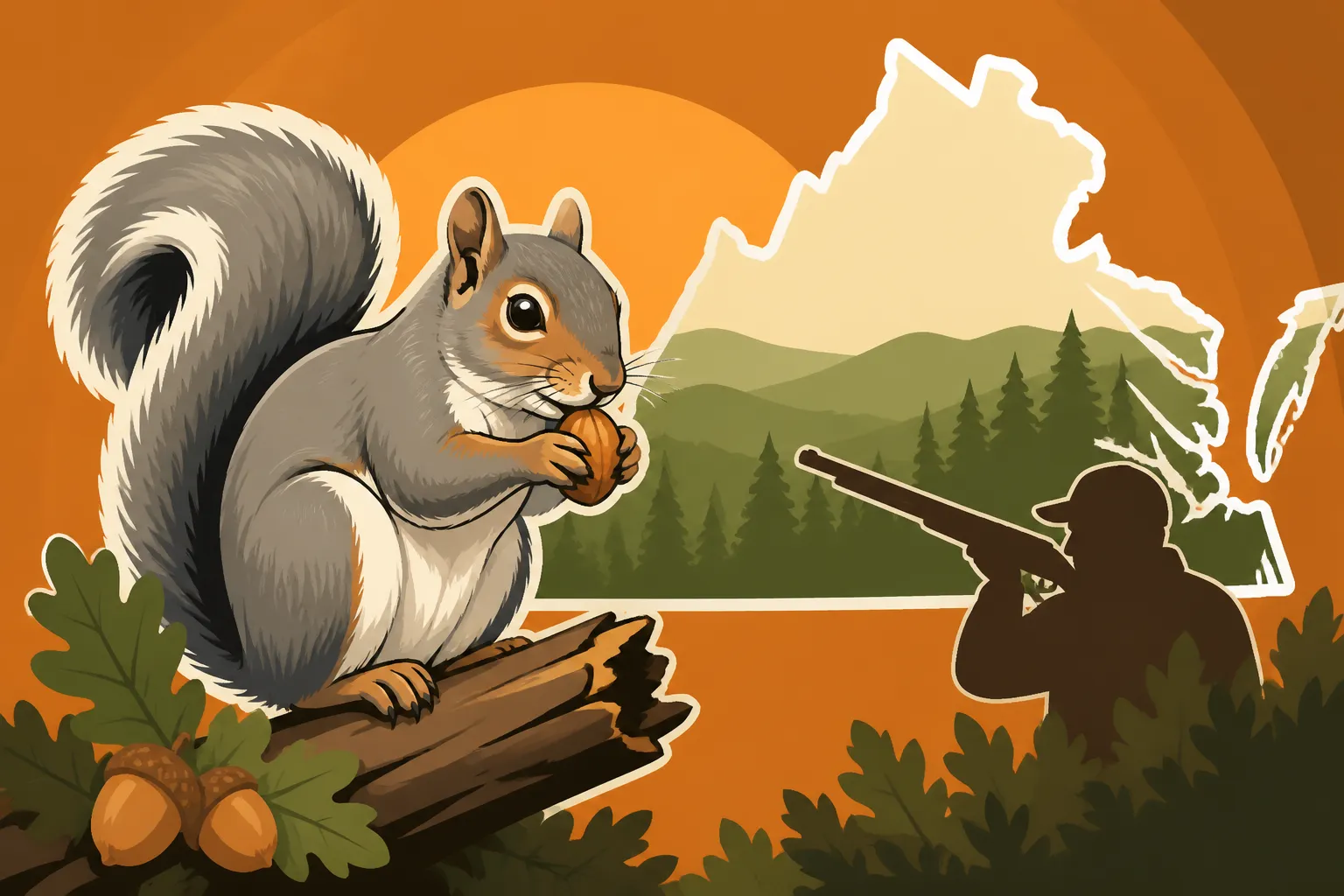
The eastern gray squirrel (Sciurus carolinensis) is likely what most hunters picture when they think of squirrel hunting in Virginia. These agile, often chattery, creatures are incredibly numerous and widespread across the Commonwealth, thriving in mature hardwood forests, mixed woodlands, and even suburban parks where hunting is prohibited. They are smaller than their fox squirrel cousins, typically weighing around a pound, and are known for their frantic movements and habit of barking warnings from high in the trees. Gray Versus Fox Squirrels in Virginia is a good read to distinguish between them.
Gray squirrels contribute the vast majority to Virginia’s annual squirrel harvest. Their high population density, rapid reproductive rates, and relative ease of finding (especially during peak feeding times) make them a staple for many small game hunters. They primarily feed on nuts, seeds, and acorns, often caching them for winter. Hunters targeting gray squirrels will have the most success focusing on oak and hickory ridges, creek bottoms, and mature timber stands. Their tendency to stay in trees, often circling to the opposite side of the trunk to avoid detection, makes them a challenging but rewarding quarry. For optimal success, try to hunt when Virginia Public Land Hunting Hours allow you to be in the woods during prime morning or late afternoon feeding times.
Fox Squirrels: The Larger, More Elusive Quarry
The fox squirrel (Sciurus niger) is Virginia's largest squirrel species, often weighing two pounds or more, with a robust build and a distinctive reddish-orange belly, tail, and sometimes face. Unlike the gray squirrel, fox squirrels are often found in more open, mature woodlands, especially those with scattered den trees, open understories, and a mix of hardwoods and pines. They tend to be less numerous and more solitary than gray squirrels, often preferring to forage on the ground and covering more territory. This behavior makes them a more challenging target for hunters, as they don't always offer the same high-volume action as grays.
Due to their lower population density and more dispersed habits, fox squirrels make up a smaller, though still significant, portion of the overall squirrel harvest in Virginia. Hunters looking specifically for fox squirrels should seek out more expansive tracts of mature timber, often in more rural areas, particularly in the western and northern parts of the state. They're less likely to be found in dense, brushy thickets and more likely to be seen along field edges bordering woods or in park-like stands of timber. Patience and careful observation are key when pursuing these impressive bushytails. They are truly a trophy for the dedicated squirrel hunter.
| Squirrel Species | Average Weight (lbs) | Primary Habitat | Typical Behavior | Contribution to Harvest |
|---|---|---|---|---|
| Eastern Gray | 1 – 1.5 | Dense Hardwoods, Mixed Forests, Suburban | Agile, numerous, vocal, arboreal | Major (most common) |
| Fox Squirrel | 2 – 3 | Open Woodlands, Scattered Mature Timber, Pine/Hardwood Mix | Larger, more solitary, ground foraging | Minor (less common) |
Understanding Virginia's squirrel harvest numbers provides more than just a statistical summary; it's a vital tool for making you a more informed and effective hunter. By paying attention to these trends, recognizing the factors that influence them, and utilizing the resources available, you can spend less time guessing and more time enjoying successful days afield pursuing these fantastic small game animals. Good luck out there, and happy hunting! Don't forget to check the Virginia Squirrel Season Opening Day before you head out!
Disclaimer
This article is for general informational purposes only and does not constitute professional advice. Laws, prices and regulations vary by location and change over time. Consult a qualified professional for guidance on your specific situation.