Virginia Crossbow Equipment Requirements
It can feel like you need a law degree just to figure out what gear you can legally use for hunting in Virginia, and crossbows, in particular, often seem to fall into a gray area for many hunters. The rules around them have shifted over the years, leading to a lot of confusion about what's allowed and what's not, especially when it comes to the actual equipment you can put to use in the field. This guide is here to clear the air, breaking down everything you need to know about the specific equipment requirements for hunting with a crossbow in the Commonwealth, ensuring you're both compliant and ready for a successful season.
Understanding Virginia's Crossbow Regulations
Crossbows have a unique history in Virginia hunting. For a long time, they were primarily reserved for hunters with specific physical disabilities or during limited seasons. But times have changed! The Virginia Department of Wildlife Resources (DWR) has progressively expanded crossbow use, recognizing their efficiency and appeal to a broader range of hunters, including those new to archery or looking for a different challenge. This shift has made it crucial to understand not just when you can hunt with a crossbow, but precisely what kind of equipment is legal to use.
Who Can Hunt with a Crossbow in Virginia?
Gone are the days when a crossbow was almost exclusively for hunters with a special permit in Virginia. The DWR has made significant strides in making crossbow hunting more accessible, which is fantastic news for many. Today, crossbows are generally permitted for all licensed hunters during the statewide archery season, which opens in early October. This means if you've got your valid hunting license and big game tags, you're good to go.
They're also a legal option during the incredibly popular and often productive urban archery season. This season typically kicks off in early September in designated urban and suburban areas, offering extended opportunities for deer management close to home. If you're looking for early season action in places like Chesapeake, Richmond, or even parts of Fairfax County, your crossbow can be your go-to tool. Hunters should always consult the specific regulations for their county or city, as local ordinances can sometimes add additional layers, especially regarding discharge setbacks. Beyond these archery-specific windows, crossbows are also typically legal during the early muzzleloader season, providing even more flexibility. This wide acceptance means more hunters can participate, whether they're new to the sport, have a physical limitation that makes drawing a traditional bow difficult, or simply prefer the unique challenge and precision a crossbow offers. For detailed opening dates, check out Virginia Statewide Archery Season Dates and Virginia Urban Archery Opening Day.
General Rules of Engagement for Crossbow Hunters
When you pick up a crossbow in Virginia, it's important to remember that for regulatory purposes, it generally falls under the umbrella of "archery equipment." This means many of the same general rules that apply to vertical bow hunters will also apply to you. For instance, specific limitations on hunting hours, typically from one-half hour before sunrise until one-half hour after sunset, are standard for all archery seasons. There are also critical safety regulations to adhere to, such as discharge distances from occupied dwellings, which are typically 150 yards. This is especially vital if you're hunting smaller private tracts or venturing into those expanding urban archery zones.
Beyond general hunting safety, crossbows require their own set of precautions. Always be mindful of the string path, keeping your fingers and thumb clear of the rail when firing. The power generated by these devices means accidental discharge can be incredibly dangerous. It’s also important to adhere to the principle of "fair chase" and responsible hunting practices, ensuring you're taking ethical shots within your effective range. While this article focuses on equipment, a deeper dive into all the overarching rules can be found in our comprehensive guide on Crossbow Rules During Virginia Archery Season. Always ensure you possess a valid hunting license and any required big game stamps for the species you pursue.
Essential Crossbow Equipment Requirements
Alright, let's talk brass tacks: what specifically do you need on your crossbow to keep it legal and effective in Virginia's woods? It's not just about having a crossbow; it's about having the right crossbow with the right accessories. The DWR sets clear guidelines, and understanding them means you can hunt with confidence.
Minimum Draw Weight and Kinetic Energy
One common question among new crossbow hunters, especially those transitioning from vertical bows, is about minimum draw weights. With traditional bows, the DWR often specifies a minimum draw weight, usually around 35 or 40 pounds, to ensure sufficient power for an ethical kill. However, for crossbows in Virginia, there is no specific minimum draw weight requirement mandated by state regulations. This doesn't mean you can just grab any old toy crossbow, though!
While the DWR doesn't set a hard number, ethical hunting demands that your crossbow generates enough kinetic energy to cleanly harvest your target animal. For deer, a good rule of thumb is to aim for a setup that produces at least 40-50 foot-pounds of kinetic energy at impact, though more is always better for optimal penetration and pass-throughs. Most modern hunting crossbows, especially those from reputable manufacturers like Ravin, TenPoint, or Excalibur, easily exceed this, often producing 100+ foot-pounds. When researching models, pay close attention to manufacturer specifications regarding speed and arrow weight, as these are key factors in kinetic energy output. You can often find fantastic reviews and comparisons on platforms like GoHunt that delve into these performance metrics, helping you pick a model that's both powerful and reliable. Don't cheap out here; ensuring your equipment has the power to dispatch game quickly and humanely is a fundamental aspect of ethical hunting.
Broadhead and Arrow Specifications
The sharp end of your arrow is perhaps the most critical component when it comes to equipment requirements. Virginia has specific rules regarding broadheads for archery equipment, and crossbows are no exception. Legally, you must use broadheads that are at least seven-eighths of an inch wide at their widest point. This ensures adequate cutting surface for a quick and humane kill.
When it comes to the type of broadhead, Virginia permits both fixed-blade broadheads and mechanical (expandable) broadheads. Fixed blades are tried and true, known for their reliability and deep penetration, especially on bone. Mechanical broadheads, which deploy on impact, can offer better flight characteristics and larger cutting diameters once open. However, always ensure your mechanicals are designed to open reliably and meet the minimum seven-eighths-inch width when deployed. What you cannot use are broadheads that are barbed, designed to stun or tranquilize, or those containing poisons or other toxic substances. Those are a definite no-go. As for arrows (often called bolts for crossbows), they must be at least 18 inches long, though most modern hunting crossbows use bolts in the 20-22 inch range. Ensure your bolts are straight, fletched correctly, and matched in spine and weight to your specific crossbow for optimal accuracy and kinetic energy delivery. Practice with the same broadheads you intend to hunt with, as they can significantly change your point of impact compared to field points. Our guide on Broadheads for Timber Shots offers more insights into selecting the right broadheads for various hunting scenarios.
Crossbow Scopes and Sights
One of the significant advantages of hunting with a crossbow is the ability to use magnified optics, which isn't typically allowed on vertical bows during Virginia's archery seasons (though red dots are often fine). For crossbows, scopes are generally permitted during all open seasons where crossbow hunting is legal. This means you can mount a traditional magnified scope, a red dot sight, or a holographic sight on your crossbow to aid in target acquisition and precise shot placement.
Many crossbow-specific scopes feature multiple aiming points or a reticle designed to compensate for arrow drop at various distances. Some even have speed-compensated dials that you can set to match your crossbow's velocity, making ranging and aiming more intuitive. Illuminated reticles, which can be invaluable in low-light conditions at dawn or dusk, are also perfectly legal and widely used. When choosing a scope, consider one that is durable, waterproof, and shockproof to withstand the rigors of hunting in various weather conditions. Clarity and light-gathering capabilities are also crucial for those critical moments. Ensure your scope is properly sighted in, not just at 20 yards, but also at your maximum ethical hunting range. This preparation is essential for clean, ethical shots in the field. To learn more about selecting the right optic, check out Crossbow Scopes for Virginia Timber Ranges.
Safety and Accessory Considerations for Crossbow Hunting
Beyond the bare essentials, there are several other pieces of equipment and safety practices that are crucial for a successful and ethical crossbow hunt in Virginia. These aren't just about compliance; they're about enhancing safety, improving performance, and maximizing your chances of a clean harvest.
Safety Features and Best Practices
Modern crossbows come equipped with several safety features, and understanding how to use them is paramount. Most crossbows will have a manual safety that should be engaged any time the bow is cocked and you are not ready to shoot. This is your first line of defense against accidental discharge. Additionally, many models feature an anti-dry fire mechanism, which prevents the crossbow from firing if an arrow isn't properly seated on the rail. This is a critical feature, as dry firing a crossbow can cause severe damage to the limbs and string, and even cause personal injury. Always verify that your arrow is fully seated against the string before disengaging the safety.
Another vital practice is keeping your fingers and thumb below the flight deck and away from the string's path. The speed and force of a crossbow string can cause serious injury if your digits are in the wrong place. After your hunt, or if you decide not to take a shot, you must safely de-cock your crossbow. Never carry a loaded and cocked crossbow unless actively hunting and ready to shoot. Many hunters use a decocking bolt to safely discharge their crossbow into the ground or a suitable target. Others utilize a safe de-cocking mechanism if their crossbow is equipped with one, but never attempt to "slowly" let the string down manually without proper equipment, as this is extremely dangerous. When hunting from elevated positions, such as a treestand, always use a full-body safety harness and a lifeline. Your safety off the ground is just as important as your safety on it. For more on elevated hunting safety, see Treestand Safety Gear for Steep Ground.
Accessories for Enhanced Performance and Compliance
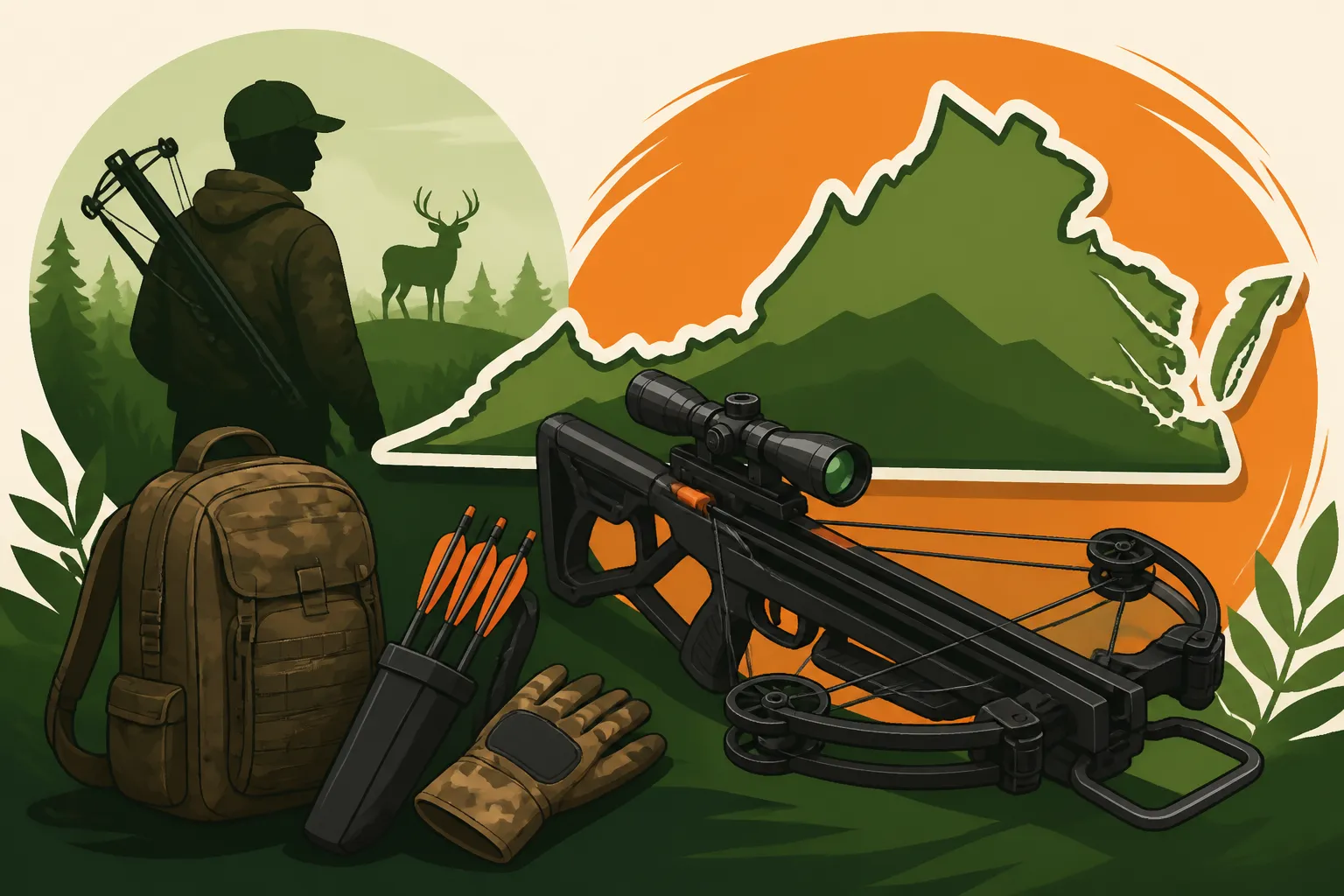
While not always legally required, several accessories can significantly enhance your crossbow hunting experience and ensure compliance with best practices. A cocking aid is nearly essential for consistent and effortless cocking. Rope cockers greatly reduce the draw weight, making it easier to cock the crossbow accurately every time, which is crucial for shot consistency. Crank cockers, integrated or external, offer the ultimate ease of use, slowly winding the string back with minimal effort.
A reliable quiver to securely hold your bolts is also a must, keeping them readily accessible yet protected from damage or loss. When transporting your crossbow, a good case will protect your investment from bumps, dirt, and moisture, especially when traveling to and from prime hunting spots like those public lands within the George Washington National Forest. Rangefinders are another invaluable tool. With the flatter trajectory of a crossbow compared to a vertical bow, knowing the exact distance to your target is paramount for precise shot placement. They eliminate guesswork and help you make confident decisions in the field, keeping your shots within ethical ranges. You can find many robust, budget-friendly options, as discussed in Rangefinders Under 100 Yards. Brands like Leupold and Vortex offer excellent rangefinders that are rugged enough for the Virginia backcountry. Remember, the goal is not just to be legal, but to be effective and humane, and good accessories contribute greatly to that. Finding reviews and comparisons of these accessories on platforms like GoHunt can help you make informed purchasing decisions.
Blaze Orange Requirements for Crossbow Hunters
This is one area where crossbow hunters sometimes get confused, particularly when different seasons overlap. While you are considered an "archery" hunter, the need for blaze orange or blaze pink can change depending on the current season. Generally, during the statewide archery season and urban archery seasons, blaze orange or blaze pink is NOT required when hunting with a crossbow. This is consistent with rules for traditional bowhunters, allowing you to utilize camouflage for concealment during these early, foliage-rich periods.
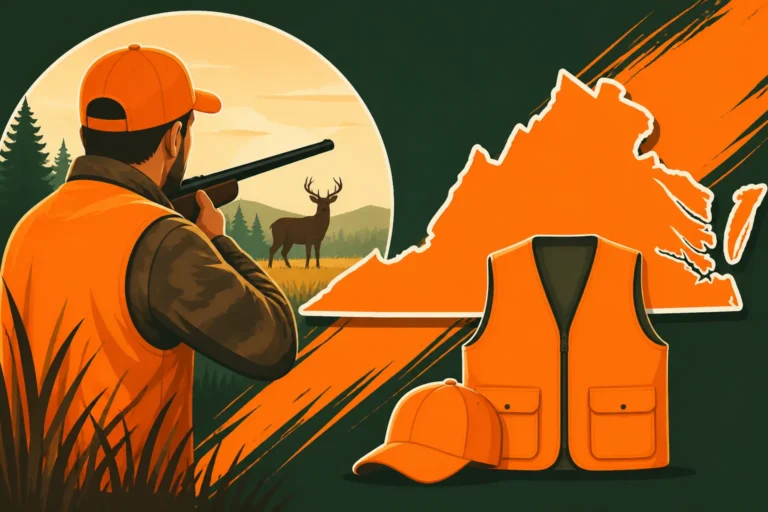
However, a crucial exception exists: if you are hunting with a crossbow during any portion of the general firearms deer season, you are then required to wear blaze orange or blaze pink. This applies even if you're carrying your crossbow and not a firearm. The requirement is substantial: you must wear at least 100 square inches of solid blaze orange or pink above the waist, and it must be visible from 360 degrees. This ensures you are clearly visible to other hunters who may be using firearms. It's vital to know your hunting dates and coordinate your clothing accordingly. Always consult the DWR regulations annually, as they can update these rules. For a comprehensive breakdown of these visibility requirements, take a look at our guide on How Much Blaze Orange Virginia Requires.
Maintenance and Ethical Considerations
Having the right equipment is only half the battle; keeping it in top shape and using it responsibly are equally important. Ethical hunting goes beyond just following the law; it's about respecting the animal and ensuring a quick, clean harvest.
Proper Crossbow Maintenance for Longevity and Safety
Your crossbow is a precision instrument, and like any fine tool, it requires regular maintenance to perform reliably and safely. Neglecting it can lead to decreased accuracy, equipment failure, and even potential injury. One of the most critical aspects of maintenance is regular waxing of your string and cables. The string is under immense tension, and consistent waxing, typically every 5-10 shots or after any exposure to moisture, helps reduce friction and prolong its life. Always use a wax specifically designed for crossbow strings.
Beyond waxing, regularly inspect your limbs and cams for any signs of cracks, splinters, or excessive wear. Even minor damage can lead to catastrophic failure. Check screws and bolts for tightness, especially after extended use. The rail, where the arrow rests, should also be kept clean and free of debris, and some manufacturers recommend a light application of rail lubricant to reduce friction and improve arrow flight. It's also a good practice to have your crossbow professionally inspected and tuned by a qualified archery technician at least once a year, or whenever you notice a significant drop in performance. They can check string and cable condition, cam timing, and overall integrity, ensuring your crossbow is safe and shooting true. Remember, a well-maintained crossbow is not only safer but also far more accurate, leading to more ethical shots in the field.
Ethical Shot Placement and Practice
No matter how high-tech your crossbow or how well-maintained your equipment, nothing replaces solid shot placement and consistent practice. Ethical hunting is about ensuring a quick, humane harvest, and that responsibility rests entirely on the hunter. Practicing regularly with your hunting broadheads is non-negotiable. While field points fly identically, broadheads, especially fixed-blade ones, can sometimes impact differently. Confirm your point of impact with your hunting setup well before the season opens.
Focus your practice on a vital area target, aiming for the lung-heart zone on deer. Understand shot angles and limit your shots to ethical ranges—the distance at which you can consistently place an arrow into a six-inch circle under field conditions. For many crossbow hunters, this might be 40-50 yards, but for others, it could be closer. Don't push your limits in the field. When the moment of truth arrives, if you have any doubt about the shot, don't take it. After the shot, observe the animal's reaction, listen for sounds, and then wait a reasonable amount of time (typically 30 minutes to several hours, depending on the shot) before beginning your track. Responsible tracking and recovery are integral to ethical hunting. Platforms like GoHunt often have detailed articles and videos on shot placement that can further your understanding and skill. For general reporting requirements after a successful harvest, consult Virginia Deer Reporting Requirements.
Virginia Crossbow Equipment Summary
To help clarify the core equipment requirements and recommendations, here’s a quick overview:
| Equipment Component | Virginia DWR Requirement | Ethical/Best Practice Recommendation |
|---|---|---|
| Crossbow Draw Weight | No minimum specified | Sufficient kinetic energy for clean kill (40-50 ft-lbs+ for deer) |
| Broadhead Width | Minimum 7/8 inch | Match to bolt weight & crossbow; practice for accuracy |
| Broadhead Type | Fixed or Mechanical (non-barbed, non-toxic) | Use reliable, sharp broadheads |
| Bolt Length | Minimum 18 inches | Use manufacturer-recommended length for optimal performance |
| Optics/Sights | Scopes/Red Dots Permitted | Durable, clear, low-light capable scope; properly sighted in |
| Cocking Aid | Not required | Rope or crank cocker for consistent, easy cocking |
| Blaze Orange/Pink | Required during General Firearms Season | Wear during overlap; optional for archery-only seasons |
| Safety Features | Crossbow must function safely | Utilize manual safety, anti-dry fire, maintain clear rail |
Disclaimer
Please remember that hunting regulations, including equipment requirements, can change. While this guide provides comprehensive and up-to-date information, it is always your responsibility as a hunter to consult the latest Virginia Department of Wildlife Resources (DWR) regulations prior to engaging in any hunting activities. Local ordinances may also apply.