Rifle Setups for Virginia Deer Hunting
Trying to figure out the perfect rifle setup for deer hunting in Virginia can feel like staring at an overwhelming menu with too many delicious options. You've got mountains, rolling hills, flat farmlands, and dense swamps, each presenting its own unique set of challenges, from tight timber shots to open field crossings, and all under Virginia's specific regulations. This guide is here to walk you through the nuances of choosing and setting up a deer rifle that's not just legal, but truly effective for the diverse Virginia landscape you plan to hunt, helping you make informed decisions and build confidence for your next season.
Navigating Virginia's Diverse Terrains with Your Rifle Setup
Virginia is a state of incredible topographical contrasts, and what works perfectly in the Appalachian mountains might be overkill or underpowered in the Eastern Shore marshlands. Many hunters get frustrated trying to find a one-size-fits-all solution, only to discover that their rifle setup is either too cumbersome for thick cover or lacks the reach for open country. The key to successful deer hunting in Virginia isn't just owning a rifle, but owning the right rifle, matched to the specific environment you'll be spending your time in.
Mountainous and Western Virginia Considerations
When you venture west of the Blue Ridge, into the George Washington and Jefferson National Forests or the rugged private lands of places like Giles or Tazewell counties, you're looking at steep elevation changes, dense timber, and deep hollows. Shots are often closer, rarely exceeding 150-200 yards, and frequently much less, often in low light conditions under a thick canopy. The biggest challenge here is navigating the terrain itself, and your rifle setup needs to be as nimble as you are. A long, heavy barrel on a magnum caliber might feel great on the bench, but after a few miles of climbing and descending, it becomes a burden.
For these environments, a compact, lighter rifle with a moderate-power scope is often the wisest choice. You want something that's easy to carry, quick to shoulder, and can handle a variety of positions, whether you're leaning against a tree on a steep slope or trying to thread a shot through a small opening. Recoil is also a consideration; practicing with a hard-kicking magnum might be fine at the range, but a quick follow-up shot on an excited buck after a strenuous climb is another story. Reliable, accurate, and manageable is the mantra for mountain hunting.
Piedmont and Central Virginia Considerations
Move towards the Piedmont, encompassing much of central Virginia from the foothills of the Blue Ridge to the edges of the Tidewater, and the landscape shifts dramatically. Here, you'll find a mix of rolling timber, agricultural fields, clear-cuts, and suburban fringes, especially as you get closer to cities like Richmond or Charlottesville. This region presents a broader range of shot opportunities – from tight woods shots at 50 yards to crossing a cut powerline or field edge at 250 yards. This mix can be incredibly challenging for hunters who primarily hunt one type of terrain, as their gear might not be optimized for the varied conditions.
A versatile rifle setup shines in the Piedmont. You need a caliber that has enough flat trajectory and energy to handle longer shots across a field, but isn't so powerful that it's excessive for shorter timber engagements. Rifle weight and length are still important, as you'll often be walking through brushy areas or along fencerows, but perhaps not as critical as in the mountains. Optics selection here becomes a delicate balance, needing enough magnification for those longer opportunities without sacrificing field of view or light gathering for quick, close shots in denser cover. Many hunters in the Piedmont opt for a rifle that can bridge the gap, offering a blend of power, precision, and portability. Rifle Ranges Realistic in Piedmont Woods can give you more insight into typical shot distances.
Tidewater and Eastern Virginia Considerations
Down in the Tidewater and Eastern Shore, the landscape becomes much flatter, characterized by swamps, pine plantations, dense thickets, and expansive agricultural fields. While there can be long shots across fields, many opportunities arise in extremely dense cover where deer might pop out at spitting distance. Think about hunting near the Great Dismal Swamp or the thick areas of Southampton County. The challenges here are often visibility, humidity, and the sheer density of vegetation.
For these areas, fast-handling rifles are often preferred. Lever-action rifles in brush-busting calibers or even shotguns with slugs are popular for their quick maneuverability and ability to penetrate thick brush without excessive over-penetration in more populated areas. While longer range capabilities aren't usually the primary concern, having enough power to humanely dispatch a deer through modest cover is crucial. Optics might lean towards lower magnification, wider fields of view, and robust construction to handle the damp, sometimes harsh conditions. The name of the game here is quick acquisition and reliability in tough, wet environments.
Virginia's Legal Framework for Deer Rifles
Understanding the legal landscape for hunting deer with a rifle in Virginia is paramount. It’s not just about what rifle you want to use, but what you can legally use, and these rules can sometimes be a source of confusion for new hunters or those coming from other states. Virginia's regulations are designed to ensure hunter safety, public safety, and ethical harvest, but they do require a bit of homework to fully grasp. Nothing is more frustrating than meticulously planning a hunt, only to realize your chosen firearm isn't compliant.
Minimum Caliber and Ammunition Types
Virginia has specific rules regarding the minimum caliber for hunting deer with a rifle. Generally, you need a centerfire rifle firing ammunition with an expanding bullet. This means no rimfire cartridges for deer. The minimum caliber requirement is designed to ensure sufficient energy and bullet performance for a humane harvest. While the specific number isn't always explicitly stated as a hard minimum diameter, the emphasis is on effective, humane dispatch. For instance, cartridges like the .223 Remington, while popular for varmints, are often considered borderline by many experienced deer hunters and conservationists due to their smaller diameter and lighter bullet weights, especially when compared to larger calibers often recommended.
It's crucial to use expanding bullets – soft points, hollow points, or other designs intended to mushroom upon impact. Full metal jacket (FMJ) or military-style bullets are generally prohibited for hunting game animals in Virginia, as they are designed for penetration rather than expansion, which can lead to less effective energy transfer and a higher chance of a wounded animal. Always check the current Virginia Department of Wildlife Resources (DWR) regulations for the most up-to-date and explicit requirements on ammunition and caliber. Err on the side of caution and choose a caliber and bullet combination known for reliable deer performance. Virginia Minimum Rifle Caliber Rules offers a more detailed look at these regulations.
Straight-Wall Cartridge Zones and Restrictions
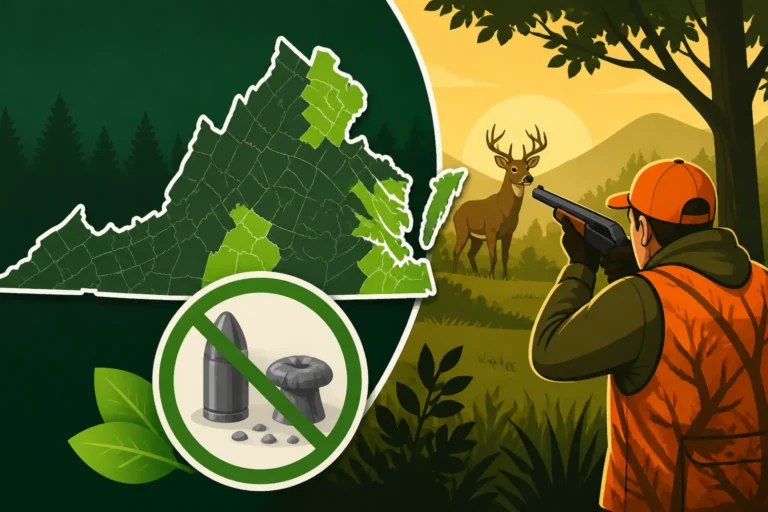
One of the more unique aspects of Virginia's deer hunting regulations is the distinction of certain counties for straight-wall cartridge rifles only. This regulation is generally applied in areas with higher population densities or where safety concerns warrant limiting the effective range of firearms. Straight-wall cartridges typically have a lower maximum range compared to bottlenecked rifle cartridges, which helps mitigate concerns about projectiles traveling long distances. This often creates a challenge for hunters who might hunt both in these restricted zones and in more open, unrestricted areas.
If you plan to hunt in a county designated for straight-wall cartridges only, you'll need a rifle chambered for cartridges like the .350 Legend, .450 Bushmaster, .44 Magnum, .45 Long Colt, or .30-30 Winchester. Shotguns with slugs are also generally permitted in these zones and offer similar ballistic characteristics. It's vital to confirm if your hunting location falls within one of these zones well before opening day. Many hunters find themselves owning two different rifle setups to accommodate these varying rules. Always consult the DWR county-specific regulations map or guide to ensure compliance. You certainly don't want to show up on your carefully scouted public land spot only to realize your rifle isn't legal.
Popular Rifle Calibers for Virginia Deer
When it comes to choosing a caliber for Virginia deer, you're spoiled for choice, but that can also make the decision daunting. Every hunter has their favorite, and you'll hear passionate arguments for everything from classic brush-busters to long-range precision cartridges. The "best" caliber really depends on your hunting style, the terrain you frequent, and your personal comfort and proficiency with the rifle. Let's look at some of the mainstays and why they've earned their reputation among Virginia deer hunters.
.30-06 Springfield and .308 Winchester
These two calibers are arguably the most ubiquitous and versatile options for deer hunting across North America, and Virginia is no exception. The .30-06 Springfield is a classic, with over a century of proven performance. It offers excellent range, sufficient power for deer and even larger game like black bear, and a wide variety of bullet weights from 150-180 grains. Its recoil is manageable for most shooters, and ammunition is readily available everywhere, from your local hardware store to big box retailers. It's a reliable workhorse, at home in the mountains, rolling Piedmont, or even threading shots through dense Tidewater timber.
The .308 Winchester offers similar ballistics to the .30-06 but in a shorter, more compact cartridge, making it ideal for lighter, shorter action rifles. It's incredibly accurate, has slightly less recoil than the .30-06, and benefits from a vast selection of factory ammunition and components for reloaders. The .308 is often favored for its efficiency and accuracy, and it shares the .30-06's versatility across Virginia's diverse landscapes. If you're looking for a do-it-all deer cartridge that won't let you down, either of these .30-caliber options are fantastic choices. Many seasoned Virginia hunters swear by one or the other, often for reasons of tradition or slight personal preference.
6.5 Creedmoor and .270 Winchester
These calibers have gained immense popularity for their flat trajectories and excellent terminal performance on deer. The 6.5 Creedmoor has surged in recent years, especially among younger hunters and those coming from a precision shooting background. It's known for its incredibly flat trajectory, low recoil, and excellent accuracy, making it a joy to shoot and very effective for longer shots across fields or powerline cuts in the Piedmont. The 6.5mm bullets, despite their smaller diameter compared to .30 calibers, are highly efficient and penetrate well, delivering impressive results on deer. It's a fantastic option if you anticipate shots at extended ranges but still want manageable recoil. 6.5 Creedmoor for Blue Ridge Ridges can provide more detail on its mountain performance.
The .270 Winchester is another legendary caliber, a favorite of many older generations of hunters. It offers a slightly flatter trajectory than the .30-06 and is known for its excellent performance on deer-sized game. With a wide range of bullet weights typically from 130-150 grains, the .270 delivers plenty of energy for clean kills without excessive recoil. It's a fantastic choice for open country and longer shots but also performs well in mixed timber settings. Both the 6.5 Creedmoor and .270 Winchester are excellent choices for Virginia's diverse deer hunting opportunities, especially where longer shots are a possibility.
.243 Winchester and Other Lighter Calibers
For hunters who are recoil-sensitive, or for younger hunters, the .243 Winchester is a perennial favorite. It's a flat-shooting, highly accurate cartridge with very mild recoil, making it easy to shoot well. While some debate its suitability for deer, a well-placed shot with a quality expanding bullet from a .243 is absolutely lethal on whitetails. It shines in open country where precise shot placement is possible, and where recoil might be a factor in confidence. However, some experienced hunters prefer a bit more bullet weight and energy for less-than-ideal angles or for larger-bodied Virginia bucks, especially in the Western mountains. Is a .243 Enough for Virginia Whitetails? delves into this debate.
Other lighter calibers like the 7mm-08 Remington offer a nice compromise, providing more bullet weight and energy than a .243 but with less recoil than a .308 or .30-06. It's a highly efficient and accurate cartridge, making it an excellent choice for a wide range of Virginia hunting scenarios. For those strictly hunting in straight-wall zones, calibers like the .350 Legend or .450 Bushmaster are purpose-built for deer, offering good performance at typical straight-wall ranges with minimal recoil and often available in AR-platform rifles. Choosing a lighter caliber requires a commitment to shot placement and understanding its limitations, but for many, it's a very effective and enjoyable option.
Rifle Actions: Finding Your Perfect Match for Virginia Hunting
Beyond the caliber, the type of rifle action you choose plays a significant role in how your rifle handles, performs, and feels in the field. Each action type has its own set of advantages and disadvantages, and what suits one hunter perfectly might be a poor fit for another. Virginia hunters utilize a wide array of actions, reflecting the varied hunting styles and traditions found across the state. Understanding these differences can help you select a rifle that truly complements your hunting approach.
Bolt-Action Rifles
The bolt-action rifle is, without a doubt, the most popular choice for deer hunting in Virginia and across the country. Its reputation for accuracy, reliability, and robust design is well-deserved. The manual cycling of the bolt allows for a very strong lock-up, which contributes to excellent precision, especially at longer ranges. This strength also makes it suitable for a wide range of powerful cartridges. For hunters who value pinpoint accuracy for those open-field shots in the Piedmont or for reaching out across a mountain hollow, a bolt-action is often the preferred choice.
While they are generally slower to cycle than semi-automatics, a skilled hunter can operate a bolt-action surprisingly quickly for follow-up shots. Their simplicity of design also makes them relatively easy to clean and maintain, which is a bonus after a wet or muddy hunt. Brands like Savage, Remington, Winchester, and Tikka offer excellent bolt-action options that are a favorite among Virginia deer hunters. For anyone prioritizing accuracy and reliability for precision shots, a quality bolt-action rifle is an outstanding choice that will serve them well in almost any Virginia hunting scenario.
Lever-Action and Pump-Action Rifles
For those who hunt in thicker cover, value quick follow-up shots, or appreciate classic American firearms, lever-action and pump-action rifles hold a special place. The lever-action rifle, often associated with cartridges like the .30-30 Winchester or .45-70 Government, is a classic "brush gun." These rifles are typically compact, lightweight, and very quick to shoulder, making them ideal for fast-moving targets or tight quarters in dense Virginia timber or swamps. Their tubular magazines generally necessitate flat-nosed or round-nosed bullets for safety, which, while effective at closer ranges, can limit their long-range ballistic performance compared to pointed spitzer bullets in box magazines.
Pump-action rifles, while less common than bolt-actions for deer, offer a similar advantage in terms of rapid follow-up shots. They operate much like a pump-action shotgun, allowing for quick cycling of rounds with minimal movement. They can be found in a variety of calibers and often appeal to hunters who are already proficient with pump shotguns. Both lever-actions and pump-actions are excellent choices for close-to-medium range hunting in heavy cover, and they often carry a certain nostalgic appeal for hunters steeped in Virginia's hunting traditions.
Semi-Automatic Rifles
Semi-automatic rifles, particularly those based on the AR platform, have become increasingly popular for deer hunting in Virginia, especially for their rapid follow-up shot capability and modularity. Chambered in common calibers like .223 Remington (check local regulations and ethical considerations for deer), .308 Winchester, 6.5 Creedmoor, and straight-wall cartridges like .350 Legend or .450 Bushmaster, these rifles offer a familiar manual of arms for many modern shooters. Their design allows for quick reloads, and the ability to customize them with various stocks, grips, and optics is a significant draw.
However, it's important to be mindful of Virginia's regulations regarding magazine capacity for hunting. While many semi-automatic rifles can accept high-capacity magazines, hunting regulations often limit the number of rounds allowed in the magazine while pursuing game. Always verify current DWR regulations regarding magazine capacity for deer hunting. Despite potential misconceptions, AR-platform rifles are accurate, reliable, and perfectly legal for deer hunting in many parts of Virginia, offering a robust and versatile option for hunters who appreciate their modern features and ergonomic design.
Optics and Accessories: Maximizing Your Rifle Setup's Potential
Having the right rifle and caliber is only part of the equation; your optics and accessories are equally crucial for success in the Virginia deer woods. A mediocre scope can turn a highly accurate rifle into an unreliable tool, and the right sling or shooting stick can make a world of difference in your comfort and accuracy in the field. Many hunters overlook these critical components, only to find themselves struggling with target acquisition or making unstable shots when it counts. It’s an area where a little investment and thoughtful consideration can yield huge dividends.
Rifle Scopes for Virginia Hunting
Choosing the right rifle scope is perhaps the most important accessory decision. For Virginia, you need a scope that balances magnification, light-gathering capability, and durability. In the dense timber of the mountains or the low light of a Piedmont creek bottom, a scope with excellent low-light performance and a wide field of view is paramount. Variables like a 3-9×40 or 2-7×33 are classics for a reason; they offer enough magnification for most shots while retaining a broad sight picture at lower power for quick target acquisition. For hunters in more open areas of the Piedmont or those who might encounter longer shots, something like a 4-12×40 or even a 3-15×44 can offer the necessary magnification. Rifle Scopes for Low-Light Mountain Hollows can provide excellent guidance here.
Beyond magnification, consider the quality of the glass. Brands like Leupold, Vortex, and Zeiss offer scopes with superior light transmission and clarity, which can literally mean the difference between seeing a buck at dawn or dusk and just seeing shadows. Durability is also key; your scope needs to withstand bumps, drops, and Virginia's sometimes harsh weather. Look for fog-proof, waterproof, and shock-proof construction. Simplicity in the reticle is often best for hunting, though some shooters prefer ballistic reticles for holdover at longer ranges. Avoid the temptation to buy the cheapest scope; it's often the weakest link in an otherwise solid setup.
Binoculars and Rangefinders
While not mounted directly on your rifle, binoculars are an indispensable optical tool for any serious Virginia deer hunter. They allow you to scout an area, identify deer at a distance, and assess antler quality without raising your rifle and potentially spooking game. An 8×42 or 10×42 binocular is typically ideal, offering a good balance of magnification, field of view, and light-gathering capability without being too heavy or shaky. Quality glass in your binoculars is just as important as in your rifle scope, allowing you to pick out subtle details in dense cover or at last light.
A rangefinder is another critical piece of equipment, especially if you anticipate shots over 100 yards or hunt in varied terrain. Estimating range can be incredibly difficult, particularly in the mountains or across uneven fields. A laser rangefinder provides instant, accurate distance readings, allowing you to make precise adjustments for bullet drop, ensuring an ethical shot. This is especially true when hunting open areas or considering longer shots. Combine your binoculars and rangefinder with a robust mapping app like those from GoHunt or onX Hunt, and you have a powerful scouting and hunting tool. Using these tools to verify distances to landmarks before a hunt can give you a huge advantage.
Slings, Shooting Sticks, and Bipods
How you carry and stabilize your rifle is just as important as the rifle itself. A good sling is essential for comfortable carrying, especially on long walks through public land like the George Washington National Forest. Look for a wide, padded sling that distributes weight evenly and has non-slip features. A quick-adjust sling can also be beneficial, allowing you to tighten it for stable shooting from a standing position.
Shooting sticks or a bipod can dramatically improve your accuracy in the field by providing a stable shooting platform. While a bipod offers excellent stability from prone or seated positions, it can be cumbersome in thick brush and typically adds weight. Shooting sticks (monopods, bipods, or tripods) are more versatile and can be quickly deployed for kneeling or standing shots, which are often necessary in Virginia's varied terrain. Practicing with your chosen stabilization method at the range is crucial; don't wait until a deer is in front of you to figure it out. These simple accessories can turn a shaky offhand shot into a confident, steady one, greatly increasing your chances of a humane kill. Shooting Sticks From a Blue Ridge Overlook further highlights their value.
Sighting In and Practice: The Often-Overlooked Key to Success
It might seem obvious, but the single biggest factor in successful deer hunting with a rifle isn't the cost of your gun or the power of your scope; it's your proficiency with it. Many hunters spend countless hours scouting, preparing gear, and obsessing over calibers, only to neglect the fundamental step of properly sighting in their rifle and putting in consistent practice. This oversight leads to missed shots, wounded animals, and immense frustration – a scenario no hunter wants to experience.
Zeroing Your Rifle for Virginia Ranges
Properly zeroing your rifle is non-negotiable. For deer hunting in Virginia, a good starting point is often a 100-yard zero, especially for medium-velocity cartridges. This means your bullet will impact exactly where you aim at 100 yards. For many popular deer calibers, this zero will keep your bullet within a +/- 3-inch vital zone out to about 200-250 yards, which covers a significant portion of typical Virginia deer hunting shot distances. However, depending on your specific cartridge and anticipated shot distances, a 200-yard zero can also be effective, often keeping your bullet even flatter across a wider range. Zeroing a Rifle for Mixed Distances offers specific techniques.
Always confirm your zero from a stable rest – a bench with sandbags, or a sturdy bipod – and shoot multiple groups to ensure consistency. Don't just fire one shot and call it good. Account for environmental factors like wind, though in typical Virginia woods, wind is less of a factor than in wide-open plains. After achieving your primary zero, it’s highly recommended to shoot at varying distances (50, 150, 200, 250 yards) to understand your bullet’s trajectory. Knowing your holdovers or point of impact at different ranges will build immense confidence when you're in the field.
Practical Practice Scenarios
Range time shouldn't just be about shooting paper from a bench. While initial zeroing requires precision, your practice needs to simulate real hunting scenarios. Most deer aren't going to stand perfectly still at 100 yards while you shoot from a comfortable bench. Practice shooting from various field positions: kneeling, sitting, and standing. Use the shooting sticks or bipod you plan to carry into the woods. If you hunt from a treestand, practice shooting from an elevated position (safely, of course, at an appropriate range).
Practice shooting quickly and accurately. A deer might only offer a clear shot for a few precious seconds. Can you shoulder your rifle, acquire the target, and make a precise shot under a bit of pressure? Simulate cold weather, if possible, by wearing your hunting clothes. Even practice with your gloves on. The goal is to build muscle memory and confidence so that when the moment arrives, your actions are fluid and natural. Regular, realistic practice is the ultimate confidence booster and the most ethical preparation you can make as a hunter.
Ammunition Consistency
Once you've zeroed your rifle with a particular brand and type of ammunition, stick with it. Different loads, even from the same manufacturer and of the same bullet weight, can produce significantly different points of impact. The slight variations in powder charge, bullet construction, and primer can cause your groups to shift. Finding a load that your rifle "likes" – meaning it consistently shoots tight groups – and then purchasing enough of that specific lot number to last you for the season (and maybe some for practice next year) is a smart move.
Testing different ammunition types can be an interesting endeavor, but once you've settled on one that performs well, resist the urge to switch unless absolutely necessary. Consistency in your ammunition, combined with consistent practice, eliminates one more variable that could lead to a missed shot or a poorly placed one. It's often better to have a slightly less "premium" bullet that you've practiced extensively with and that shoots accurately in your rifle, than a high-tech bullet you've only fired a few times.
Ethical Shot Placement and Field Care
Beyond the gear, a hunter's responsibility extends to ensuring a quick, humane harvest and proper care of the game afterward. This is where all the practice and thoughtful gear selection culminate. Making an ethical shot and knowing how to handle your deer post-harvest are fundamental aspects of responsible hunting in Virginia. It’s a moment of truth that demands respect for the animal and adherence to the principles of conservation.
The Anatomy of an Ethical Shot
An ethical shot aims to quickly and humanely dispatch the animal by targeting vital organs. For deer, the primary target is the heart-lung area, often referred to as the "boiler room." This region offers a large target and contains organs critical for life, leading to rapid blood loss and incapacitation. A shot through both lungs or the heart will typically drop a deer quickly or lead to a short, easily followed blood trail. Understanding deer anatomy, even a basic understanding, is crucial. The vitals sit just behind the shoulder, slightly low in the body cavity.
A common mistake is aiming too far forward into the shoulder bone or too far back into the gut. While a shoulder shot can be lethal, it often destroys a lot of meat and can be harder to penetrate with lighter calibers. A gut shot is rarely lethal quickly and results in a prolonged, painful death for the animal and a difficult, messy tracking job for the hunter. Always wait for a clear, broadside, or slightly quartering-away shot if possible. Pass on questionable shots. It’s far better to let a deer walk and hunt another day than to take a risky shot that may wound the animal and cause unnecessary suffering.
Tracking and Recovery
Even with a perfect shot, deer rarely drop in their tracks, especially when adrenaline is pumping. It's crucial to give the deer time after the shot before immediately pursuing it. For a heart-lung shot, waiting 15-30 minutes can often allow the deer to bed down and expire. For a shot that might be less than ideal, such as a liver shot, waiting several hours (or even until morning if shot late in the evening and conditions allow) can dramatically increase your chances of recovery. Impatiently pursuing a wounded deer can push it further, making recovery much harder.
When you do begin tracking, meticulously look for blood, broken branches, disturbed leaves, and tracks. Mark the last known spot of blood or sign, and move slowly and deliberately. If you lose the trail, circle widely to pick it up again. A quality headlamp is invaluable for tracking after dark in Virginia's dense woods. If you've shot a deer on public land, remember to reference a map tool like GoHunt or the Virginia DWR app to ensure you stay within boundaries and adhere to public land regulations during recovery. Blood Trailing After Dark in Virginia offers more specific advice.
Field Dressing and Meat Care
Once your deer is recovered, proper field dressing is paramount to preserving the quality of the meat. The goal is to remove the entrails as quickly as possible to allow the carcass to cool. This inhibits bacterial growth and prevents spoilage, especially on warmer early season days. Make clean cuts, avoid puncturing the intestines, and be thorough. If you're hunting in mountainous terrain or far from a vehicle, consider the gutless method or boning out the deer to make extraction easier. Field Dressing a Deer in Cold Weather can help you understand nuances related to temperature.
After field dressing, get the deer out of the woods and to a cooler, butcher, or processing area as quickly as possible. If temperatures are warm, ice in the body cavity is essential. Even in cooler weather, hanging the deer in a cool, dry place can help age the meat and improve flavor. Properly done, the venison from your Virginia deer will be a delicious and sustainable source of food for your family, a testament to the entire hunting process, from setup to harvest and care. Butchering a Deer at Camp can help you take the next step.
Maintaining Your Virginia Deer Rifle
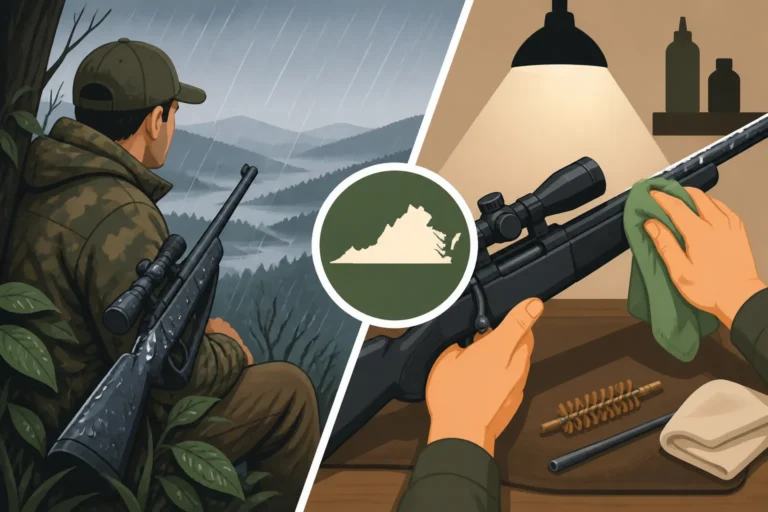
Your deer rifle isn't just a tool; it's an investment, and like any investment, it requires care to perform at its best and last for years to come. Virginia's hunting seasons can throw everything at you, from pouring rain and damp foggy mornings to freezing temperatures and dusty conditions. Neglecting your rifle can lead to rust, reduced accuracy, and even dangerous malfunctions. A well-maintained rifle is a reliable rifle, and reliability is key when you have that split-second opportunity at a Virginia whitetail.
Regular Cleaning and Inspection
Routine cleaning is the backbone of rifle maintenance. After every hunting trip, especially if the rifle has been exposed to moisture, dust, or mud, it needs a thorough cleaning. This involves cleaning the bore to remove copper and powder fouling, wiping down all metal surfaces, and ensuring the action is free of debris. Use appropriate cleaning solvents, brushes, and patches, following the manufacturer's instructions for your specific rifle. Pay particular attention to the crown of the barrel, as damage here can severely impact accuracy.
Beyond cleaning, a regular inspection is crucial. Check all screws for tightness, especially scope mounts and stock screws. Ensure there are no cracks in the stock or forend. Look for any signs of rust developing on metal surfaces, and address them immediately. Inspect your scope for any signs of impact damage, loose turrets, or fogging. Function-check the rifle – ensure the safety works, the bolt cycles smoothly, and the trigger functions properly (always with an empty chamber, of course!). These simple checks can prevent headaches and potential safety issues in the field.
Proper Storage for Longevity
How you store your rifle between hunts and seasons can significantly impact its lifespan and condition. The ideal storage environment is a cool, dry place with consistent humidity. A gun safe is excellent for security, but also helps regulate temperature and humidity, especially if equipped with a dehumidifier or desiccant. Avoid storing rifles in cases (soft or hard) for extended periods, especially if the case interior is foam. Foam can trap moisture and chemicals, leading to rust. If you must use a case for storage, ensure it's an airtight, watertight case with desiccant packs, and still open it periodically to check.
Before storing your rifle, apply a thin coat of rust preventative oil to all external metal surfaces. For the bore, a light coat of gun oil after cleaning helps protect against corrosion. Store ammunition separately from your firearms, also in a cool, dry place. Proper storage isn't just about keeping your rifle safe from theft; it's about protecting it from the elements and ensuring it's ready to perform flawlessly whenever you grab it for your next Virginia deer hunt. Cleaning a Rifle After a Wet Sit can offer more direct advice on post-hunt care.
Table: Popular Virginia Deer Calibers Comparison
Here's a quick look at some popular rifle calibers and their general suitability for different Virginia terrains, along with key characteristics. Remember, specific bullet choice and shot placement are always paramount.
| Caliber | Typical Velocity (fps) | Effective Range (yards) | Recoil Level | Common Bullet Weights (gr) | Best for Virginia Terrain | Notes |
|---|---|---|---|---|---|---|
| .30-06 Springfield | 2700-2900 | 300+ | Moderate | 150, 165, 180 | All (Mountains, Piedmont, Tidewater) | Classic, versatile, powerful for deer and bear. |
| .308 Winchester | 2600-2800 | 300+ | Moderate | 150, 165, 180 | All (Piedmont, Mountains) | Compact, accurate, slightly less recoil than .30-06. |
| 6.5 Creedmoor | 2600-2700 | 400+ | Low | 120, 129, 143 | Piedmont (open fields), Western (mountain overlooks) | Flat trajectory, excellent accuracy, light recoil. |
| .270 Winchester | 2900-3100 | 350+ | Moderate | 130, 140, 150 | Piedmont (open fields), Western (longer shots) | Flat shooting, traditional deer caliber, good for bear. |
| .243 Winchester | 2900-3000 | 250-300 | Low | 80, 95, 100 | Piedmont (open fields, younger hunters), mountains (careful shots) | Mild recoil, accurate, requires precise shot placement. |
| .350 Legend | 2200-2300 | 200 | Low | 150, 180 | Straight-Wall Zones (Piedmont, Tidewater) | Low recoil, good for AR platforms, effective within range. |
| .450 Bushmaster | 2100-2200 | 200 | Moderate-High | 250, 300 | Straight-Wall Zones (Piedmont, Tidewater) | Significant power at closer ranges, legal for straight-wall zones. |
Disclaimer
This article is for general informational purposes only and does not constitute professional advice. Laws, prices and regulations vary by location and change over time. Consult a qualified professional for guidance on your specific situation.