Optics for Blue Ridge and Piedmont Hunting
One of the biggest frustrations for hunters in Virginia is feeling like you're missing out on opportunities because you can't quite make out that buck in the thick timber or range that gobbler across the field. Different parts of our beautiful Commonwealth present unique challenges, and the optics you rely on need to be up to the task. This comprehensive guide will walk you through everything you need to know about selecting and using binoculars, rangefinders, and rifle scopes tailored for hunting the diverse terrain of Virginia's Blue Ridge Mountains and rolling Piedmont.
Understanding the Virginia Landscape and Its Optical Demands
Virginia is a state of stunning contrasts, and nowhere is this more apparent than in its hunting grounds. From the towering peaks and dense forests of the Blue Ridge to the sprawling fields and scattered woodlots of the Piedmont, each region demands a slightly different approach to your gear, especially when it comes to optics. What works perfectly for spotting deer far off a cut cornfield might leave you squinting in frustration in a mountain hollow.
The Blue Ridge Mountains: Steep, Dense, and Distant
Hunting in the Blue Ridge Mountains is an experience like no other, but it's not for the faint of heart. The terrain is rugged, with steep inclines and declines that will test your legs and your lungs. The timber is often thick, creating a shadowy, broken landscape where deer can vanish with a single step. You're dealing with vast expanses, deep hollows, and distant ridgelines where a buck might appear as a tiny speck against the skyline. Here, optics aren't just a luxury; they're a necessity for effectively Hunting West of the Blue Ridge. You need to be able to pick apart distant cover, confirm antlers in low light, and make precise shots that often involve significant elevation changes. The challenges are amplified by unpredictable wind currents and thermals that constantly shift, making spotting even more critical.
The limited visibility within the dense mountain cover means that while long-range glassing might be possible from high vantage points, much of your hunting will involve picking apart closer cover. However, the sheer scale of the landscape still necessitates powerful optics to scan across hollows and draw attention to movement far away. You might hike for miles to reach a specific ridge, and once there, your binoculars become your primary tool for understanding the landscape and locating game that could be hundreds of yards away, yet still within the same drainage. It's a game of patience and precision, where every detail matters.
The Piedmont: Rolling Hills, Fields, and Woodlots
The Piedmont region offers a different set of optical challenges and opportunities. Here, you'll find a patchwork of agricultural fields, mature hardwoods, pine plantations, and suburban fringes. While it lacks the dramatic elevation changes of the mountains, the rolling hills and creek bottoms still provide plenty of terrain features for deer to utilize. Hunters often find themselves overlooking large fields at dawn and dusk, or navigating smaller, fragmented woodlots during midday. The distances can vary wildly, from close-quarters encounters in thickets to long shots across open fields. Hunting East of the Blue Ridge often means adapting to these dynamic environments.
In the Piedmont, the ability to quickly scan expansive fields for movement is crucial, but equally important is the ability to scrutinize the edges of those fields, where deer often stage before entering. Optics with a wide field of view can be incredibly beneficial when watching a large swath of cropland. Unlike the mountains, where you might be looking for a distant outline, in the Piedmont, you're often looking for a specific deer emerging from cover or working its way along a fencerow. The transitions between open and thick cover are fast, requiring versatile optics that can handle both scenarios. It's not uncommon to spot a deer bedded down in a distant pasture, then have to relocate it as it moves into a brushy draw.
The Essential Optical Trio: Binoculars, Rangefinders, and Scopes
When you're out chasing game in Virginia, you're going to rely on a core set of optical tools. These three – binoculars, a rangefinder, and a rifle scope – each serve a distinct purpose, and together, they form an indispensable system for successful hunting. Thinking of them as separate, unrelated pieces of gear is a common mistake; instead, consider how they complement each other to give you the most complete picture of your hunting environment and your target.
Binoculars: Your Eyes in the Woods
Binoculars are, without a doubt, your most critical scouting and spotting tool. Far more versatile than a rifle scope for observation, they allow you to scan vast areas, pick apart cover, and identify game without having to constantly point your firearm. This is a fundamental safety practice and a highly effective hunting technique. Imagine spending hours on a stand in the George Washington National Forest, glassing distant clear-cuts or looking for movement along a timbered ridge. Your binoculars are what prevent unnecessary movement, help you remain undetected, and ultimately save your neck from a potential fall if you were trying to use your rifle scope for extended periods.
For Virginia hunters, especially those working thicker cover or expansive fields, a good pair of binoculars can dramatically increase your effective range of observation. You can discern details like antler points, identify subtle deer movements, or even confirm if a patch of brown is a stump or a bedded deer. They are your first line of defense against wasting precious time or blowing a stalk on a misidentified animal. When used correctly, they become an extension of your natural vision, allowing you to see things that would be impossible with the naked eye, particularly in the challenging light of dawn and dusk.
Rangefinders: Closing the Distance with Confidence
Once you've spotted an animal with your binoculars, the next critical step is to accurately determine its distance. This is where a dedicated rangefinder comes into play. Guessing distances, especially in varied terrain, is a recipe for a missed shot or, worse, a wounded animal. In the Blue Ridge, where shots might involve significant uphill or downhill angles, a rangefinder with angle compensation isn't just helpful; it's practically mandatory. A deer standing 300 yards away on a steep incline or decline will effectively shoot shorter than a flat 300-yard shot, and your rangefinder needs to account for that.
For archery hunters, the rangefinder is even more critical, as shot distances are generally shorter but the margin for error is much smaller. Whether you're bowhunting from a Treestand Setups in George Washington National Forest or Using a Ground Blind on Virginia Public Land, knowing the exact yardage to your lanes and potential shooting opportunities can be the difference between success and frustration. Even with a rifle, understanding the precise distance allows you to apply the correct holdover or turret adjustment, ensuring your bullet finds its mark. Modern rangefinders are fast, accurate, and relatively compact, making them an indispensable tool in your Virginia hunting kit.
Rifle Scopes: Precision for Every Shot
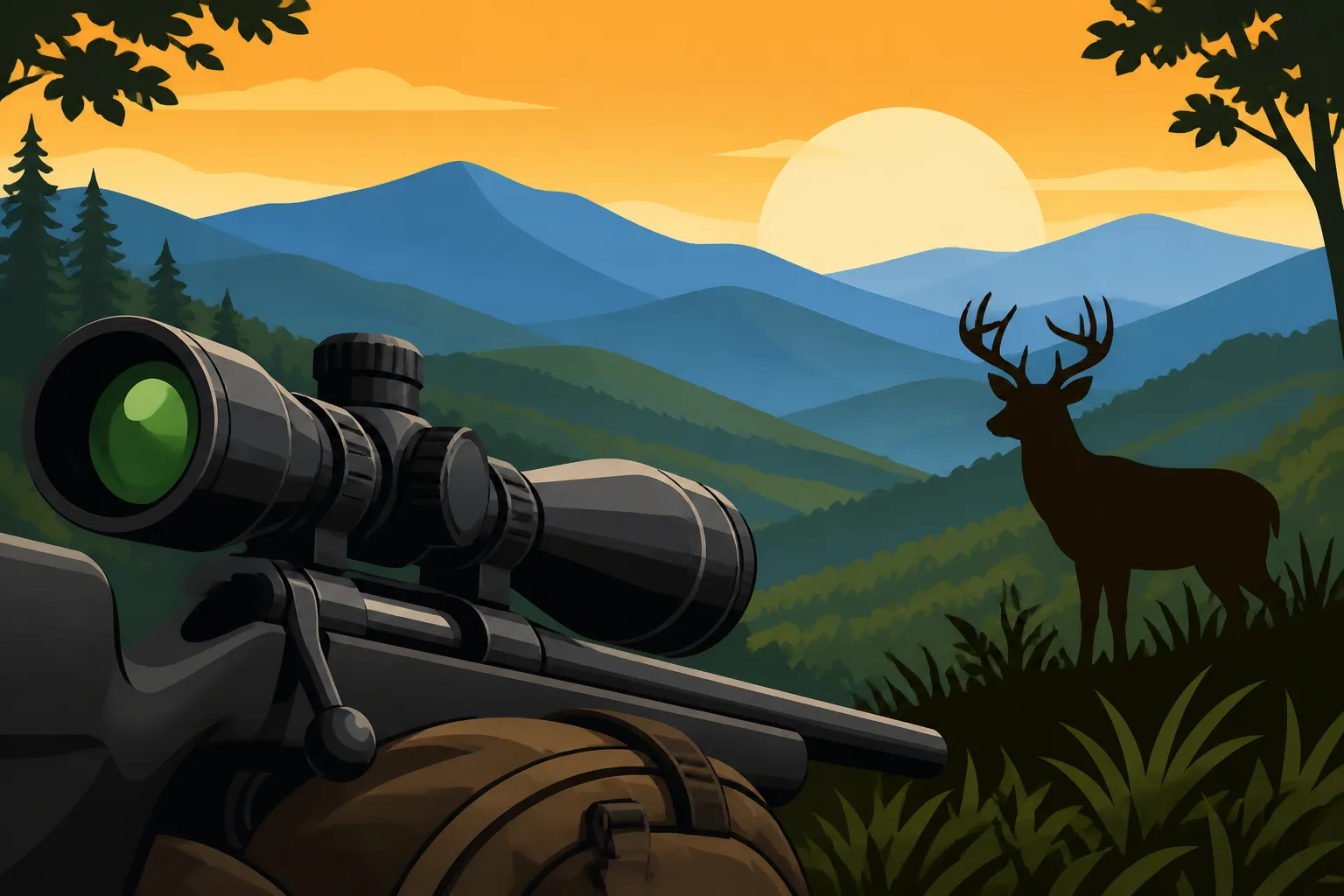
Finally, after all the spotting and ranging, comes the moment of truth: the shot. Your rifle scope is the tool that transforms distant targets into precise aiming points. It magnifies your view, gathers light, and provides a clear reticle for consistent bullet placement. In Virginia, where shot opportunities can range from 50-yard quick shots in thick woods to 200+ yard cross-field engagements, a versatile and reliable rifle scope is paramount. Rifle Setups for Virginia Deer Hunting demands a scope that can handle both ends of this spectrum without compromising on clarity or durability.
A good scope should offer clear, bright images even in challenging light conditions – think about those first and last minutes of legal shooting light, which are often the most productive. It needs to hold zero reliably, enduring the bumps and knocks of days spent hiking through brush or riding in a truck. The reticle should be intuitive and not overly cluttered, allowing for quick target acquisition. Investing in quality glass here pays dividends in confidence and ethical shot placement, regardless of whether you're chasing a buck through the thickets of the Jefferson National Forest or watching a doe step into a Piedmont soybean field.
Diving Deeper into Binocular Choices for Virginia
Choosing the right binoculars for Virginia hunting isn't about finding the most expensive pair; it's about finding the pair that best suits your hunting style and the specific terrain you'll be covering. There's a balance to strike between magnification, objective lens size, and overall comfort, all while considering how much light you'll realistically need to gather in various conditions. Don't fall into the trap of thinking "more power" always equals "better."
Magnification and Objective Lens Size
When you see binocular specifications like "8×42" or "10×50," the first number (8x or 10x) refers to the magnification, meaning the image appears 8 or 10 times closer than with the naked eye. The second number (42 or 50) refers to the diameter of the objective lens in millimeters, which dictates how much light the binoculars can gather. For most Virginia hunting, an 8x or 10x magnification is ideal. An 8x provides a wider field of view, is easier to hold steady, and is excellent for thick cover where you need to quickly locate animals. A 10x offers a bit more detail at longer ranges, which can be beneficial when glassing open fields or distant mountain slopes.
As for objective lens size, 42mm is generally considered the sweet spot for a balance of light gathering, weight, and portability. A 50mm objective will gather more light, offering a brighter image in very low light, but it comes with added bulk and weight that might become noticeable during long hikes. For most hunters, especially those who prioritize mobility in the Blue Ridge, a 42mm is often the better compromise. However, if you primarily hunt from a stationary position or prioritize every last minute of legal light, a 50mm might be worth the extra weight. It's truly a personal preference that hinges on your typical hunting scenarios. A quick search using a tool like GoHunt's gear reviews can give you insights into different brands and models that strike this balance well.
Field of View and Eye Relief Considerations
Beyond magnification and objective lens, two other crucial factors are field of view (FOV) and eye relief. FOV refers to how wide an area you can see through the binoculars at a given distance, typically measured in feet at 1,000 yards. A wider FOV is incredibly useful in dense Virginia cover, allowing you to scan broader areas more quickly and track moving game more easily. An 8x binocular will inherently have a wider FOV than a 10x binocular of the same optical design, which is another reason why 8x is often favored in tighter woods.
Eye relief is the distance from the eyepiece that your eye can be and still see the full, unvignetted image. This is particularly important for hunters who wear eyeglasses. If you wear glasses, look for binoculars with generous eye relief (15mm or more) and adjustable eyecups that allow you to customize the distance. Trying binoculars on with your glasses is essential to ensure you can comfortably see the entire field of view. There's nothing more frustrating than having to constantly adjust your glasses or pull them off to get a clear picture. For more on general binocular considerations, check out our guide on Binocular Choice for Virginia Whitetails.
Harnesses and Comfort for Long Days
Even the best binoculars are useless if they're not readily accessible or if they're a pain to carry. A comfortable binocular harness is an absolute game-changer, especially for hunters who spend full days afield, whether still-hunting ridges or sitting patiently in a blind. A good harness distributes the weight across your shoulders and back, rather than letting the binoculars bounce around your neck. This not only prevents neck strain but also keeps your binoculars secure against your chest, protecting them from impacts and making them quick to deploy.
Look for harnesses that are adjustable, made from durable, quiet materials, and offer some weather protection for your glass. Many modern harnesses feature a chest pouch that fully encloses the binoculars, shielding them from rain, dust, and scratches. When you're spending hours on foot, or waiting in a cold stand, the last thing you want is a bulky, uncomfortable strap digging into your neck or your binoculars swinging wildly. Investing in a quality harness is just as important as investing in the binoculars themselves, ensuring they're always ready when that critical moment arrives.
Rangefinder Nuances for Varied Virginia Terrain
A rangefinder isn't just a simple "point and shoot" device; its effectiveness hinges on understanding its features and how they apply to Virginia's diverse hunting landscapes. From steep mountain slopes to undulating Piedmont fields, knowing the true ballistic distance to your target is paramount for an ethical shot.
Angle Compensation: A Mountain Hunter's Best Friend
This feature is a non-negotiable for anyone hunting the Blue Ridge Mountains. When you shoot uphill or downhill, gravity's effect on the bullet is reduced compared to a flat shot of the same "line-of-sight" distance. Without angle compensation, your rangefinder will give you the straight-line distance, which will lead you to shoot high. A rangefinder with angle compensation will provide you with the "true ballistic range" or "horizontal equivalent distance" that you should use to calculate your holdover or dial your scope.
Imagine you're on a steep ridge overlooking a hollow in the Jefferson National Forest. You range a buck at 250 yards, but your rangefinder shows a compensated distance of 220 yards. If you were to shoot for 250 yards, your bullet would likely sail over the buck's back. This technology is incredibly important for maintaining accuracy and making ethical shots in mountainous terrain. Even in the rolling Piedmont, angle compensation can be beneficial when ranging across deep creek beds or from elevated stands. Always verify your rangefinder has this feature if you plan on hunting anything but perfectly flat ground.
Max Range and Target Acquisition Speed
While it's rare you'll be shooting a deer at extreme distances in Virginia, the "max range" specification on a rangefinder is still relevant. This number usually refers to the maximum distance the unit can range a highly reflective target, like a building. More important for hunting is the advertised range on deer or trees. Ensure your rangefinder can reliably range deer at your maximum comfortable shooting distance, plus a buffer. For most rifle hunters, this means a unit capable of ranging deer out to at least 400-500 yards, even if your personal shooting limit is closer to 200-300 yards. This extra capability ensures reliable performance under less-than-ideal conditions.
Equally important is target acquisition speed. When that buck steps out of the timber, you don't have all day to range him. You need a unit that can give you a quick, consistent reading. Some rangefinders are noticeably faster than others, snapping to a target almost instantly. Others might require a steadier hand or more time to lock on. When considering options, test them for speed and ease of use. A sluggish rangefinder can lead to missed opportunities, especially during fast-paced hunts or when game is moving. Our guide on Rangefinders in Thick Blue Ridge Cover elaborates further on these features.
Battery Life and Durability
There's nothing worse than heading into the field only to have your rangefinder die on you halfway through the morning. Pay attention to battery life and consider carrying a spare, especially for multi-day trips. Many modern rangefinders use common CR2 batteries, which are usually easy to find. However, some newer models might use rechargeable options or less common sizes, so be mindful of that. Checking the battery status before each hunt should become a routine.
Durability is another key factor. Your rangefinder is going to be exposed to the elements – rain, snow, dust, and the occasional bump or drop. Look for units that are waterproof or at least water-resistant and have a robust housing. Rubber armor can help absorb impacts and provide a better grip in wet conditions. While no piece of gear is indestructible, choosing a well-built rangefinder will ensure it stands up to the rigors of Virginia's unpredictable weather and varied terrain. Brands like GoHunt often highlight the ruggedness of different optics, which can be a valuable resource for research.
Selecting the Right Rifle Scope for Virginia's Deer Season
Your rifle scope is the direct link between your eye and the target. In Virginia, where a shot could be through a narrow window in the timber or across a sprawling Piedmont field, choosing a scope that offers both versatility and exceptional clarity is crucial. It’s not just about hitting the target; it’s about making a clean, ethical shot every single time.
Variable Magnification: Versatility is Key
For the diverse hunting conditions found across Virginia, a variable power scope is almost universally recommended. This means a scope that allows you to adjust the magnification from a low power (e.g., 3x or 4x) to a higher power (e.g., 9x or 12x). A common and highly effective range for Virginia is a 3-9×40 or 3.5-10×44. The lower magnification settings are perfect for quick, close-range shots in thick woods, offering a wide field of view and quick target acquisition. You can easily find that deer that just materialized 75 yards away in a pine thicket.
The higher magnification settings become invaluable when that deer steps out at 200 yards across a field or when you need to carefully place a shot through a small opening in the Blue Ridge timber. This versatility ensures you're prepared for whatever opportunity presents itself, without having to switch rifles or compromise your sight picture. It's about having the right tool for the job, no matter the distance or cover. Our guide on Rifle Scope Magnification for Virginia Deer dives deeper into balancing these needs.
Reticle Types and Their Advantages
The reticle (or crosshairs) is what you use to aim. While the classic duplex reticle is still very popular and effective, many modern scopes offer more advanced options that can be incredibly useful for Virginia hunters. BDC (Bullet Drop Compensating) reticles, for example, have multiple aiming points below the main crosshair, calibrated for specific distances. These can be very handy for quick adjustments on shots out to 300-400 yards without having to dial your turrets, which is often preferred in hunting situations where speed is critical.
Other options include illuminated reticles, which can be a godsend in very low light conditions, such as deep timber at dawn or dusk. A faintly glowing reticle can make all the difference when trying to acquire a target against a dark background. Fine reticles are great for precision at long range, but a slightly bolder reticle can be quicker to pick up in dense cover or against a busy background. Consider your typical hunting scenarios and choose a reticle that complements them. Some hunters even prefer a simple heavy duplex for those moments where you just need to put the crosshairs on quickly and fire.
Low-Light Performance and Objective Lens Diameter
Perhaps no factor is more critical for a Virginia deer hunter than a scope's low-light performance. Deer are most active during the first and last hours of daylight, periods when light is scarce. A quality scope will gather and transmit light efficiently, providing a bright, clear image even when your naked eye struggles. This is where the objective lens diameter plays a role; a larger objective lens (e.g., 44mm or 50mm) can gather more light than a 40mm, potentially extending your effective shooting light. However, larger objective lenses also mean a heavier, bulkier scope that sits higher off the rifle.
Beyond objective lens size, the quality of the glass and the lens coatings are paramount. Higher-quality glass with advanced multi-coatings will transmit more light and reduce glare, resulting in a clearer, brighter image. Don't cheap out on your scope if you want to maximize your prime hunting time. A clear, bright image in low light can help you identify your target more precisely, verify it's an ethical shot, and ensure you're not passing on legal game simply because you can't see well enough. For more focused advice, read our article on Rifle Scopes for Low-Light Mountain Hollows.
Specialized Optics and Accessories for Virginia Hunters
While the binocular, rangefinder, and rifle scope form the core of your optical setup, there are other specialized tools and accessories that can enhance your hunting experience in Virginia. These might not be for everyone, but for certain situations or hunting styles, they can make a significant difference.
Spotting Scopes for Long-Range Scouting
For the hunter who enjoys extensive pre-season scouting or observes game from very long distances, a spotting scope can be a powerful addition. While not typically carried during an active hunt due to their bulk, they are invaluable for picking apart distant ridgelines, food plots, or clear-cuts during observation sessions. If you're looking for Reading a Ridge for Blue Ridge Deer from miles away, or trying to judge the rack on a buck across a massive agricultural field in the Piedmont, a spotting scope will offer far greater magnification and detail than even your best binoculars.
Spotting scopes typically range from 15-45x magnification up to 20-60x, allowing you to count antler points, assess body size, and study animal behavior without disturbing the game. They usually require a tripod for stability, which adds to the setup time and weight, but the clarity and detail they provide at extreme ranges are unmatched. For trophy hunters or those who meticulously scout private land before the season opens, a spotting scope can be a valuable investment, helping you make informed decisions about where and when to hunt.
Thermal and Night Vision Considerations
The use of thermal and night vision optics is a rapidly evolving area in hunting, and it's essential to understand Virginia's specific regulations regarding their use. Generally, these technologies are not legal for hunting deer or most other big game during regular hunting seasons. However, they can be perfectly legal and extremely useful for other activities, such as scouting at night or for hunting certain nuisance species like feral hogs on private land with specific permits. Night Hunting Hogs With Lights on Private Land often involves these tools.
Thermal optics detect heat signatures, allowing you to "see" animals in complete darkness, heavy fog, or thick brush where traditional optics would be useless. Night vision, on the other hand, amplifies ambient light. Both have their niches. Always, always check the current Virginia Department of Wildlife Resources (DWR) regulations before using any thermal or night vision device for hunting. Misusing these technologies can lead to serious legal consequences. However, for identifying game trails, observing nocturnal animal movements, or confirming the presence of feral hogs, they can be incredibly effective tools outside of regulated big game seasons.
Tripods, Adapters, and Lens Care
No matter how good your binoculars or spotting scope, a stable image makes all the difference. For extended glassing sessions, especially with higher magnification binoculars or any spotting scope, a lightweight tripod and a binocular adapter are highly recommended. A tripod eliminates hand shake, allowing you to detect subtle movements and observe details you'd otherwise miss. This is especially true when trying to glass the Blue Ridge's intricate terrain, where a steady view can reveal a hidden deer.
Proper lens care is also paramount to maintaining the performance and longevity of your optics. Always carry a lens cloth and a lens cleaning solution or pen. Dust, dirt, fingerprints, and water spots can degrade image quality significantly. Never wipe your lenses with your shirt or a rough cloth, as this can scratch the delicate coatings. Treat your optics like the precision instruments they are; a little care goes a long way in ensuring they perform optimally year after year. Think about the investment you've made, and protect that crisp, clear view.
Making Your Optics Work for You in the Field
Having top-tier optics is only half the battle. To truly leverage their potential in Virginia's challenging hunting environments, you need to understand how to use them effectively, practice regularly, and maintain them meticulously. Your optics are an extension of your senses; treat them as such.
Practice and Familiarization
Just like you wouldn't head into the woods with a brand-new rifle you've never shot, you shouldn't rely on optics you're not intimately familiar with. Spend time practicing with your binoculars, rangefinder, and scope well before opening day. Get to know their quirks, how they adjust, and how they perform in different lighting conditions. Take your binoculars out hiking or scouting, and practice picking apart distant features, identifying animals, and ranging objects at various distances and angles.
For your rifle scope, zero it correctly and then practice shooting at different distances with different magnifications. If your scope has a BDC reticle, know your holdovers. If it has dialing turrets, practice dialing for various ranges. The more comfortable and intuitive your optics feel, the less you'll have to think about them in the heat of the moment, allowing you to focus on the shot. A tool like GoHunt can help you find local ranges or public lands where you can practice your long-range glassing and shooting skills. This familiarity builds confidence, which is invaluable when that dream buck finally steps out.
Care and Maintenance in Harsh Conditions
Virginia's weather can be notoriously unpredictable. One day it's sunny and mild, the next it's a cold, driving rain or even snow. Your optics need to be able to withstand these conditions, and you need to know how to care for them. Always protect your lenses with caps when not in use. If your optics get wet, wipe them down with a soft, clean cloth as soon as possible, and allow them to air dry thoroughly before storing them. Never store wet optics in a sealed case, as this can lead to fogging or mold.
Regularly check all moving parts for smooth operation and ensure all screws are snug. If you've been in dusty conditions, use a lens brush or canned air to remove grit before wiping the lenses. Proper care extends the life of your expensive equipment and ensures it's always ready to perform. Neglecting your optics can lead to scratches, internal fogging, or mechanical failures that could cost you a shot of a lifetime. Think of them as precision tools, not just rugged outdoor gear.
The Importance of Scouting with Optics
Optics aren't just for hunt day; they're indispensable scouting tools. Before the season even begins, use your binoculars and spotting scope to survey potential hunting areas. Look for natural funnels, bedding areas, food sources, and travel corridors. Identify key landmarks and pre-range distances to them. Scouting Virginia Public Land Before Season with quality optics will give you a significant advantage. You can study deer behavior from a distance without alerting them, figuring out their patterns and preferred routes.
Even during the hunt, constantly use your binoculars to scan and re-scan the landscape. Don't just look for an entire deer; look for parts of a deer – an ear, a leg, a horizontal line in a vertical world. Small movements or glints of light can reveal an otherwise hidden animal. By actively using your optics, you're not just waiting for a deer to appear; you're actively searching for it, increasing your chances of success. A keen eye behind good glass is often the most potent weapon in a Virginia hunter's arsenal.
Disclaimer
This article is for general informational purposes only and does not constitute professional advice. Laws, prices and regulations vary by location and change over time. Consult a qualified professional for guidance on your specific situation.