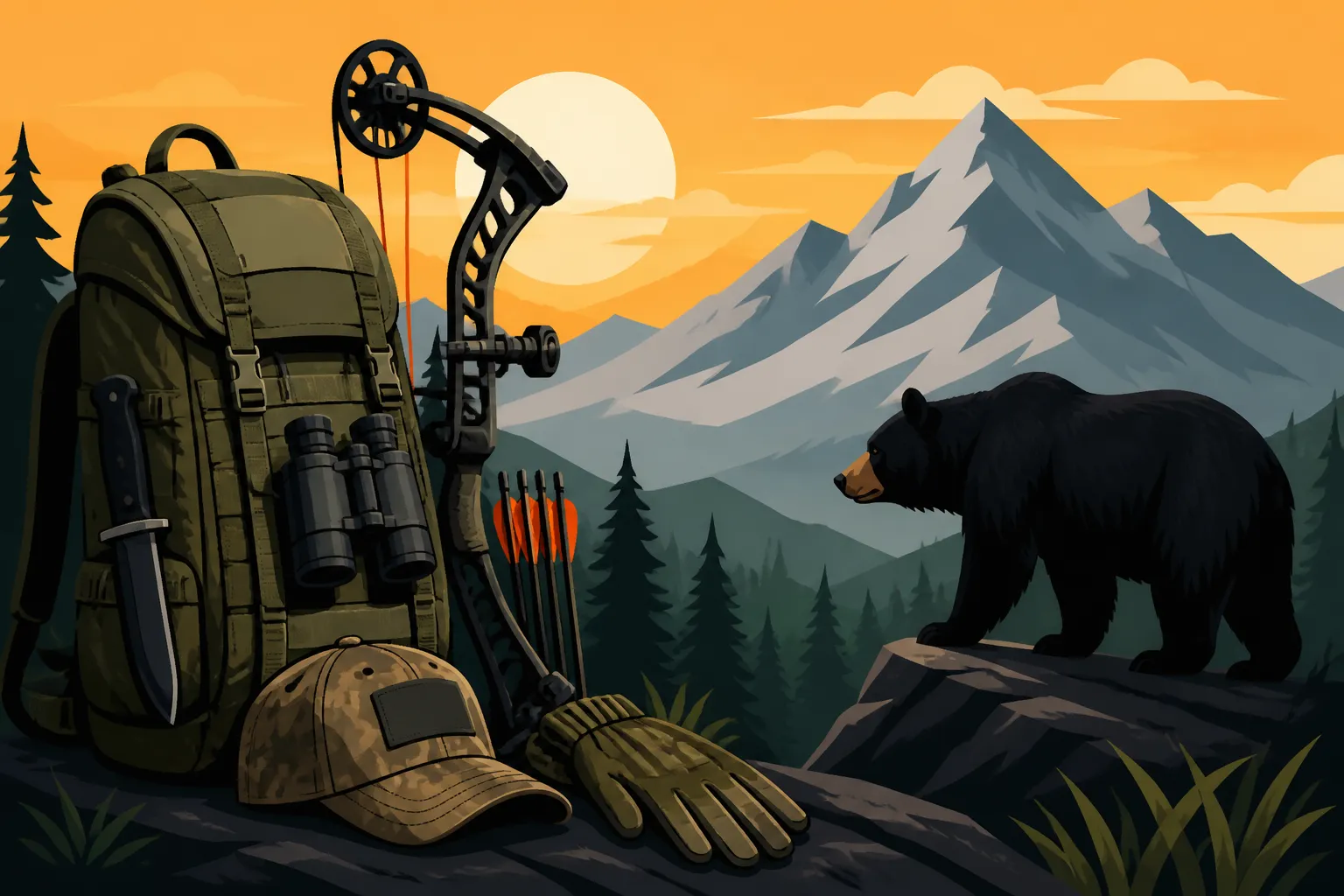
Bear Hunting Gear in the Mountains
Heading into the rugged mountains of Virginia for bear season is an experience unlike any other, but it comes with its own unique set of challenges. You're not just dealing with the raw power of a black bear; you're also contending with steep climbs, unpredictable weather, and dense cover that can make even finding your quarry a monumental task. This comprehensive guide is designed to equip you with the knowledge and confidence to select the right gear, ensuring you're prepared for the physical and tactical demands of mountain bear hunting.
The Unique Demands of Mountain Bear Hunting
Hunting black bears in the mountains of Virginia isn't like sitting in a ground blind over a corn pile in flatter country. The terrain itself becomes a significant factor, testing not only your physical endurance but also the durability and effectiveness of your gear. From the soaring peaks of the Blue Ridge to the dense, sprawling wilderness of the Jefferson National Forest, every aspect of your hunt is shaped by elevation, cover, and the sheer remoteness of these wild places. It's a true test of preparation, patience, and the ability to adapt.
Rugged Terrain and Remote Access
When you're chasing bears in the Virginia mountains, you're often miles from the nearest road, traversing steep slopes, rocky outcroppings, and thick rhododendron thickets. This isn't flat, easy walking, and your gear needs to be up to the task. Imagine hiking for hours through uneven terrain, climbing over downed timber, and pushing through brush so thick you can barely see your feet. Every piece of equipment, from your boots to your rifle, is subjected to relentless abuse.
The remoteness also means self-sufficiency is paramount. A broken boot lace or a dead headlamp battery isn't just an inconvenience; it can become a serious problem when you're deep in the backcountry, especially as daylight fades or unexpected weather rolls in. You're far from immediate help, and that means carrying reliable gear that can withstand the rigors of the mountain and perform flawlessly when you need it most. Thinking about how you'll drag a heavy bear out of a deep hollow before you even get a shot is a critical part of the planning process.
Variable Weather Conditions
One of the most frustrating aspects of mountain hunting in Virginia is the sheer unpredictability of the weather. You might start your day with a crisp, clear morning, perfect for a long hike. But by midday, a dense fog can roll in, dropping visibility to mere yards, or a sudden downpour can turn a well-worn trail into a slick, muddy mess. Temperatures can fluctuate wildly, too, with frosty mornings giving way to surprisingly warm afternoons, only to plummet again as the sun dips below the ridgeline.
This constant fluctuation means your clothing system, in particular, needs to be incredibly versatile. Getting caught unprepared in a freezing rain or a sudden snow squall can quickly turn a challenging hunt into a dangerous ordeal. Keeping dry and maintaining core body temperature are critical for both comfort and survival. You can't just throw on a heavy coat and call it a day; you need a dynamic layering system that allows you to adjust to whatever the mountain throws at you.
Shot Opportunities and Tracking
Bear hunting often involves tough shot opportunities, especially in the thick mountain cover where clear lines of sight are rare. You might catch a glimpse of a bear moving through a laurel slick, or it could step out briefly onto an old logging road. These shots are rarely easy, requiring a steady hand, a calm demeanor, and a rifle setup that allows for quick target acquisition. Unlike deer, bears are incredibly tenacious animals, and a well-placed shot is absolutely crucial for a quick, ethical harvest.
Furthermore, once a bear is hit, tracking it in the mountains can be a formidable task. The dense undergrowth, steep inclines, and rocky ground make blood trailing exceptionally difficult. Bears can travel surprisingly far, even with a mortal wound, and they often seek the thickest cover available. This means you need gear that aids in tracking, from powerful headlamps for after-dark retrieval to reliable GPS devices that help you pinpoint your last known blood trail and navigate the challenging terrain. Patience and thoroughness are your allies in the recovery process.
Essential Firearms and Ammunition
When it comes to bear hunting in the mountains, your choice of firearm and ammunition is paramount. You need something that delivers a decisive punch, can withstand the elements, and performs reliably under pressure. The dense cover and the size of a black bear mean you're generally looking for power and penetration over extreme long-range precision, though accuracy is always key.
Rifles for Mountain Bear
For Virginia's black bears, a rifle that delivers significant kinetic energy and has a good track record for terminal performance is essential. Many hunters opt for cartridges like the .30-06 Springfield, .308 Winchester, or even larger calibers such as the .300 Winchester Magnum or .338 Winchester Magnum. These calibers offer a great balance of power, range, and common availability. The .45-70 Government, especially in a lever-action platform, is another popular choice, providing excellent stopping power at closer ranges often encountered in thick timber. Rifle Calibers for Virginia Bear is a topic many hunters pore over.
The rifle itself should be robust and capable of handling rough treatment. Stainless steel or synthetic stocks are often preferred over blued steel and wood, as they are more resistant to moisture and impacts. While a heavy, long-barreled rifle might offer superior accuracy at the bench, a more compact and lighter rifle might be a better choice for mountain hunting, where every ounce and every inch of maneuverability counts as you navigate steep climbs and dense brush. Reliability in all weather conditions is non-negotiable.
Shot Placement and Bullet Construction
Ethical shot placement is always critical, but even more so with an animal as tough as a black bear. The ideal shot is typically through the shoulder into the vitals (heart/lungs), aiming to incapacitate the animal quickly. This means understanding bear anatomy well before you ever step into the woods. A poorly placed shot can lead to a long, arduous, and potentially unsuccessful tracking job, which is something every hunter wants to avoid.
Bullet construction is just as important as caliber. You need a bullet designed for deep penetration and controlled expansion, capable of breaking heavy bone and reaching vital organs. Cheap, thin-jacketed bullets designed for varmints won't cut it. Look for bonded core bullets (like Federal Fusion, Hornady InterBond, or Nosler AccuBond), monolithic bullets (Barnes TSX/TTSX), or partition-style bullets (Nosler Partition). These designs retain more weight and hold together better upon impact, maximizing energy transfer and creating a sufficient wound channel to ensure a quick, clean harvest.
Handgun and Muzzleloader Considerations
While rifles are the primary tool for most mountain bear hunters, handguns and muzzleloaders do have their place. Handgun hunting for bear is legal in Virginia, but it's a specialized pursuit requiring a powerful magnum caliber (e.g., .44 Magnum, .454 Casull) and exceptional shooting proficiency. The effective range is significantly shorter, making it more challenging in open mountain terrain but potentially viable in extremely dense cover if you're comfortable with the limitations. It often demands a closer encounter.
Muzzleloaders, particularly during the Muzzleloader Deer Hunting in Virginia season, can also be effective for bear if you're running heavy-for-caliber projectiles like saboted bullets or large conical projectiles. Modern inline muzzleloaders can be surprisingly accurate and powerful, but they require meticulous care to keep powder dry in the often damp mountain environment. The single-shot nature of a muzzleloader means your first shot must be perfect, and follow-up shots are slow, adding another layer of challenge. Both handguns and muzzleloaders demand a higher level of hunting skill and discipline, making them less common but still viable options for the dedicated hunter.
| Caliber | Typical Range in Mountains | Bear Stopping Power | Recoil (Relative) | Notes |
|---|---|---|---|---|
| .308 Winchester | 100-250 yards | Good | Moderate | Excellent accuracy, commonly available, effective with good bullets. Popular for versatility. |
| .30-06 Springfield | 150-300 yards | Very Good | Moderate-Heavy | Classic bear cartridge, more power than .308, wide bullet selection. |
| .300 Winchester Magnum | 200-400+ yards | Excellent | Heavy | Powerful, good for longer shots across clearings, but recoil can be a factor. |
| .45-70 Government | 50-150 yards | Outstanding | Moderate-Heavy | Old-school thumper, superb at close range in thick cover. Often in lever-action rifles. |
| .338 Winchester Magnum | 250-500+ yards | Exceptional | Heavy | Significant power, primarily for dedicated bear hunters or those expecting very large bears. |
| .44 Magnum (Handgun) | 25-75 yards | Fair-Good | Heavy | Requires excellent proficiency, limited range. Best for close-quarters self-defense or dedicated handgun hunters. |
Optics for Spotting and Tracking Bears
In the vast, broken landscape of the Virginia mountains, your eyes are your most critical tool. High-quality optics aren't a luxury; they're a necessity. They help you pick apart distant hillsides, identify subtle movements in thick cover, and, crucially, assist in tracking a downed bear through challenging terrain. Investing in good glass can literally be the difference between success and a missed opportunity.
Binoculars
A reliable pair of binoculars is the backbone of any mountain hunter's optic setup. For bear hunting, a magnification of 8x or 10x is generally ideal. An 8x magnification offers a wider field of view and is easier to hold steady, which is a real advantage when you're breathing hard after a climb or trying to quickly scan a large area. A 10x magnification provides a bit more detail for scrutinizing distant cover, but requires a steadier hand or a tripod mount for extended viewing.
Beyond magnification, prioritize low-light performance. Bears are often most active during dawn and dusk, when light is at a premium. Look for binoculars with large objective lenses (e.g., 42mm or 50mm) that gather more light, and high-quality coatings that maximize light transmission and provide a clear, bright image even in challenging conditions. Durability and waterproofing are also non-negotiable; your binoculars will be exposed to rain, fog, and bumps as you navigate the rugged mountain environment. A comfortable harness is also key to keeping them accessible and protected while you hike.
Rangefinders
Mountain terrain is notoriously deceptive when it comes to judging distance. What looks like 100 yards could easily be 150 or more, especially when shooting across hollows or up steep inclines. This is where a good rangefinder becomes indispensable. For bear hunting, you need a rangefinder that can accurately measure distances out to at least 400-500 yards, and ideally, one that offers incline/decline compensation. This feature adjusts the horizontal distance for angled shots, providing a more accurate "shoot-to" range that prevents over or under-shooting on steep ground.
Ensure your rangefinder is rugged, waterproof, and has a clear display that's easy to read in varying light conditions. Some rangefinders now integrate with mapping apps or ballistic solvers, offering even more precision. Practice using your rangefinder frequently before season to develop muscle memory and ensure you can get a quick, accurate reading when a bear presents itself, as these moments are often fleeting in the mountains.
Spotting Scopes (Optional but Helpful)
While not as universally critical as binoculars or a rangefinder, a spotting scope can be a valuable tool for dedicated bear hunters, especially if you spend a lot of time glassing large, open areas or distant clear-cuts. A high-quality spotting scope allows you to scrutinize details from extreme distances that binoculars simply can't resolve. This can be crucial for identifying a bear from a rock or stump, or for confirming sex and size before making a long trek.
However, a spotting scope adds significant weight and bulk to your pack, which is a major consideration when every ounce matters on a mountain hunt. If you decide to carry one, make sure it's paired with a lightweight, compact tripod. Choose a scope with variable magnification (e.g., 15-45x or 20-60x) and a large objective lens for superior low-light performance. For most mobile mountain hunters, the trade-off in weight might not be worth it, but for those who hunt from fixed positions overlooking vast tracts of land, it can be a game-changer.
Clothing and Layering for Comfort and Safety
The dynamic weather of the Virginia mountains demands a versatile clothing system that can adapt to rapid changes in temperature, precipitation, and exertion levels. Staying dry, warm, and comfortable is paramount, not just for enjoyment, but for safety and endurance. You're going to sweat climbing those hills, and then you're going to get cold sitting still once you reach your spot.
Base, Mid, and Outer Layers
A successful mountain hunting clothing strategy relies on the layering principle. Start with a moisture-wicking base layer next to your skin. Materials like merino wool or synthetic fabrics are excellent choices because they move sweat away from your body, keeping you dry even during strenuous climbs. Avoid cotton at all costs; once wet, it loses its insulating properties and stays wet, leading to rapid heat loss.
Your mid-layers provide insulation. Fleece, down, or synthetic puff jackets work well here. The key is to have options you can easily add or shed as your activity level and the temperature change. For example, you might wear a lightweight fleece during the hike in, then add a heavier insulated jacket once you've settled into your spot. Finally, a durable, waterproof and windproof outer shell is essential. It protects you from rain, snow, and biting winds, which are all common in the mountains. Look for breathable membranes (like Gore-Tex or similar technologies) that prevent moisture from building up inside your shell while keeping the elements out.
Footwear and Headwear
Your feet are your foundation in the mountains, so don't skimp on footwear. You need sturdy, waterproof hunting boots with excellent ankle support and aggressive traction. Look for boots designed for rugged, uneven terrain, with stiff midsoles that provide stability and protect your feet from sharp rocks and roots. Leather, synthetic, or a combination of both are good options, but always ensure they are fully waterproof. Break them in thoroughly before the season to avoid blisters, which can quickly derail a hunt.
Pair your boots with high-quality wool or synthetic socks. Just like base layers, these materials wick moisture and provide cushioning, preventing hot spots and blisters. Carry at least one extra pair of socks in your pack; there's nothing worse than cold, wet feet. Headwear is also critical for temperature regulation. A warm beanie or stocking cap is essential for cold mornings, as a significant amount of body heat is lost through the head. On warmer days, a breathable cap with a brim can offer sun protection and help manage sweat.
Blaze Orange Requirements and Visibility
Safety should always be your top priority, especially when hunting in areas where other hunters might be present. Virginia has specific regulations regarding blaze orange (or blaze pink) visibility during certain hunting seasons, particularly during firearms seasons. Even during archery or muzzleloader seasons where it might not be mandatory, wearing some blaze orange when traveling to and from your stand, or while tracking, is a very smart move. Virginia Blaze Orange Requirements are something every hunter should know by heart.
The intent of blaze orange is to make you highly visible to other hunters, reducing the risk of accidental shootings. A good blaze orange vest or hat, easily donned or doffed, is an indispensable part of your gear. In the dense mountain woods, where visibility can be limited by topography and thick cover, standing out visually is crucial. It’s a simple piece of gear that offers immense peace of mind and significantly enhances safety for everyone in the woods.
Navigation and Communication in the Backcountry
Getting lost in the vastness of the Virginia mountains is a serious concern, and cellular service is often non-existent. Reliable navigation and communication tools aren't just for convenience; they are vital for your safety and for efficient hunting. Knowing exactly where you are and how to get out, or how to call for help, is fundamental to responsible backcountry hunting.
GPS Devices and Mapping Apps
A dedicated handheld GPS unit or a robust smartphone mapping app loaded with offline maps is an absolute must. Before your hunt, spend time downloading detailed topographical maps of your hunting area onto your device. Mark important waypoints: your vehicle, trailheads, potential bear sign, water sources, and any natural landmarks. A quality device or app will help you navigate dense timber, traverse ridgelines, and avoid getting disoriented in unfamiliar territory.
Many hunters use platforms like GoHunt for detailed mapping and satellite imagery, which can reveal subtle terrain features that might indicate bear travel routes or bedding areas. Its ability to work offline is critical when you're deep in a hollow with no cell signal. Using GoHunt to plan your routes, mark observed Bear Denning Behavior, or even log potential Bear Encounters Around Mountain Cabins can build a valuable database of information for future hunts. Learning to read a physical compass and map is also a crucial backup skill, as electronics can fail.
Communication Devices
Given the spotty nature of cell service in the mountains, relying solely on your smartphone for communication is a gamble. Consider carrying a satellite communication device, such as a satellite messenger or a satellite phone. These devices allow you to send and receive text messages or even make calls from virtually anywhere, even without cell service. They often have an SOS button that can alert emergency services to your exact location in a critical situation.
For communication within your hunting party, two-way radios can be incredibly useful, especially if you're hunting with a partner or running a small deer drive (though bear drives are less common). Ensure they have sufficient range for the mountain terrain and spare batteries. Being able to communicate with your buddies about a bear sighting, a downed animal, or simply checking in on their location can make a huge difference in both safety and success.
Essential Safety Gear
Beyond navigation and communication, a few other safety items are non-negotiable for mountain bear hunting. A well-stocked first-aid kit, tailored for wilderness use, should always be in your pack. It should include supplies for cuts, blisters, sprains, and any personal medications. A headlamp (with spare batteries) is critical for early morning hikes or unexpected late retrievals; never assume you'll be back before dark.
Fire-starting materials (waterproof matches, lighter, fire starter) are essential for emergency warmth or signaling. A multi-tool or a sturdy knife is invaluable for various tasks. Finally, consider carrying a small emergency shelter, like a lightweight tarp or space blanket, in case you get stranded or need to spend an unexpected night in the woods. These items are small investments that can literally save your life when things go wrong in remote terrain.
Field Care and Recovery Gear
Successfully harvesting a bear in the mountains is only half the battle. Retrieving and field dressing such a large, heavy animal in challenging terrain presents its own set of logistical hurdles. Having the right tools for field care and transport will make the process more efficient, ethical, and manageable. This is where the real work begins after the shot.
Knives and Processing Tools
You'll need a very sturdy, sharp knife for field dressing a bear. A fixed-blade knife with a blade length of 4-6 inches is ideal. Bears have thick hide and a lot of fat, which can dull a knife quickly, so carrying a knife sharpener or multiple sharp blades (like those in a replaceable-blade utility knife) is a smart move. Some hunters prefer a gut hook for opening the abdominal cavity safely and efficiently.
Additionally, a small bone saw can be incredibly helpful for quartering a bear, especially if you plan to pack it out in pieces. This is often the most practical approach for larger bears in remote, rugged country where dragging a whole animal isn't feasible. Gloves (latex or nitrile) are also essential for hygiene and to keep your hands clean during the process. Having these tools readily available will allow you to quickly and cleanly process your bear, preserving the meat and hide.
Hauling and Transport
Once the bear is down and field dressed, the challenge of getting it out of the woods begins. Black bears are heavy, with mature males often weighing over 300 pounds. In the mountains, you're rarely dealing with flat ground or easy access. A deer cart, while useful for relatively flat forest roads, might be impractical on steep, rocky trails. For deep backcountry kills, quartering the bear and using a sturdy frame pack is often the most realistic option.
Specialized game bags designed for larger game are excellent for keeping the meat clean and allowing it to cool. Some hunters utilize game sleds, which can work well on snow or relatively smooth ground, but can be cumbersome in thick brush or over rocks. If you're hunting with a partner or a group, distributing the load amongst several hunters can make the arduous task of hauling a bear out of a deep hollow or off a ridgeline much more manageable. Thinking through your recovery plan before you pull the trigger is crucial. Dragging a Deer Out of a Mountain Hollow shares many similarities with bear recovery.
Bear Spray and Self-Defense
While rarely necessary, carrying bear spray is a prudent safety measure, especially when dealing with a downed or injured bear. An injured bear, or a sow with cubs, can be unpredictable and dangerous. Bear spray is a non-lethal deterrent designed to create a cloud of capsaicin that temporarily incapacitates a bear, giving you time to retreat. Ensure you know how to access it quickly and deploy it effectively.
It's important to remember that bear spray is not a substitute for a firearm, but rather a complementary safety tool. While a handgun might be carried for close-range defense, the primary goal should always be to avoid confrontation. Awareness of your surroundings, making noise while hiking, and understanding Bear Encounters Around Mountain Cabins can help prevent dangerous situations. However, in the event of an unavoidable close encounter, especially during a retrieval, bear spray offers an additional layer of protection.
Scouting and Trail Camera Essentials
Successful bear hunting in the mountains begins long before opening day. Effective scouting is the foundation of locating bears and understanding their movements. Trail cameras, when used strategically, can be invaluable allies in this process, helping you monitor activity and confirm the presence of bears in specific areas.
Trail Cameras for Bear Sign
Trail cameras are powerful scouting tools, particularly in areas where you can't be present constantly. For mountain bear hunting, look for cameras that are durable, weatherproof, and have long battery life. Bears are curious and can be rough on equipment, so robust construction is important. Place cameras along suspected travel corridors, near food sources (like oak flats for acorns or berry patches), or at natural funnels in the terrain. Finding Sign in Big Jefferson Forest Timber often involves a lot of trail camera deployment.
Look for cameras with good night vision capabilities, as bears are often most active during low light or after dark. Some cameras offer cellular connectivity, allowing you to receive photos remotely, which can save you countless trips into the backcountry. Just be mindful of local regulations regarding trail camera use on public lands. Monitoring your cameras can help you identify specific bears, understand their routines, and pinpoint high-activity areas, guiding your hunting efforts.
Bear Baiting Gear (Where Legal)
While legal in some areas outside Virginia, bear baiting is not permitted in the Commonwealth. Virginia's hunting regulations prohibit the use of bait to attract bears for hunting purposes. Therefore, bear baiting gear is not relevant for hunting in Virginia. However, focusing on natural food sources like hard mast (acorns, hickory nuts) and soft mast (berries, grapes) is crucial. Knowing which oak trees are dropping or where a good berry patch is located can be as effective as any bait station.
Instead of bait, successful Virginia bear hunters focus on extensive scouting to find natural food sources and travel patterns. This involves identifying areas with consistent mast crops, looking for tracks and scat, and observing natural funnels. Utilizing advanced mapping platforms like GoHunt can help you overlay historical mast crop data (if available) or identify potential feeding areas based on vegetation types and terrain features. The game here is all about finding where the bears want to be, naturally. Hunting Bears Over Natural Mast in the Mountains is a primary strategy.
Scent Control for Close Encounters
While bears have an incredible sense of smell, arguably one of the best in the animal kingdom, scent control for hunters remains a good practice, especially in still-hunting or stalking situations. Reducing your human odor can help minimize the chances of a bear detecting your presence prematurely, potentially allowing for closer encounters or preventing them from altering their natural movement patterns.
This can involve showering with scent-eliminating soaps, washing hunting clothes in scent-free detergents, and storing them in airtight containers. Wearing scent-adsorbing clothing layers can also help. While you'll never completely eliminate your scent, any reduction can be an advantage. The wind, of course, is the ultimate scent control tool, and paying meticulous attention to wind direction is always paramount, regardless of how much scent control you practice. In mountain hunting, thermals also play a significant role, with air typically rising during the day and falling at night, carrying scent up or down a hillside.
Disclaimer
This article is for general informational purposes only and does not constitute professional advice. Laws, prices and regulations vary by location and change over time. Consult a qualified professional for guidance on your specific situation.