Bear Bait Barrels and Legal Containers
There's often a lot of confusion, even among seasoned hunters, about what's permissible when it comes to attracting game, especially a wary animal like the black bear. When you hear "bear bait barrels and legal containers," it's easy to assume there's a straightforward path to setting up a bait station in Virginia. However, the reality of Virginia's hunting regulations is quite specific, and it's essential to understand exactly what is, and isn't, allowed before you even think about containers. This guide will unravel the intricacies of Virginia's laws regarding bear baiting, clarify the concept of "legal containers" within the context of state regulations, and explore scenarios where such containers are permitted for other wildlife management efforts.
Virginia's Stance on Bear Baiting for Hunting
Let's clear the air right upfront, because this is where many hunters get tripped up, especially if they've hunted in other states where baiting bears is a common practice. Virginia has a very clear and generally strict stance when it comes to bear baiting for the purpose of hunting.
The General Prohibition
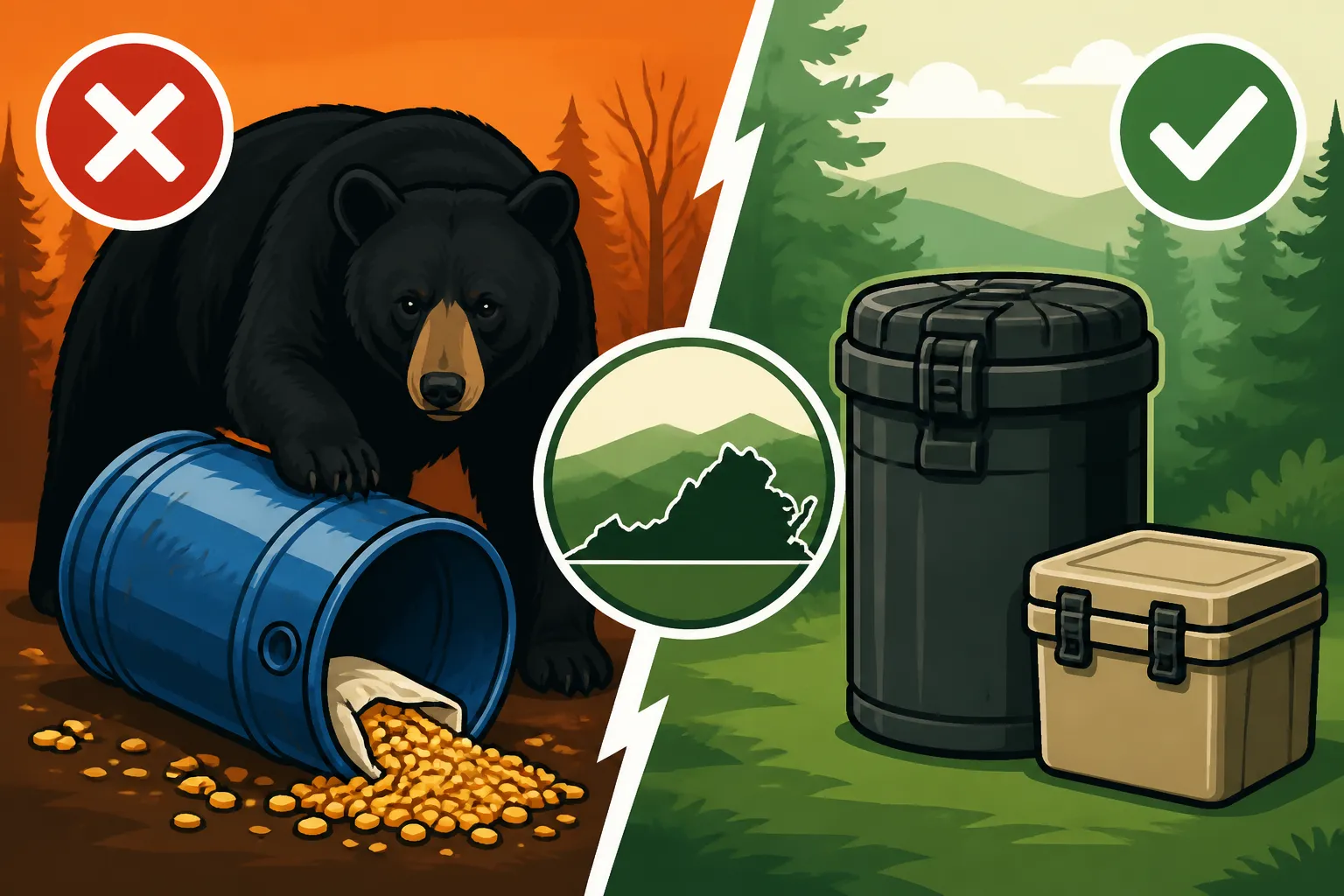
Simply put, the use of bait to hunt black bears is generally prohibited in the Commonwealth of Virginia. This isn't a gray area; it's a foundational rule for bear hunting here. The Virginia Department of Wildlife Resources (DWR) aims to maintain fair chase principles and manage the bear population through methods that don't rely on artificial attractants for hunting. This means you can't set out food, minerals, or any other substance to lure bears into a specific area to harvest them. Many hunters come to Virginia from states where baiting is legal, or they might confuse it with practices for other animals, so it's a common point of misunderstanding. Always check the current Virginia Bear Season Rules before planning any bear hunt.
Understanding "Baiting" in Virginia Law
The definition of "baiting" is crucial here, as it extends beyond just dumping a pile of donuts. In Virginia, "bait" or "baiting" generally refers to placing, exposing, depositing, distributing, or scattering salt, grain, or other feed, or any non-naturally occurring attractant for the purpose of luring, attracting, or enticing game animals. This includes things like corn, apples, pastries, scent lures, or even certain mineral blocks. If a substance is placed to attract a bear, and you then hunt that bear, it's considered illegal baiting. The intent is key. If you're setting out a deer feeder for legal purposes, but a bear consistently visits it and you decide to hunt that bear, you're entering a gray area that could lead to serious legal trouble. The DWR views any intentional act to draw a bear into a hunting scenario with artificial attractants as baiting.
Consequences of Illegal Baiting
Ignoring Virginia's baiting laws can lead to significant penalties. We're talking about fines, potential revocation of hunting privileges, and even confiscation of equipment. It's not just a slap on the wrist. Enforcement can be strict, and wildlife officers are highly trained in identifying bait sites. Beyond the legal ramifications, there are ethical considerations. Most Virginia hunters pride themselves on fair chase, and illegal baiting undermines that tradition. It can also create nuisance bears, habituating them to human-provided food sources, which can lead to conflicts in residential areas or increase the risk of vehicle collisions. For those looking to enjoy Bear Hunting Virginia's Mountains and Piedmont, focusing on natural food sources and traditional scouting methods is always the best approach.
What if Bear Baiting Were Legal? Envisioning "Legal Containers"
Given that bear baiting for hunting is generally prohibited in Virginia, the idea of "legal containers" for bear bait in a hunting context becomes hypothetical. However, if such a practice were allowed, or if we consider scenarios like trapping or research permits, we can certainly envision what standards those containers would likely need to meet to be considered "legal" and responsible. This thought exercise helps us understand the principles of regulated wildlife feeding.
Hypothetical Design and Construction Standards
If Virginia were ever to permit bear baiting, even under strict conditions, the design of bait containers would be paramount. You wouldn't just be able to toss out an old trash can. Any "legal container" would likely need to be:
- Bear-Resistant: This is crucial. A container would need to be strong enough to withstand significant force, preventing bears from easily tearing into it. Think heavy-gauge steel, reinforced plastic, or even a hardened composite material. These aren't your typical backyard garbage bins. They'd probably incorporate a secure latching mechanism that a bear couldn't easily manipulate.
- Weather-Proof: To protect the integrity of the bait and prevent spoilage that could attract other pests or spread disease, containers would need to be sealed against rain, snow, and humidity. This helps to manage the bait and ensure it remains attractive to the target species for a longer period.
- Non-Toxic: The materials used in construction would need to be certified as non-toxic and food-safe, ensuring that no harmful chemicals leach into the bait or are ingested by the bears or other wildlife.
- Stationary/Secured: To prevent bears from dragging the container off into the woods or onto public roads, it would likely need to be anchored securely to a tree or the ground. This could involve chains, heavy-duty stakes, or even concrete footings.
Capacity and Securing Mechanisms
Hypothetically, "legal containers" would also have specific requirements for their capacity and how they are secured. A large, open trough might be considered irresponsible as it could quickly be emptied or become a vector for disease transmission among multiple animals.
- Limited Capacity: The container might be designed to dispense bait slowly or in limited quantities, preventing a bear from gorging itself and becoming overly reliant on the artificial food source. This could involve a controlled feeding mechanism, such as a gravity feeder with a narrow opening, or a timed release system. The goal would be to attract, not to nourish entirely.
- Tamper-Proof Latching: Forget a simple bungee cord. Any legal container would need a robust, complex latching system. This prevents accidental opening, reduces the chance of other animals accessing the bait, and again, makes it harder for bears to "break in." This often means a bolt-style lock or a multi-point closure system that requires human dexterity to open.
- Visibility and Identification: To ensure accountability and ease of monitoring by wildlife officials, any "legal container" might require clear labeling with the permit holder's information, a permit number, and contact details. This would make it easy to identify legal sites and distinguish them from illegal ones. Tools like GoHunt might even integrate features to help permit holders track and manage their sites or understand specific local requirements.
Avoiding Non-Target Species
A critical, often overlooked aspect of any baiting or feeding operation is preventing non-target species from accessing the attractant. A container intended for bears could inadvertently attract deer, raccoons, or domestic animals. Hypothetically, a legal container might incorporate features to deter these species, such as:
- Height or Size: Placing bait far off the ground or designing openings that are only accessible to bears of a certain size could help.
- Limited Access Points: Small, strategically placed openings could limit access to larger animals while discouraging smaller ones that might not be able to reach or manipulate them effectively.
- Odor Control: While bait is meant to attract, managing the spread of strong odors can prevent it from attracting unwanted attention from every animal (or human) in the vicinity.
This hypothetical scenario underscores the complexity of regulating baiting, which is why Virginia's DWR has largely opted for a general prohibition to prevent unforeseen negative consequences.
Where Similar Containers Are Used Legally in Virginia (for Other Wildlife)
While bear baiting for hunting is out for most of us in Virginia, the concept of using specific, durable containers to attract or hold wildlife does exist in legal and regulated contexts. It's often about pest management, scientific research, or sometimes, very specific forms of supplemental feeding for other species.
Feral Hog Trapping: A Permitted Use Case
One of the most common and legal uses for robust, wildlife-resistant containers in Virginia is in the effort to control Feral Hogs Across Virginia. Feral hogs are an invasive species, causing immense agricultural damage and ecological disruption. As such, hunting and trapping them year-round on private land, often with bait, is encouraged by the DWR.
- Specialized Traps and Feeders: For hogs, large, sturdy traps often incorporate a feeder mechanism. These aren't just open troughs; they are designed to hold bait securely within a larger trap system, luring the hogs in. The "containers" within these traps are often gravity-fed barrels or hoppers that slowly dispense corn or other attractants. These must be tough enough to withstand hog rooting and chewing.
- Strategic Baiting: Unlike bear baiting for hunting, baiting for hog trapping is a strategic tool to eradicate or significantly reduce populations. The bait (typically corn) is placed inside the trap or leading directly to it. This is a very different intent and method from setting out bait to simply shoot a bear. If you're considering Hunting Virginia's Year-Round Feral Hogs through trapping, understanding the construction and placement of these bait-holding components is vital. You can even use mapping tools like GoHunt to scout good locations for trap placement, focusing on areas with hog sign near water sources or crop damage.
Supplemental Feeding for Other Species (When Permitted)
While bear baiting is a no-go, there are instances where supplemental feeding for other game species might be permitted under specific circumstances, often with careful regulations. This is where the type of "container" becomes relevant.
- Deer Feeding Bans: It's critical to remember Virginia's Twenty-Five-Mile Feeding Ban around established Chronic Wasting Disease (CWD) Management Areas (DMAs). These bans are widespread and affect many counties, prohibiting the feeding of deer and elk for any reason. This includes corn piles, mineral blocks, or any other attractant, and it applies even if you're not actively hunting over it. You must check if your area is impacted by Virginia's Four Chronic Wasting Disease Areas before considering any kind of supplemental feeding.
- Bird Feeders: For non-game species or certain small game like squirrels, bird feeders are common. These are essentially small, specialized containers designed to hold seeds or nuts. They demonstrate the principle of a "legal container" for a specific purpose, though they are rarely for large game hunting. If you're interested in Squirrel and Small Game Hunting in Virginia, understanding natural food sources is far more effective than feeding, which usually isn't for hunting purposes.
- Landowner and Research Permits: In very specific cases, landowners might obtain permits for deer damage abatement (though CWD feeding bans still apply), or research institutions may use bait for scientific study. In these rare instances, the DWR would stipulate the exact nature of the attractants and the containers used, ensuring they meet stringent environmental and wildlife management standards.
Research and Management Uses
Beyond trapping, wildlife biologists and researchers often use specialized containers for baiting or feeding in controlled scientific studies. These efforts are not for hunting but for understanding animal behavior, population dynamics, or disease monitoring.
- Hair Snares and Cameras: Researchers might use a small amount of bait in a container near a hair snare or trail camera to collect genetic samples or observe animals without direct human presence. The containers are designed to protect the bait from weather and non-target species, much like our hypothetical "legal bear bait container."
- Capture Operations: For trap-and-transfer operations or when fitting animals with GPS collars, bait may be used to lure animals into secure, humane traps. The containers here are part of a larger, regulated system for wildlife management, strictly overseen by DWR or permitted scientific bodies. These are highly controlled environments, far removed from general hunting practices.
In all these legal scenarios, the containers are part of a larger, regulated strategy, not a tool for direct hunting. This distinction is vital for any Virginia hunter to grasp.
Important Considerations for Any Wildlife Feeding Device in Virginia
Even if you're using containers for legally permitted activities like feral hog trapping, or simply setting up a bird feeder, there are crucial considerations that go beyond just the container itself. Responsible wildlife practices involve understanding the broader impact of artificial feeding and adhering to regulations that protect both wildlife and human communities.
Virginia's Twenty-Five-Mile Feeding Ban for Deer
We've touched on this, but it bears repeating because it's so critical and widespread: Virginia's Twenty-Five-Mile Feeding Ban is a game-changer for anyone thinking about putting out feed for wildlife. This ban is a direct response to the spread of Chronic Wasting Disease (CWD), a fatal neurological disease affecting deer and elk. The DWR has implemented this feeding restriction to reduce congregation of deer, which can accelerate disease transmission.
- What it covers: The ban prohibits placing or distributing any food, salt, mineral, or other attractant for deer or elk. This includes corn, apples, commercial deer feed, and mineral blocks.
- Where it applies: The ban applies within a 25-mile radius of any known CWD positive detection. This means many counties in the Shenandoah Valley and northern Virginia are under this restriction. You must know if your hunting or property area falls within one of these zones. Always check the DWR website or a mapping tool like GoHunt for the most current CWD zone information and feeding restrictions. Failing to comply can result in significant penalties, similar to illegal baiting.
- Implications for Containers: If you're in a feeding ban county, any container designed to hold feed for deer or elk is effectively illegal. Even if you claim it's for another species, if deer can access it, you're likely in violation. This ban often extends to bear baiting by default in these areas, even if bear baiting wasn't already prohibited.
Impact on Wildlife Behavior
Artificial feeding, even when legal for certain species or in specific contexts, can have unintended consequences on wildlife behavior. This is why strict regulations are in place for baiting for hunting.
- Habituation to Humans: When wildlife consistently finds food provided by humans, they can become habituated, losing their natural fear. This can lead to increased human-wildlife conflicts, particularly with species like black bears that can cause property damage or pose a perceived threat to safety.
- Altered Movement Patterns: Regular food sources can change an animal's natural foraging and movement patterns. Deer or bears might forgo traditional food plots or mast crops, becoming reliant on a feeder. This can make them more predictable but also less wild.
- Disease Transmission: Congregated animals at a feeder site are at a much higher risk of transmitting diseases like CWD, EHD (Epizootic Hemorrhagic Disease), or mange. Saliva, urine, and feces can easily contaminate a communal food source. This is a major reason behind the CWD feeding bans.
- Nutritional Imbalance: While a deer might love corn, it might not provide a balanced diet, especially during certain times of the year. Over-reliance on artificial feed can lead to nutritional deficiencies or even digestive problems.
Responsible hunters and landowners understand the importance of promoting natural foraging behavior and minimizing negative human impacts. Encouraging healthy ecosystems through habitat management, rather than artificial feeding, is generally the preferred method. When you're Scouting Virginia Public Land Before Season, you're looking for natural food and cover, not artificial attractants.
Ethical Sourcing and Placement
If you are engaging in a permitted feeding activity, such as trapping feral hogs, the ethical sourcing and placement of your attractants and containers are still paramount.
- Sourcing Bait: Ensure any feed you use is clean, free of mold or contaminants, and sourced responsibly. Moldy corn, for instance, can be toxic to wildlife.
- Container Placement: Consider the visibility and accessibility of your containers. While a bait station for hogs needs to be accessible to them, you don't want it readily accessible to pets, children, or non-target wildlife. Placement away from public roads, trails, and residential areas is crucial. For any activity on private land, ensure you have explicit permission. You can learn more about this in Getting Private Land Permission in Virginia.
- Maintenance: Any container used for feeding should be regularly monitored and maintained. Spilled feed should be cleaned up to prevent attracting unwanted scavengers or creating unsanitary conditions. Empty containers should be removed promptly.
- Regulatory Compliance: Always double-check local county ordinances in addition to state DWR regulations. Some localities may have additional rules regarding supplemental feeding or attractants, even for species like hogs. The DWR website, or even a detailed mapping application, can be a great resource for this.
The topic of "bear bait barrels and legal containers" in Virginia is less about how to bait bears and more about understanding why it's largely prohibited and what constitutes a "legal container" in the few specific, regulated instances where attractants are permitted for other wildlife management purposes. Always err on the side of caution and consult the Virginia DWR regulations directly.
Disclaimer
This article is for general informational purposes only and does not constitute professional advice. Laws, prices and regulations vary by location and change over time. Consult a qualified professional for guidance on your specific situation.