Why Virginia’s Gun Opener Draws the Biggest Crowds
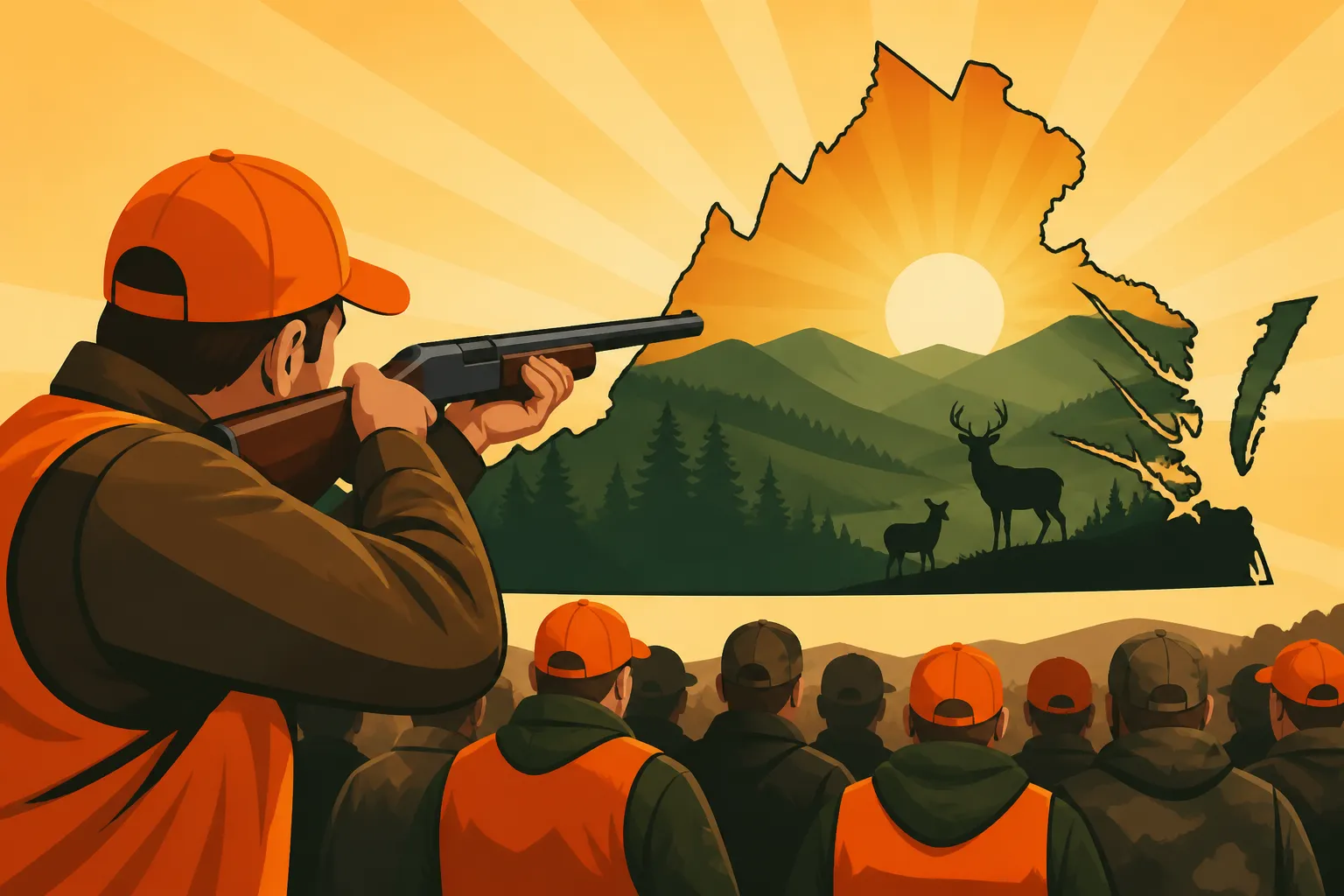
If you've ever found yourself standing shoulder-to-shoulder with what feels like half the state in a freezing pre-dawn parking lot on Virginia's general firearms opener, you know the feeling. That incredible surge of hunters hitting the woods, especially public lands, can be both exhilarating and, let's be honest, a little intimidating. This guide is all about understanding why that first Saturday of gun season is such a magnet and, more importantly, how you can still find success and enjoy the hunt despite the crowds.
The Irresistible Pull of Opening Day
There's just something magical, almost primal, about the opening day of general firearms season in Virginia. It’s more than just a date on the calendar; it's a deeply ingrained tradition for many, a true kick-off to the serious deer hunting action. For weeks, archers and muzzleloader hunters have been out, but when the guns come out, it's a different game entirely, and the woods come alive with hunters.
The Grand Tradition of General Firearms Season
For countless Virginia families, the general firearms opener isn't just a hunting day—it's an annual pilgrimage. It often falls on the third Saturday of November, a perfect storm of timing that coincides with school breaks for some and cooler weather, making it an ideal weekend for a multi-day hunt. This tradition often starts generations deep, with fathers, grandfathers, aunts, and uncles passing down the excitement and knowledge. Imagine the anticipation in the weeks leading up to it, the checking of gear, the tall tales around the dinner table, and the camaraderie of sharing camp with loved ones. It's a social event as much as it is a hunt, solidifying bonds and creating memories that last a lifetime. For many, it's the one time a year they get to truly immerse themselves in the hunting lifestyle with their entire family or hunting crew. Understanding the exact dates can help with your planning, and you can always check out when Virginia's General Firearms Season Dates are set for the upcoming year.
The buildup to this weekend is palpable. From the casual hunter who might only go out a few times a year to the dedicated enthusiast, everyone seems to mark this date on their calendar. It’s the primary opportunity for many to fill their freezers, and the sheer number of folks who participate speaks volumes about its significance. Whether you're hunting private land with a close group or venturing onto public grounds, the shared energy in the air on opening morning is undeniable.
Peak Deer Activity and Opportunity
Beyond tradition, the timing of the general firearms season often coincides with a critical period of deer activity: the tail end of the rut or the very beginning of the post-rut chase phase. This means bucks are still actively seeking does, or at least recovering from their frenetic breeding efforts, which keeps them on the move. Cooler temperatures are typically settling in across the Commonwealth, from the Blue Ridge Mountains to the Eastern Shore, and this crisp air invigorates deer, encouraging more daytime movement.
Deer are driven by two main forces at this time of year: breeding and feeding. With the rut winding down in many areas, bucks are often looking to refuel before winter truly sets in. This increased movement, combined with the leaf drop that provides better visibility for hunters, significantly increases the odds of encountering a deer. Hunters feel this surge of opportunity, knowing that the chances of seeing a mature buck are often at their highest. You can dive deeper into how deer behave during this crucial time by reading about Hunting the Virginia Rut in November. The cooler air also means scent conditions are often better, and deer are not struggling with heat stress, leading to more natural movement patterns, at least until the pressure begins to build.
Accessibility and Equipment
For many, the general firearms season represents the most straightforward entry point into deer hunting. Unlike archery, which demands a high level of precision, practice, and specialized equipment, or muzzleloader season which has its own unique learning curve and challenges, firearms hunting often feels more familiar and accessible. Most rural households have a shotgun or a rifle, and the basic skills for safe and effective use are often passed down through generations.
The equipment requirements are also relatively simple: a safe and reliable firearm, appropriate ammunition, and the required licenses. This lower barrier to entry means a broader demographic of hunters can participate. While skilled marksmen certainly have an advantage, even a moderately proficient shooter can be effective at typical woods ranges. Many hunters prefer the versatility of a rifle for potential longer shots in open fields or clear-cuts, or the close-range power of a shotgun in dense timber or shotgun-only counties. You can learn more about the legalities and options by checking out Virginia Legal Firearms for Deer Hunting. This ease of access ensures that a vast number of Virginians, from seasoned veterans to brand-new hunters, can confidently step into the woods on opening day, contributing to the significant crowds.
Navigating the Opening Day Gauntlet
While the excitement of opening day is undeniable, the sheer volume of hunters can present unique challenges. It’s not just about finding deer anymore; it's also about managing interactions with other hunters and adapting to the immediate changes in deer behavior. The woods can feel a lot smaller when everyone has the same idea of where the deer should be.
Increased Pressure and Altered Deer Behavior
The most immediate and significant impact of opening day crowds is the sudden, intense pressure on the deer herd. Deer, being highly sensitive creatures, react almost instantly to the increased human presence, scent, and noise. What might have been predictable movement patterns during pre-season scouting or the early archery season often disappear overnight. Deer quickly become more nocturnal, moving primarily under the cover of darkness. They will seek out the thickest, most impenetrable cover they can find – dense clear-cuts, laurel thickets, deep swamps, or remote pockets of timber that most hunters shy away from.
They learn to associate human activity with danger, leading them to hold tight, bed down earlier, and move less during daylight hours. This means that sitting over a well-used food plot or an obvious trail that was hot in October might now be a ghost town. Understanding this shift is crucial for success. Instead of hunting where deer were, you need to start thinking about where they are going when pressured, and where they feel safest. It’s a game of cat and mouse, and on opening day, the deer often have the immediate advantage due to their superior senses and intimate knowledge of the terrain. For a deeper dive into this phenomenon, explore Hunting Pressure on Virginia Public Land.
Safety Concerns and Awareness
With more hunters in the woods, safety becomes paramount. It's not just about your own actions; it's about being aware of everyone else around you. Unfortunately, accidents can happen, and responsible hunters do everything in their power to prevent them. This means religiously adhering to safety rules like always identifying your target and what is beyond it, keeping your muzzle pointed in a safe direction, and treating every firearm as if it's loaded.
Blaze orange or blaze pink is not just a suggestion; it's a legal requirement during general firearms season in Virginia for a very good reason. It dramatically increases your visibility to other hunters. Even if you're on private land, wearing ample blaze orange is a non-negotiable safety measure. Beyond the legal minimum, consider wearing even more, especially a hat and an outer layer. In crowded conditions, it’s also wise to make some noise as you walk, letting other hunters know you’re there. Be extra cautious at dawn and dusk, when visibility is low, and deer movement is often highest. Never assume you are the only hunter in an area, even if you haven't seen anyone else. Being constantly aware of your surroundings, both for deer and for other people, is simply good practice. The DWR has clear guidelines on Virginia Blaze Orange Requirements, which are essential reading for every hunter.
Scouting Smart to Beat the Rush
Given the immediate impact of hunting pressure, your pre-season scouting takes on an even greater importance for opening day. It’s not enough to just find a deer sign; you need to find unpressured deer sign, or identify areas where deer are likely to retreat when the pressure mounts. This means getting out well before the season, even in the summer and early fall, to identify potential sanctuaries.
Look for areas with thick cover, remote corners of public land, or difficult-to-access terrain like steep ravines, swamp edges, or large blocks of dense timber away from roads and trails. These are the places deer will seek refuge. Using mapping tools can be a game-changer here. Platforms like GoHunt allow you to overlay topographical maps, aerial imagery, and public land boundaries, helping you pinpoint these overlooked pockets. You can mark potential bedding areas, escape routes, and natural funnels that lead away from heavily trafficked zones. Don't just look for where deer are now, but where they will be when the woods are full of orange. Good scouting will inform your strategy for not just the first day, but for adapting to the entire season. A thorough pre-season scouting effort can make all the difference, so make sure to check out Scouting Virginia Public Land Before Season.
Strategies for Success Amidst the Crowds
So, how do you find success when it feels like every tree has an orange vest behind it? It's about being smarter, more adaptable, and often, more willing to work a little harder than the average hunter. These strategies focus on anticipating deer movement and finding less-pressured areas.
Hunt Remote or Difficult-to-Access Areas
This is perhaps the most fundamental and effective strategy for public land hunting on opening day. The vast majority of hunters on public land will stick close to roads, established trails, or easily accessible parking areas. They might walk a quarter-mile, maybe half a mile, but very few will venture deep into truly remote or physically challenging terrain. This creates de facto sanctuaries for deer.
Look at your maps – paper or digital like GoHunt – and identify the steepest ridges, the thickest swamps, the furthest reaches of the property that require a long, arduous walk. These are the places where deer will funnel when they get pushed from easier-to-reach spots. It requires physical fitness, a good understanding of navigation, and a strong will, but the rewards can be significant. Deer know where they are safe, and they will gravitate towards these remote pockets. Your chances of encountering a less-pressured, larger deer dramatically increase the further you get from the beaten path. It's a simple truth: if you're willing to go where others won't, you'll find what others aren't. Consider how far you're willing to trek by reading How Far to Walk From a Forest Road.
Utilize Deer Drives and Group Hunts Wisely
While solo hunting has its merits, a well-planned and safely executed deer drive can be incredibly effective on public land, especially on opening day. With so many hunters already moving through the woods, a coordinated drive can push deer directly into waiting standers, or at least encourage them to move in a predictable direction. This isn't about simply running through the woods; it's a strategic maneuver that requires clear communication, a precise understanding of the terrain, and strict adherence to safety protocols.
Identify a block of timber or a thicket where deer are likely to be bedded down, often areas adjacent to where other hunters are likely to be pushing deer. Place your standers (shooters) in strategic locations that cover escape routes and natural funnels. The drivers then slowly and methodically move through the area, pushing deer towards the standers. This works particularly well in areas with defined topography, like hollows and ridges, or where clear-cuts funnel deer movement. The key is safety: every participant must know where everyone else is, wear plenty of blaze orange, and have clear shooting lanes. Always review Deer Drives on Virginia Public Land for best practices to ensure everyone's safety and success.
Embrace the Late Morning and Midday
Many hunters, especially those who aren't accustomed to the cold or the grind, will head back to camp or their vehicles for a warm meal or a break by mid-morning. This mass exodus from the woods can create a window of opportunity. Deer that have been pushed hard at first light will often start to move again once the initial wave of hunters has subsided. They might move to a new bedding area, or try to slip to a different feeding area they couldn't access earlier.
This late morning to early afternoon period can be surprisingly productive. Instead of going in for lunch, pack a thermos and some snacks, and stay put. Or, if you did go back, consider hitting the woods for a midday still-hunt or a refreshed sit. The woods are often quieter, and deer might feel a bit more comfortable moving. While the absolute peak movement is typically dawn and dusk, the "dead" hours can be anything but on a high-pressure opening day. Persistence and an unconventional schedule can pay off handsomely, offering a different approach than the typical rush. To optimize your approach, check out Opening Weekend Tactics for General Firearms Season.
Consider Alternative Public Land Tactics
When hunting pressure is high, simply sitting on an obvious trail might not cut it. Thinking outside the box with your setup can give you an edge. Ground blinds, for example, offer excellent concealment and are far more flexible in terms of placement than a fixed treestand, especially if you're not allowed to put screw-in steps or semi-permanent stands on public land. You can quickly set up a ground blind in a thicket, at the edge of a dense clear-cut, or overlooking a natural pinch point that deer are using as an escape route.
Ground blinds allow you to move with the deer pressure. If you scouted a thick area where deer might retreat, you can deploy a blind there. They also keep you out of the wind and rain, which can be a huge comfort factor for an all-day sit. You can also brush them in heavily with natural vegetation to make them virtually disappear. In areas with steep, rocky terrain or where suitable trees for treestands are scarce, a ground blind might be your best option. Remember to place it strategically downwind and ensure your shooting lanes are clear. They provide a comfortable, concealed base of operations for long sits in high-pressure environments. For more insights on this setup, read Using a Ground Blind on Virginia Public Land.
Beyond Opening Weekend: The Evolving Season
The general firearms opener is a phenomenon unto itself, but it's important to remember that it's just the beginning of a much longer season. The woods, and the deer, undergo significant changes after that initial weekend.
The Post-Opener Shift
If you can tough it out and wait, or if your schedule doesn't permit you to be out on opening day, you'll often find a dramatically different hunting experience just a few days or a week later. The initial explosion of hunters typically dwindles significantly after the first weekend. Many casual hunters have gotten their fix, or filled their tags, and return to their regular routines. This results in a noticeable drop in human pressure on public lands.
Deer, while initially spooked, will slowly begin to adjust. They might not revert entirely to their pre-season patterns, but they often become a bit more relaxed, venturing out in daylight hours again, especially if food sources are good and new pressure points haven't emerged. The woods become quieter, and the feeling of solitude returns. This period, often overlooked by the "first-weekend-or-bust" crowd, can be incredibly productive for the patient hunter. It's a time to capitalize on deer that have been pushed into new areas or are now seeking peace and quiet away from the initial rush.
Exploring Other Methods or Later Season Opportunities
For those who truly wish to avoid the crowds, Virginia offers a diverse range of hunting seasons and methods that see considerably less pressure than the general firearms opener. Embracing Muzzleloader Deer Hunting in Virginia during its dedicated season, for example, offers a unique challenge with fewer hunters in the woods, often coinciding with prime rut activity. Similarly, Bowhunting Virginia's Statewide Archery Season provides extended opportunities with minimal competition, particularly during the early fall when deer patterns are more predictable and human scent is less pervasive.
Even within the general firearms season, focusing on the later weeks, or even pushing into the colder months towards Hunting Into the January Second Close, can provide a completely different experience. Deer behavior shifts with the dropping temperatures and dwindling food sources, and understanding these late-season patterns, combined with significantly reduced hunter numbers, can lead to quiet, productive hunts. Exploring these alternatives allows you to choose an experience that aligns best with your preferences for solitude and challenge, away from the opening day frenzy.
Virginia Deer Hunting on Opening Weekend vs. Mid-Season
To help illustrate the differences and prepare you for what to expect, here's a quick comparison of what opening weekend often looks like compared to hunting a few weeks into the general firearms season.
| Feature | Opening Weekend (General Firearms) | Mid-Season (Weeks 2-4 of General Firearms) |
|---|---|---|
| Hunter Density | Very High (especially on public land) | Moderate to Low (significant drop after first weekend) |
| Deer Pressure | Extremely High; deer become nocturnal, seek thick cover | Moderate; deer slowly return to more natural patterns |
| Deer Movement | Disrupted, often nocturnal, or pushed into sanctuaries | More consistent, especially around food sources |
| Competition | Very High for prime spots and access | Much Lower; more solitude |
| Weather | Often crisp, cool; can vary | Colder, potentially snow or ice; consistent cold |
| Rut Activity | Often late rut/post-rut chase | Post-rut; focus shifts to feeding, recovery |
| Visibility | Good (leaf drop) | Excellent (full leaf drop, potential for snow) |
| Safety Concerns | Highest; critical to be vigilant and visible | Lower, but always paramount |
| Likely Tactics | Deep woods, drives, sitting pressure points | Still-hunting, food sources, bedding areas |
Disclaimer
Hunting is an inherently dangerous activity. Always prioritize safety, adhere to all Virginia Department of Wildlife Resources regulations, and obtain proper landowner permissions. This guide provides general information and recommendations; individual hunting conditions and regulations may vary. Always verify current rules and regulations before heading afield.