Decoy Placement for Pressured Virginia Birds
It’s a scenario all too familiar to Virginia hunters: you’ve put in the legwork, found what you think is the perfect spot, and carefully set your decoy spread. Yet, instead of committing with cupped wings or strutting in, those wary birds just skirt the edges, circle high, or worse, flare completely, leaving you with a sinking feeling. Pressured birds, especially in areas with consistent hunting activity, become incredibly educated, developing a keen sense of what looks "off." This guide is all about tackling that frustration head-on, offering deep insights into how to position your decoys to outsmart even the most seasoned turkeys and waterfowl across the Old Dominion.
Understanding Pressure and Its Impact on Decoy Effectiveness
The moment a bird survives an encounter with a hunter, it learns. And in Virginia, with its diverse landscapes and passionate hunting community, those lessons accumulate quickly. This isn't just about a bird being "spooked"; it's a fundamental shift in their behavior, making them significantly harder to fool.
The Psychological Warfare of Hunting Pressure
Think about it from a bird's perspective. If every time they see a flock of their buddies or a lonesome hen, a loud bang or a deadly arrow follows, they quickly associate those visual cues with danger. This leads to what we call "pressure." Pressured birds aren't just cautious; they're suspicious. They've seen it all: the static, too-perfect spread, the spinner decoy that looks unnatural, the lone hen that doesn't move. They've learned to identify these anomalies.
This learning curve means they scrutinize everything. They'll look for natural movement, appropriate spacing, and a realistic overall scene. A single decoy out of place, a string visible, or an unnatural posture can be enough to send them packing. They're looking for reasons not to commit, and unfortunately, many standard decoy setups give them those reasons. Your setup needs to overcome this ingrained skepticism, turning their suspicion into curiosity, and eventually, confidence. It’s a game of psychological warfare, and to win, you need to think like the bird you’re hunting.
How Different Species React to Pressure
Different game birds react to hunting pressure in distinct ways, largely dictated by their natural behaviors, keenness of sight, and the specific pressures they face. Understanding these nuances is key to effective decoy placement.
For waterfowl, whether you're targeting mallards on a small Piedmont farm pond or tackling the challenging task of Waterfowl Hunting the Chesapeake Bay, pressured ducks and geese develop incredible aerial reconnaissance skills. They’ll circle at higher altitudes, meticulously inspecting your spread. Geese, particularly resident Canada geese, become incredibly wary of large, dense spreads near blinds. They often prefer to land short, out of gun range, or simply bypass the setup altogether. Divers on the Bay, like canvasbacks or bluebills, might make wide swings, looking for any glint of unnatural material or perfectly symmetrical layouts. If they see anything that deviates from a truly natural scene—decoys too close to the blind, unnatural patterns, or too many "active" poses with no real movement—they'll flare. Their survival instincts are finely tuned to detect the slightest discrepancy.
Wild turkeys, especially the venerable gobblers of Virginia's spring season, also become incredibly wise. After the initial rush of opening week, these birds have heard countless calls and seen numerous decoy setups. A gobbler might hang up just out of range, inspecting your hen or jake decoy with intense scrutiny. They're looking for validation, often expecting the "hen" to move or call. If the decoy is too static, too numerous, or positioned in an unnatural way (e.g., a dominant gobbler decoy too close to a submissive jake or hen), they might strut and gobble from afar, but never commit the final few yards. Public land turkeys, in particular, are notorious for this behavior, having been called to and shot at multiple times. They know the drill, and they've often figured out that static decoys can mean trouble.
Strategic Decoy Spreads for Different Species and Habitats
When dealing with pressured birds, the "more is better" philosophy often backfires. Instead, focus on realism, natural behavior, and creating an inviting scene that mitigates their suspicion.
Ducks on Water: Less is Often More
For pressured ducks, especially mallards, wood ducks, and other dabblers on smaller bodies of water like beaver ponds, flooded timber, or even small impoundments in Virginia, a minimalist, highly realistic approach is often your best bet. Forget the dozens of decoys you might deploy on larger open water. For these wary birds, sometimes just a half-dozen well-placed, high-quality decoys are far more effective.
The key is to mimic natural feeding and loafing patterns. Ducks want to land in a safe, uncrowded area. Create a clear "landing zone" – a pocket of open water where they feel secure to set down. Position your decoys in loose, natural groups, with some facing into the wind (as they would naturally), and others appearing to be feeding or resting. Avoid perfectly symmetrical V-shapes or straight lines; nature isn't so tidy. For instance, on a small, secluded pond, a group of three feeding mallard hens and drakes, paired with one or two loafing birds, can be incredibly convincing. For Hunting the Eastern Shore Marsh, you might need specific diver decoys like bluebills or canvasbacks, but even there, a smaller, more realistic spread can outperform a giant, artificial-looking one on tough days.
Motion is still crucial, but it needs to be subtle. A jerk string can provide gentle ripples and lifelike movement that a spinner decoy, often seen by pressured birds as unnatural, cannot. Position your jerk string decoys strategically within your spread to create movement in the landing zone without directly pointing to your hide. Remember, the goal isn't to shock and awe, but to reassure.
Geese in Fields: The Power of Realism and Space
Canada geese, particularly the resident populations that have grown accustomed to Virginia’s farmlands, are arguably some of the most intelligent and pressured waterfowl you’ll encounter. They have excellent eyesight and often fly in large family groups, making them incredibly difficult to fool. For these birds, full-body decoys consistently outperform shells or silhouettes when facing significant pressure. The three-dimensional realism is simply harder to pick apart from above.
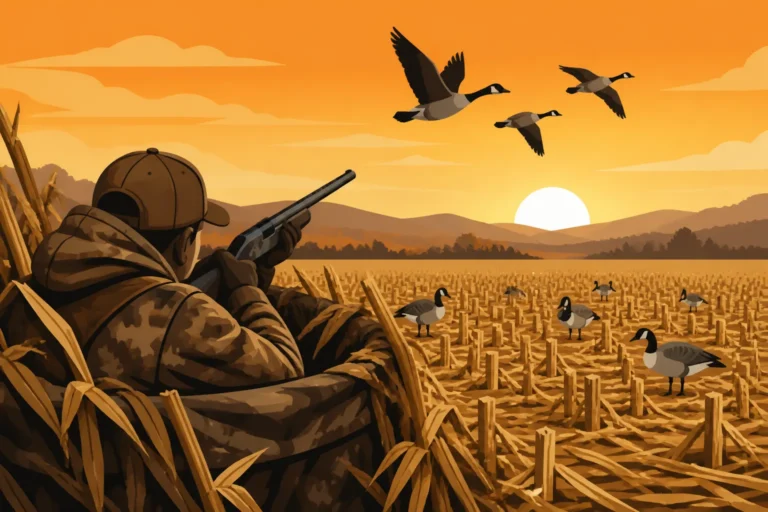
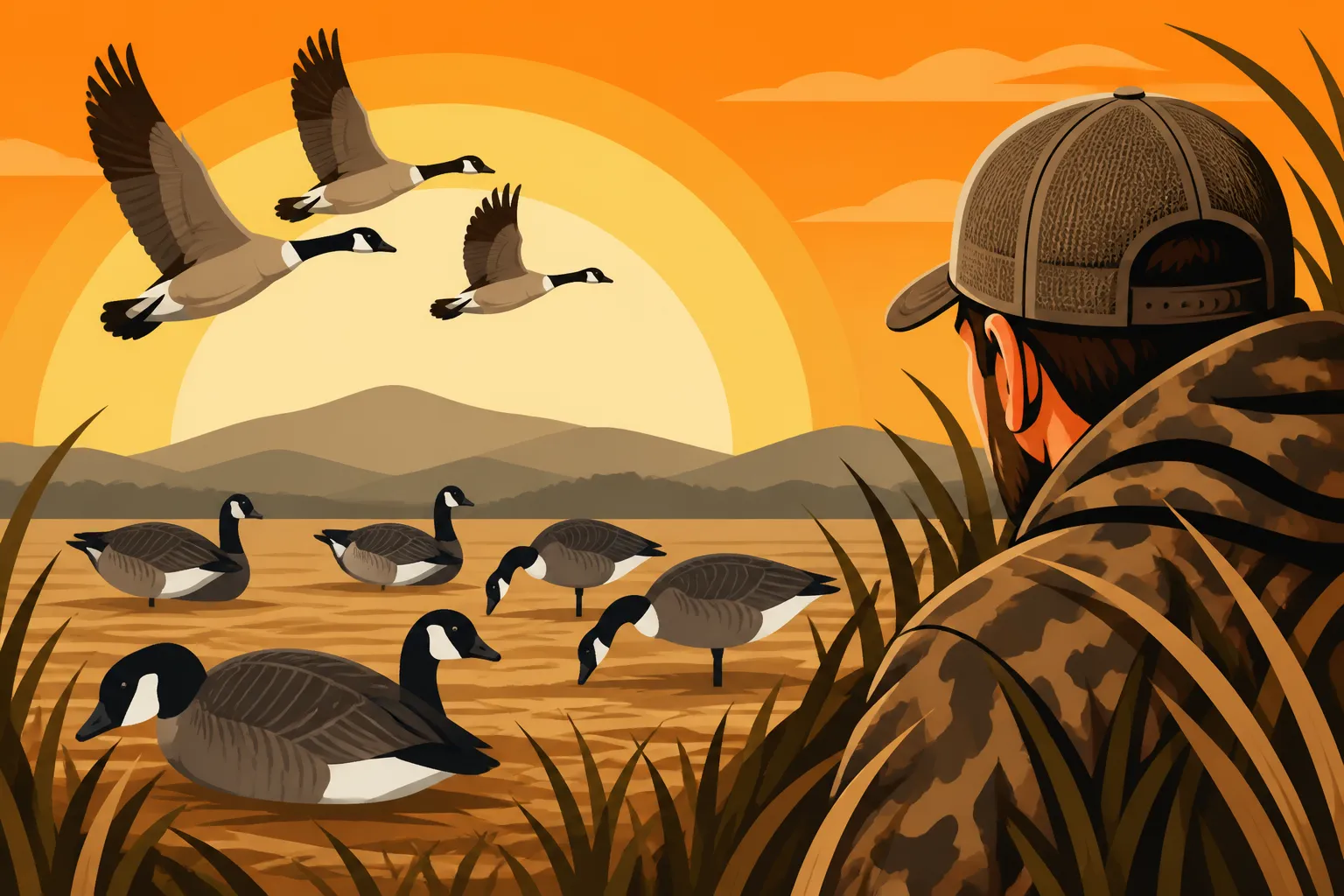
When setting up for pressured geese in a cut cornfield or winter wheat field, space is paramount. Geese, when feeding, spread out to maximize their foraging. A tight, bunched-up spread looks unnatural and screams danger. Aim for realistic family groups of 3-5 decoys, spaced several yards apart, with individual decoys within those groups positioned a few feet from each other. Ensure a variety of feeding, sentry, and resting postures. This diversity adds to the realism.
Crucially, you need a large, inviting landing zone. This open area, typically 20-30 yards directly in front of your Layout Blinds and Marsh Boats, is where they will commit. Position your decoys to funnel birds into this zone, creating a gap in your spread that looks like an open invitation. Pay attention to the wind, as geese, like ducks, almost always land into it. Your landing zone should allow them to make a final approach directly into the wind, settling comfortably into what appears to be an active, undisturbed feeding area. If you're on public land, you're constantly competing with others, so using a tool like GoHunt to scout specific field locations and recent bird activity can give you an edge in understanding where birds are feeding most naturally, influencing your spread design.
Turkeys in the Timber: Subtle Seduction
Spring turkey hunting in Virginia, particularly after the first week or on highly trafficked public land, can be incredibly challenging. Gobblers become call-shy and decoy-wary, often hanging up just out of range, drumming and strutting but refusing to close the distance. For these birds, less is almost always more.
Forget the three-gobbler, five-hen spread. For pressured turkeys, one or two ultra-realistic decoys are generally all you need. A single hen, especially one in a breeding or receptive posture, is often the most effective. Sometimes, adding a submissive jake can provoke an aggressive gobbler, but be cautious—a dominant gobbler decoy can intimidate other gobblers, making them skirt the area.
Placement relative to your blind or cover is critical. The decoy should be visible to the approaching gobbler, but positioned to draw him past your shooting lane, offering a broadside or slightly quartering-away shot. A common tactic is to face the hen decoy away from your position, enticing the gobbler to circle around to face her, exposing his vitals. Place the decoy approximately 15-20 yards out, a comfortable range for most shotgun patterns.
Consider the terrain. If you're Setting Up Against a Big Oak on a ridge, ensure the decoy isn't silhouetted awkwardly. Use natural shadows and cover to enhance realism. Remember that turkeys have excellent eyesight, so any unnatural shine or lack of movement can be a red flag. On mornings when you're Roost Hunting Virginia Gobblers, you might even forgo a decoy initially, only deploying it once you’ve established a solid calling sequence and pinpointed the bird’s exact approach, reducing the time it has to scrutinize the fake. The goal with pressured turkeys is to subtly seduce them, not to overwhelm them with an unrealistic display.
Advanced Tactics for Ultra-Pressured Birds
When standard approaches fall flat, it’s time to dig deeper into the bag of tricks. Ultra-pressured birds demand a more nuanced, integrated strategy where your decoys are just one component of a flawless presentation.
The Art of the Minimalist Spread
Sometimes, the most effective decoy spread for ultra-pressured birds is barely a spread at all. This "less is more" philosophy isn't just about reducing numbers; it's about maximizing the quality and strategic placement of each individual decoy. For ducks, consider two or three high-quality, feeding-drake mallard decoys, or a pair of contented pintails on a shallow flat. The goal isn't to look like a bustling flock, but a small, safe group that existing birds can quietly join without feeling threatened by competition or excessive numbers. For more details on effective setups, consider researching specific Decoy Spreads for Chesapeake Bay Divers.
For turkeys, especially those wily gobblers that have run the gauntlet of multiple hunters, a single, hyper-realistic hen decoy in a breeding or receptive posture can be devastating. Many veteran hunters find that a single Avian-X or Dave Smith decoy, meticulously placed, is far more convincing than a whole flock of less realistic fakes. This single hen represents an easy opportunity for a dominant gobbler, without the visual clutter that can spook an educated bird. The absence of other gobbler decoys removes any perceived threat, making him more likely to commit without hanging up. The quality of these premium decoys often lies in their realistic paint schemes, flocking, and body postures that truly mimic live birds, making them worth the investment when facing educated game.
Camouflage and Concealment as an Extension of Your Decoys
Your concealment isn't just about hiding yourself; it's an integral part of your decoy setup, especially when hunting pressured birds. A perfectly placed decoy spread can be entirely negated by a poorly concealed hunter. Birds will quickly pick up on unnatural shapes, movement, or glare from your position.
For waterfowl, this means taking the time to truly brush in your blind. Whether you're in a layout blind in a cornfield, or a permanent pit blind in an Hunting the Eastern Shore Peninsula marsh, the blind must disappear into its surroundings. Use local vegetation – cornstalks, marsh grass, cattails – to break up its outline. Pay close attention to the top edge, as this is often what birds see first from above. Any gap or unnatural line can be a red flag. For turkey hunting, sitting absolutely still against a wide, dark tree trunk, or inside a well-camouflaged ground blind, is paramount. Your movement, even subtle, can be picked up by their keen eyesight.
Consider the sun's position. Always try to place your blind with the sun at your back. This not only puts the sun in the birds' eyes, making it harder for them to see you, but it also illuminates your decoys, making them more visible and realistic. A well-hidden blind complements your decoy spread by completing the illusion of a safe, undisturbed environment, making it much easier for wary birds to commit. Using mapping tools, like those found on GoHunt, can help you scout the ideal position for both your decoys and your blind relative to sun direction and potential bird flight paths before you even set foot in the field.
Integrating Motion Without Alarming
Motion in a decoy spread can be a double-edged sword when hunting pressured birds. Too much, or the wrong kind, and you'll send them packing. But subtle, realistic motion can be incredibly effective.
For ducks, a simple jerk string, operated by hand, is often superior to battery-powered spinners for educated birds. The unpredictable, gentle ripples and bobbing movements of decoys on a jerk string perfectly mimic ducks feeding or preening naturally. Position the jerk string so it creates movement in your kill hole or landing zone, drawing attention without being directly attached to a decoy that birds might scrutinize. On calm days, even the slightest ripple can bring a flat, lifeless spread to life.
For geese, flags can be effective, but require judicious use. A small, black and white goose flag, used sparingly and realistically, can simulate a goose landing or flapping its wings. However, over-flagging, or flagging at the wrong time (e.g., when birds are directly overhead and looking down), can appear unnatural and send them spiraling away. For both ducks and geese, observe how real birds move in the field. They don't constantly flap or spin; their movements are often subtle and intermittent. Mimic this. Integrating motion should add to the realism, not detract from it. For turkeys, minimal motion can be key. Some realistic hen decoys come with subtle head movement capabilities, which can be just enough to convince a hung-up gobbler that his potential mate is alive and well, waiting for him.
| Decoy Type | Target Species (Pressured) | Recommended Spread Size | Key Placement Strategy | Motion Integration |
|---|---|---|---|---|
| Full Body | Geese (Canada) | 6-12 (family groups) | Wide spacing, clear landing zone in front of blind, various feeding/sentry postures. | Judicious flagging, very subtle movement. |
| Shell/Silh. | Geese (Canada) | 10-20+ (complement full-bodies) | Mix with full-bodies, extend the spread, create depth. | N/A (static) |
| Floating | Ducks (Mallard, Wood Duck) | 3-6 | Natural clusters, open landing pocket, mix feeding/loafing. | Jerk string for subtle ripples. |
| Floating | Diver Ducks (Canvasback, Bluebill) | 6-12 (species specific) | Realistic V or J-hook pointing to blind, open water at tip. | Wave motion (from wind/current). |
| Full Body | Turkey (Hen) | 1 (or 1 hen + 1 jake) | 15-20 yards out, facing away from hunter, clear shooting lane. | Static or subtle head movement. |
| Full Body | Turkey (Jake/Gobbler) | 0-1 (submissive jake only) | Only if provoking; position to show vulnerability. | Static. |
Common Mistakes and How to Avoid Them
Even with the best intentions, it's easy to make mistakes that can cost you a shot at pressured birds. Understanding these pitfalls is the first step to avoiding them.
Over-Decoying and Unnatural Setups
One of the biggest temptations, especially for new hunters or those with a large collection of decoys, is to put out everything they own. For pressured birds, this is often a recipe for disaster. An overly large or dense spread can look unnatural and intimidating. Birds may perceive too many "competitors" or simply view the sheer number as a sign that something is amiss.
Moreover, unnatural setups – perfectly symmetrical lines, decoys all facing the same direction, or birds that appear unnaturally bunched – scream "fake" to wary eyes. Remember, nature is chaotic and unpredictable. A real flock of feeding geese won't be in a perfect chevron, nor will a group of ducks be spaced equidistant from each other.
To avoid this, always prioritize quality over quantity. Use fewer, higher-quality decoys that mimic natural postures and coloration. Focus on creating an asymmetrical, loose, and inviting scene. Think about what a real group of birds would look like in that specific habitat and try to replicate it. Step back from your spread and view it from different angles, especially from higher ground if possible, to get a bird's-eye perspective. If it looks off to you, it will definitely look off to them. Regularly scouting the specific areas you plan to hunt with tools like GoHunt, and observing how actual birds interact and group together, will provide invaluable real-world examples to inform your decoy placement.
Ignoring Wind and Sun Direction
These two environmental factors are absolutely crucial, yet often overlooked, leading to missed opportunities. Birds almost invariably land into the wind. This is a matter of physics; landing into the wind provides lift and control, allowing for a slower, more graceful touchdown. If your decoy spread isn't set up to allow birds to comfortably land into the wind, they'll often circle, make awkward approaches, or simply give up and fly away. Your "kill hole" or landing zone should always be positioned downwind of your primary decoy groups, allowing birds a clear flight path directly into the breeze and into your shooting lane.
The sun's position is equally important. Setting up with the sun at your back not only puts the sun in the approaching birds' eyes, making it harder for them to spot you, but it also brilliantly illuminates your decoys, enhancing their realism. Imagine the opposite: if the sun is in front of you, the birds will be backlit, making them harder to see, and your decoys will appear as dark, flat silhouettes, losing much of their lifelike appeal. Always try to orient your setup so that you are looking into the shade or away from the sun, while the birds are flying into the sun. This provides the best visibility for you and the most realistic presentation for your decoys.
Failing to Adapt to Changing Conditions
Perhaps the most common mistake experienced hunters make, especially when faced with pressured birds, is sticking to a rigid plan, even when it’s clearly not working. Hunting is dynamic, and what worked yesterday or in a different location might not work today. Weather changes, bird patterns shift, and hunting pressure on a particular piece of public land can intensify dramatically from one hour to the next.
Being adaptable means having the willingness and foresight to change your spread, your calling sequence, or even your location mid-hunt. If ducks are flaring consistently to one side, perhaps your landing zone is too small or too close to your blind on that side. If a gobbler keeps hanging up at 60 yards, maybe your single hen decoy needs to be moved closer, or positioned more alluringly. Perhaps the birds are now keying in on different Late-Season Food Sources for Virginia Whitetails nearby, and your field of cut corn isn't as appealing as it was yesterday for geese.
This adaptability comes from constant observation. Pay attention to how birds are reacting. Are they circling wide? Are they landing short? Are they flying over without a second glance? Each of these behaviors provides valuable clues. Don't be afraid to pull up stakes, reposition your decoys, or even move to an entirely new spot if the current setup isn't producing. Carry a variety of Turkey Calls Worth Carrying in Virginia to change up your calling approach as well. The most successful hunters are those who treat every hunt as a learning experience, constantly tweaking their strategies to match the ever-changing temperament of pressured game. It also helps to be well-versed in different Virginia Duck and Goose Bag Limits and adjust expectations accordingly.
Disclaimer
Hunting is an inherently dangerous activity. Always follow all local, state, and federal hunting regulations. Practice responsible gun and hunting safety. The information provided in this guide is for informational purposes only and does not constitute professional advice. Ensure you have the proper licenses and permits before engaging in any hunting activities in Virginia.