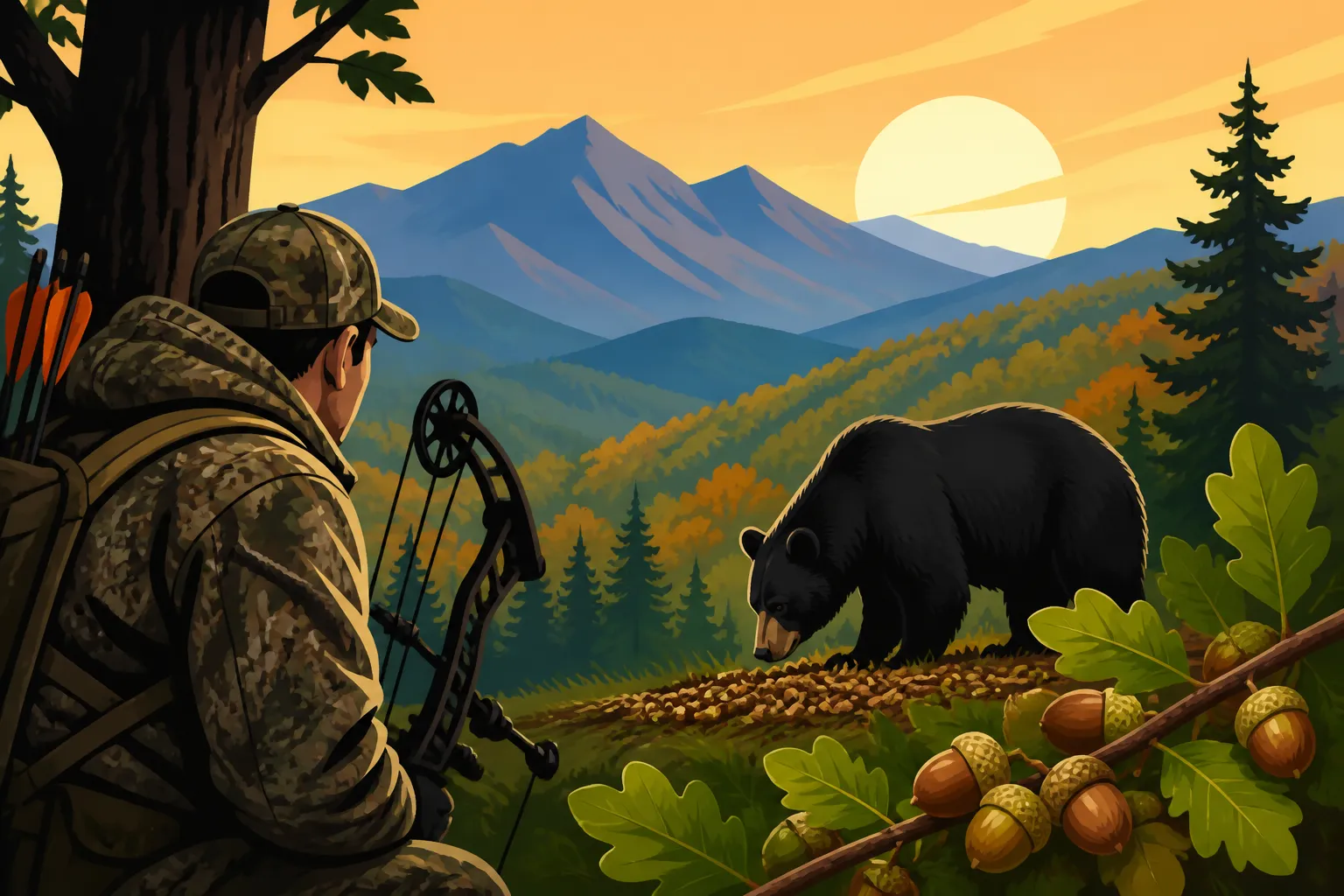
Hunting Bears Over Natural Mast in the Mountains
Hunting bears in Virginia's vast, rugged mountain country can feel like searching for a ghost sometimes, especially when you're trying to figure out where those elusive bruins are feeding. It's incredibly frustrating to spend hours on a stand, scanning miles of timber, only to wonder if you're even in the right zip code. This guide is here to cut through that frustration, focusing on how to understand, locate, and effectively hunt bears that are actively feeding on natural mast crops in Virginia's mountains, giving you a real edge in a challenging pursuit.
Understanding Bear Behavior and Natural Mast Sources
Virginia's black bears are incredibly intelligent and opportunistic feeders, and their movements are almost entirely dictated by food availability. When natural mast crops are abundant in the mountains, bears will gorge themselves, sometimes forgoing other food sources entirely. This makes finding a good mast crop a critical first step in locating bears. It's a game of connecting the dots: finding the food means finding the bears.
What is "Mast" and Why is it Critical for Bears?
"Mast" refers to the fruits, nuts, and seeds of woody plants that serve as food for wildlife. It's typically categorized into hard mast and soft mast. For bears, especially in the late summer and fall, mast is king. It's packed with the calories and fat they need to survive the winter denning period. A bumper crop of acorns, for instance, can concentrate bears in areas they might not frequent in a lean year, creating prime hunting opportunities. Conversely, a poor mast year can scatter bears far and wide as they desperately seek alternative food sources like agricultural crops in lower elevations or even expand into suburban areas, making them much harder to pattern in the deep woods.
Hard mast includes things like acorns (from various oak species), hickory nuts, beechnuts, and chestnuts. These are incredibly important due to their high caloric value and fat content. Virginia's mountains are rich with different oak species – white oaks, red oaks, chestnut oaks – all producing mast at slightly different times, which can keep bears in a particular area for an extended period. Soft mast, on the other hand, includes berries, wild grapes, persimmons, and apples. While also important, soft mast typically ripens earlier in the season and degrades faster, making it a more transient food source. Bears will hit soft mast hard in late summer and early fall, but as the season progresses, hard mast becomes their primary focus, especially leading up to the denning period.
Key Mast-Producing Trees in Virginia's Mountains
Knowing your trees is half the battle when it comes to identifying good mast-producing areas. In the Appalachian range of Virginia, certain species are absolute magnets for bears when they're producing.
- White Oaks: These are often the first to drop their acorns, usually in late September to early October. White oak acorns are preferred by many animals, including bears, because they contain less tannin, making them sweeter. If you find an area with a good white oak crop, you're likely to find early-season bear activity. Look for the distinct rounded lobes on their leaves.
- Red Oaks (Northern Red, Scarlet, Black Oaks): These acorns drop later, typically from mid-October into November. They have a higher tannin content, so bears might not hit them as hard initially, but they become a crucial food source as other mast disappears. They also tend to hang on the trees longer and are available later into the season, making them vital for bears topping off their fat reserves. Their leaves have pointed lobes with bristles.
- Chestnut Oaks: These thrive on dry, rocky ridges and often produce large acorns. They drop earlier, similar to white oaks, and are highly favored by bears. If you're hunting high ridges in the George Washington National Forest or Jefferson National Forest, always be on the lookout for chestnut oaks. Their leaves are distinct, with saw-toothed margins and no bristles.
- Hickories: While not as consistently favored as acorns, hickories (like shagbark and pignut) offer a good supplement, especially in years where oak mast is scarce. Bears will spend considerable time cracking open hickory nuts for their rich, oily kernels.
- Wild Cherry and Persimmon: These are fantastic soft mast sources. Wild cherry ripens earlier in the summer and early fall, attracting bears, while persimmons typically drop in October and are a significant draw, especially after a few frosts. Finding a stand of persimmon trees with dropping fruit is like hitting the jackpot for late-season bear hunting.
Understanding these trees and their fruiting cycles is paramount. When you're scouting, you're not just looking for bear sign; you're actively searching for the trees that produce their preferred food and assessing the abundance of that food.
Scouting for Prime Mast-Feeding Locations
You can't effectively hunt bears over natural mast if you don't know where the mast is. This means getting out there and putting boots on the ground long before the season opens. Pre-season scouting is non-negotiable for consistent success. It allows you to identify hot spots and pattern bear movements before hunting pressure changes their behavior.
Pre-Season Reconnaissance: Identifying Mast Crops
The best time to start scouting for mast is typically late summer through early fall, even as early as August, to get a sense of the potential crop. This allows you to differentiate a banner year from a bust.
- Glassing Hillside and Ridges: From distant vantage points, use good binoculars to scan oak flats and ridges for heavy acorn production. Look for the tell-tale clusters of nuts on the branches. While difficult to do for every tree, it can help you pinpoint general areas with higher mast concentrations. This can be particularly effective in areas where you might be Glassing a Powerline Cut at Last Light for other game.
- Boots on the Ground: This is the most crucial step. Walk the ridges, hollows, and benches. Focus on areas with mature timber, especially mixed oak stands. Look directly up into the canopy for acorns or other mast. Pay close attention to the ground for dropped nuts, especially under white oaks which are often consumed quickly. For mapping, I often use a tool like GoHunt's mapping system to mark potential mast areas, especially in the George Washington National Forest or Jefferson National Forest where knowing the terrain and tree species distribution can make a huge difference. This also helps you keep track of areas you've checked, especially across vast public lands.
- Identifying Bear Sign: As you scout, look for fresh bear sign directly related to mast consumption.
- Scat: Bear droppings will be full of acorn caps or other mast remnants. Fresh scat is a clear indicator of recent activity.
- Torn-Up Ground: Bears are known to root around like hogs, flipping over leaves and digging shallow holes to find buried acorns or grubs underneath. This torn-up leaf litter is a strong indicator.
- Tracks: Look for large, distinct bear tracks in soft soil near mast trees or along trails leading to them.
- Claw Marks on Trees: Bears will climb certain trees, especially cherry or persimmon, to access fruit. Look for fresh claw marks on the bark.
- Rub Trees: Bears often rub their backs against trees to scratch or leave scent. While not directly related to mast, a heavily used rub tree near a mast stand indicates a bear travel corridor.
Using Technology for Scouting Efficiency
While traditional woodsmanship is essential, modern technology can greatly enhance your scouting efforts, especially across the vastness of Virginia's public lands.
- Mapping Apps: Tools like the Virginia DWR app or other hunting-specific mapping applications are invaluable. They allow you to mark specific mast trees, observe terrain features like saddles and benches, and identify potential bedding and travel corridors. Being able to drop pins on your phone for a cluster of white oaks or a productive persimmon tree saves a lot of time later. You can also use them to identify public land boundaries, which is crucial when planning your hunt. Remember, you might be Scouting With the Virginia DWR App for deer, but the same principles apply to bears!
- Aerial Imagery: Reviewing satellite imagery can help identify different timber types. Hardwood ridges and creek bottoms, often visible through aerial views, are prime areas for mast production. Look for changes in canopy texture or color that might indicate different tree species.
- Trail Cameras: While the rules on trail cameras on public land can vary, if legal in your specific hunting area, placing them on trails leading into or out of mast areas, or directly on major bear trails, can confirm activity, identify specific bears, and help you understand their feeding patterns (time of day, frequency). However, always be mindful of ethical considerations and regulations regarding their use.
| Mast Type | Primary Species (Virginia) | Ripening/Dropping Season | Bear Preference | Key Characteristics |
|---|---|---|---|---|
| Hard Mast | White Oak (Acorns) | Late Sep – Early Oct | High | Sweeter, lower tannin, quickly consumed |
| Chestnut Oak (Acorns) | Late Sep – Early Oct | High | Large acorns, common on dry ridges | |
| Red/Black/Scarlet Oak (Acorns) | Mid Oct – Nov | Moderate/High | Higher tannin, available later in season, crucial for fat | |
| Hickory (Nuts) | Oct – Nov | Moderate | Rich, oily kernels, supplement to acorns | |
| Soft Mast | Wild Cherry (Berries) | Late Summer – Early Fall | Moderate | Early season draw, quickly consumed |
| Persimmon (Fruit) | Oct (after frost) | High | Sweet, sticky fruit, late season magnet | |
| Wild Grape (Berries) | Late Summer – Early Fall | Moderate | Often found in thickets, provides quick energy |
Hunting Strategies Over Natural Mast
Once you've identified an active mast-feeding area, the next step is to develop a solid hunting strategy. Bears are smart, and they are masters of using the terrain to their advantage. Your approach needs to be calculated and mindful of their senses.
Stand Placement and Ambush Tactics
Hunting from a fixed position, like a treestand or a ground blind, is often the most effective way to intercept bears moving into or feeding in a mast area.
- Identify Travel Corridors: Bears don't just appear in a mast patch; they travel to it. Look for well-worn trails leading from thick bedding cover (like dense laurel thickets, rhododendron hells, or inaccessible benches) to the feeding area. Also, identify trails that follow ridge lines, creek bottoms, or benches that connect different feeding areas. These pinch points and funnels are ideal for stand placement.
- Wind and Thermals are King: In mountain hunting, understanding wind and thermals is paramount. Air currents in mountainous terrain are tricky; they often rise in the morning as the sun heats the ground and fall in the evening as the air cools. Always set up with the wind in your favor, anticipating these thermal shifts. Your scent must blow away from where you expect bears to approach or be feeding. This is especially true when you're considering Wind and Thermals on a Blue Ridge Slope.
- Treestand Placement: Position your treestand or saddle (many hunters are now Saddle Hunting in Virginia Hardwoods) on the downwind side of the mast area, ideally overlooking a well-used trail or an open cluster of productive trees. Aim for a vantage point that offers good visibility but also sufficient cover to break up your outline. Remember to trim shooting lanes before the season. For public land hunting in areas like the George Washington National Forest, ensure your stand is legal and adheres to DWR regulations regarding permanent stands.
- Ground Blind Placement: If you prefer a ground blind, brush it in thoroughly to break up its silhouette. Place it carefully where you have good shooting lanes but remain concealed. Again, wind direction is critical. Ensure your entry and exit routes don't cross potential bear travel paths, especially at dawn and dusk.
- Patience is a Virtue: Bears often feed intermittently throughout the day, but their most active periods are typically early morning and late afternoon into evening. Be prepared for an all-day sit if regulations allow, especially during the peak fall season.
Still-Hunting and Stalking Mast Areas
While ambush hunting is effective, still-hunting or slow-stalking through mast-rich areas can also be highly productive, especially on large tracts of public land where bears might be widely dispersed.
- Slow and Deliberate Movement: This isn't a race. Move incredibly slowly, taking a few steps then pausing to scan, listen, and glass. Bears have an incredible sense of smell and hearing, and they can be remarkably quiet even when feeding heavily. Use the terrain to your advantage, moving along contours or through depressions to stay out of sight. When you're Still-Hunting Jefferson Forest Ridges, this deliberate pace is key.
- Read the Ground: As you move, constantly look for fresh sign – fresh tracks, turned-over leaves, fresh scat. These are indicators that bears are actively using the area now. Adjust your approach based on what you find.
- Wind Check, Always: Just like with stand hunting, always be aware of the wind direction. You'll need to constantly check it with a wind checker or a pinch of dust to ensure your scent isn't blowing ahead of you.
- Visibility and Cover: Focus your still-hunting efforts on areas that offer reasonable visibility but also enough cover to remain concealed. Areas with open understories under large oaks can be good, but avoid open, noisy sections. Creek bottoms and benches with scattered mast trees are often productive as they offer natural travel routes and abundant food.
- Focus on the "Noises": When still-hunting, don't just look for bears; listen for them. The sound of acorns crunching, leaves rustling as they move, or even a branch breaking can betray their presence. If you hear something, freeze and let your eyes and ears do the work.
Timing Your Hunt: Peak Mast Availability
Virginia's bear season typically opens in October or November, overlapping perfectly with the peak hard mast drop.
- October: Early October often sees the white oaks dropping their acorns. This can be an excellent time to target bears that are keenly focused on this high-energy food source.
- November: As November progresses, red oaks and chestnut oaks become increasingly important, and bears are in full "hyperphagia" mode – eating as much as possible before denning. This month is often prime, especially if you're Hunting Mountain Bears in November. If soft mast like persimmons are still dropping, those areas can also be very productive, particularly after a few hard frosts sweeten the fruit.
- Weather Influences: A cold front can often spur increased feeding activity as bears sense the approaching winter. Rainy or windy days can also be beneficial, as the noise helps mask your approach when still-hunting, and bears might feel more secure moving. However, clear, still days can be tough due to poor visibility and loud leaf litter.
Post-Harvest and Management Considerations
After all your hard work, successfully harvesting a bear over natural mast is a rewarding experience. But the job isn't done at the shot; there are important steps to follow for both responsible hunting and good wildlife management.
Reporting Your Bear and Meat Care
Virginia has specific requirements for reporting harvested game, and bears are no exception. This data is vital for the Virginia Department of Wildlife Resources (DWR) to manage the population effectively.
- Immediate Reporting: All bears harvested in Virginia must be reported to the DWR by midnight on the day of kill. This can typically be done online through the Go Outdoors Virginia website, via the DWR mobile app, or by calling a toll-free number. You'll need specific information like the county of harvest, date, sex of the bear, and the weapon used. Accurate reporting ensures that biologists can monitor harvest numbers, population health, and make informed decisions about future seasons.
- Meat Care in the Field: Bears have a thick layer of fat, and their meat can spoil quickly, especially in warmer early-season temperatures. Immediately after the kill, begin field dressing. Remove all internal organs, and if possible, split the sternum and pelvis to allow the body cavity to cool down. If you're deep in the backcountry, consider quartering the bear and bagging the meat in game bags to facilitate cooling and transport. Getting the hide off and the meat cooling rapidly is crucial for quality.
- Transporting Your Harvest: Be aware of legal requirements for transporting your bear. The carcass must remain intact enough to determine sex and species until it reaches its final destination for processing. If you're hunting in a remote mountain area, having a sturdy sled, game cart, or even a pack frame can make the task of dragging a bear out much more manageable. You can find useful information about Dragging a Deer Out of a Mountain Hollow which applies equally, if not more, to bears.
Contributing to Conservation and Community
Hunting bears isn't just about the personal experience; it's also about being a responsible conservationist and contributing to the wider hunting community.
- Providing Samples for DWR: In certain areas, particularly those bordering counties with Chronic Wasting Disease (CWD) concerns or other disease monitoring zones, the DWR may request samples (such as a lymph node or tooth) from your harvested bear. Participating in these programs provides valuable data for wildlife biologists to monitor overall herd health and track diseases like mange that can impact bear populations. Many hunters are also participating in Virginia CWD Testing for Hunters when they harvest deer, and similar efforts can apply to bears in specific research contexts.
- Donating Meat: If you find yourself with more bear meat than you can use, consider donating it to local food banks or programs like Hunters for the Hungry. It's a fantastic way to share your harvest with those in need and promote a positive image of hunting. Bear meat is delicious and versatile, and many organizations are grateful for wild game donations.
- Mentoring New Hunters: Sharing your knowledge and passion for bear hunting, especially the intricacies of hunting over natural mast, is vital for the future of our sport. Take a new hunter out, teach them about tree identification, bear sign, and mountain ethics. It's an investment in the next generation of Virginia hunters.
Hunting bears over natural mast in the Virginia mountains is a true challenge, but by understanding bear behavior, diligently scouting for food sources, employing smart hunting strategies, and adhering to responsible post-harvest practices, you can greatly increase your chances of success and gain a deeper appreciation for this magnificent animal and its mountain home.
Disclaimer
Please remember that hunting regulations and seasons can change. Always consult the most current Virginia Department of Wildlife Resources (DWR) regulations before heading afield. Safety should always be your top priority.