Crow Hunting Seasons and Tactics in Virginia
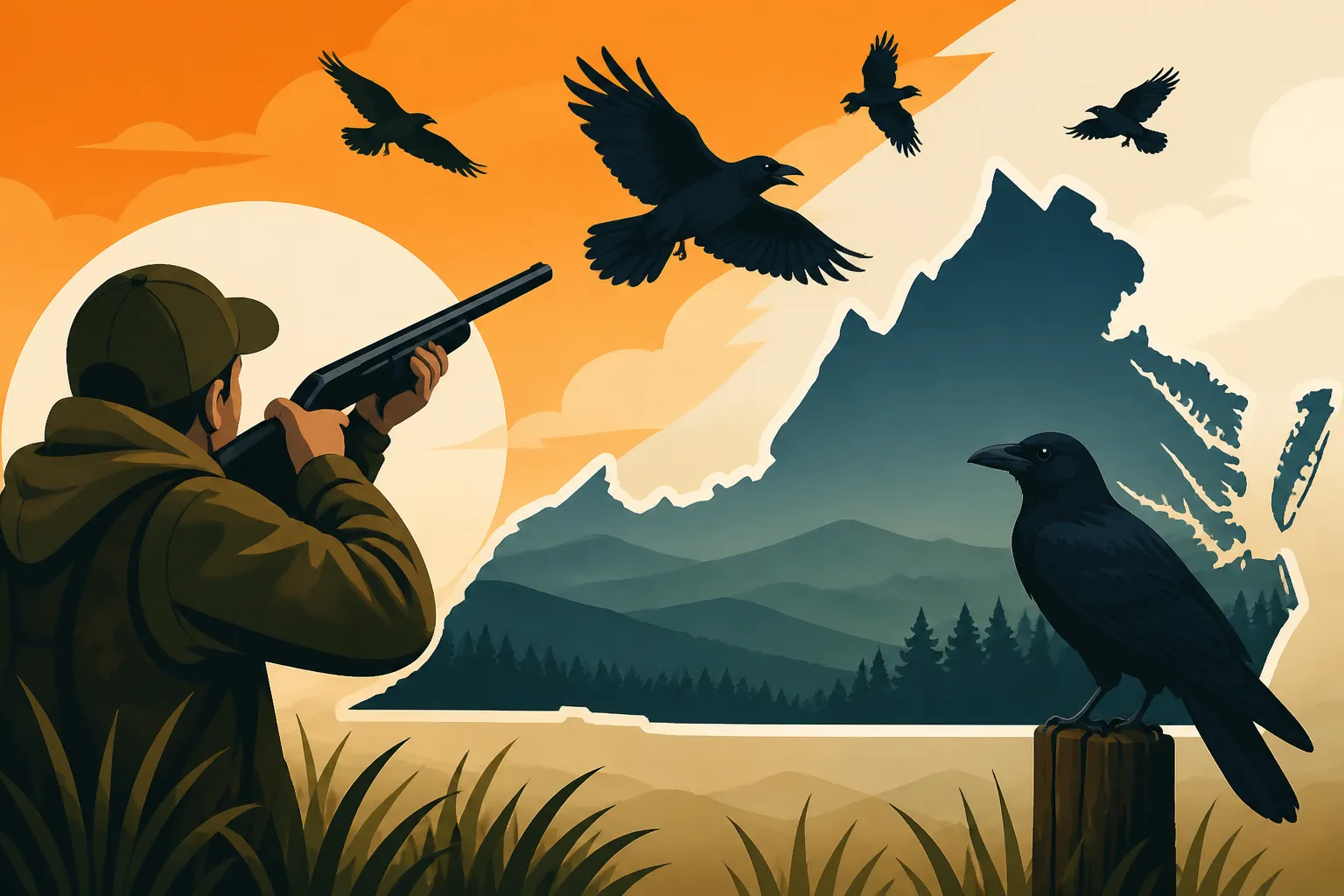
The caw-caw of a crow can be an annoying sound for farmers watching their crops, or simply a nuisance in suburban areas. But for many Virginia hunters, that distinct call signals an exciting, year-round opportunity to hone their skills, enjoy fast-paced action, and help manage a highly intelligent bird population. If you’ve been curious about targeting these clever corvids but aren't sure where to start with seasons, tactics, or gear, you've come to the right place. This guide will help you understand the ins and outs of crow hunting in Virginia, from legal seasons to calling strategies.
Deciphering Virginia's Crow Hunting Seasons and Regulations
One of the most appealing aspects of crow hunting in Virginia is the sheer length of the season. Unlike many other game species with tightly defined windows, crows offer hunters a much more expansive opportunity to get out into the field. However, there are still specific regulations you need to be aware of, so don't just grab your shotgun and head out.
The Long, But Sometimes Split, Season
Virginia's crow season is unique because crows are classified as migratory game birds by federal law, yet they are also widely recognized as agricultural pests. This dual status allows for a much longer season than most other migratory birds, often spanning several months of the year. Typically, the Virginia Department of Wildlife Resources (DWR) establishes two distinct segments for crow hunting. You might find an early fall segment, perhaps running from early September through late November, followed by a winter segment that picks up in January and continues into March. The specific dates can shift slightly each year, so it's always best to check the current DWR Hunting & Trapping Regulations.
This split season offers fantastic flexibility. The early fall period often coincides with milder weather, making for comfortable days afield and opportunities to scout before deer seasons kick into high gear. Crows are often focused on newly harvested fields or ripening crops during this time. The later winter segment, however, can be incredibly productive, as large numbers of crows often congregate in massive roosts, especially during colder weather, making them more predictable targets if you can locate these gathering points. There is generally no daily or season bag limit for crows in Virginia, which means if you find an active area, the action can be non-stop.
Legal Hunting Hours and Sunday Restrictions
Just like hunting for other game in the Old Dominion, there are specific legal hunting hours for crows. In Virginia, you can typically hunt crows from one-half hour before sunrise until sunset. This applies to all legal hunting days. This gives you ample opportunity to intercept birds moving to and from roosts in the early morning or late afternoon, which are often prime times for activity.
However, a critical regulation to remember is Virginia's Sunday hunting law. While recent changes have opened up Sunday hunting for deer and other species on private land, crow hunting on Sundays generally remains prohibited across the state. Always verify the most current regulations to ensure you're in compliance, as laws can and do change. Understanding these nuances is crucial for any responsible hunter, and planning your hunts for weekdays or Saturdays will ensure you're within legal bounds. If you're venturing onto public lands like national forests or Wildlife Management Areas, pay extra attention to posted rules, as these areas sometimes have additional restrictions on hunting days or hours.
Understanding Crow as a Game Bird vs. Pest
The federal Migratory Bird Treaty Act protects crows, but also acknowledges their status as agricultural pests. This is why their hunting regulations differ significantly from, say, ducks or geese. While you still need a valid Virginia hunting license and HIP certification (which you'd also need for "Virginia Waterfowl Zones and Seasons"), there's no federal duck stamp requirement for crows. The goal of crow hunting, from a wildlife management perspective, often includes crop protection and nuisance control.
Farmers often welcome crow hunters because large flocks can decimate newly planted fields or damage ripe crops like corn and peanuts. This pest status is why bag limits are usually unrestricted. When you're out crow hunting, you're not just enjoying a challenging sport; you're also providing a service to the agricultural community. This often makes it easier to gain permission for "Getting Private Land Permission in Virginia" compared to deer hunting, especially if you emphasize the pest control aspect to landowners.
| Season Segment | Typical Dates (Approximate) | Daily Bag Limit | Shooting Hours | Sunday Hunting |
|---|---|---|---|---|
| Early Fall | Early Sept. – Late Nov. | None | 1/2 hr before sunrise to sunset | Prohibited |
| Winter | Early Jan. – Mid-March | None | 1/2 hr before sunrise to sunset | Prohibited |
Note: Always consult the current Virginia DWR Hunting & Trapping Regulations for precise dates and any annual changes.
Essential Gear for Outsmarting Wary Crows
Crow hunting doesn't require an arsenal of expensive, specialized equipment, but having the right tools can significantly increase your success. Crows are notoriously intelligent and have excellent eyesight, so your gear and setup need to be well thought out.
The Power of Effective Calling Devices
At the heart of any successful crow hunt is an effective calling strategy. Crows communicate constantly, and mimicking their calls is the primary way to draw them into range. While experienced hunters can use mouth calls, electronic callers have become incredibly popular and effective due to their realism and versatility. Devices from brands like Foxpro or Primos are excellent, but regardless of the brand, the key is having a variety of sounds. You'll want distress calls (mimicking a crow in trouble), fighting calls (crows squabbling over food or territory), and assembly or aggregation calls (crows gathering).
The trick isn't just what call you use, but how you use it. Start with an aggressive assembly call to get their attention, then transition to distress or fighting calls to really pique their curiosity and anger. Vary the volume and cadence; don't just hit play and wait. Use short, sharp bursts, then pause. Observe their reaction. If they're coming in hot, you might back off the calling a bit. If they're hanging up, a more frantic distress call might seal the deal. Remember, crows learn quickly, so don't over-call from one spot repeatedly. For more insights on calling, check out "Predator Calling Virginia Farm Country", as many principles apply.
Decoys and Unwavering Concealment
Crows, with their keen eyesight, are wary birds. They're much more likely to commit to your setup if they see other crows already on the ground, or better yet, a perceived threat like an owl or hawk. Decoys are a critical component for convincing them to come into shotgun range. Full-body crow decoys placed strategically on the ground or in trees can be very effective. Positioning them around an owl or hawk decoy (often called a "super decoy" setup) can be incredibly potent, as crows will mob predators, attempting to drive them away.
However, even the best decoys are useless if the crows spot you. Unwavering concealment is paramount. This means full camouflage, including a face mask and gloves. Pop-up ground blinds are excellent, especially when hunting field edges or open areas, as they provide full concealment and allow for movement. If you're hunting in timber, utilizing natural cover like thick brush, standing pines, or the base of large trees can work, but you need to be absolutely motionless. Consider using a mapping tool like GoHunt to scout the terrain beforehand, identifying natural concealment options and potential setup spots. For tips on maximizing your hide, take a look at "Using a Ground Blind on Virginia Public Land".
Firearms and Ammunition Choices
For crow hunting, a shotgun is typically your weapon of choice due to the fast, erratic flight patterns of incoming birds. A 12-gauge or 20-gauge shotgun with a modified or improved cylinder choke is generally ideal. You'll want a pattern that's broad enough to catch these agile flyers but dense enough to deliver sufficient energy for a clean kill. As for ammunition, standard game loads with smaller shot sizes, such as 7 ½ or 8, are usually more than adequate. You don't need heavy waterfowl loads or magnum charges for crows. The goal is a dense pattern of small pellets.
While shotguns are the norm, some hunters also utilize small-caliber rimfire rifles like a .22LR or even an air rifle for crows, especially in areas where shotguns might be too loud or overkill, or for taking crows perched at longer ranges. However, this demands excellent marksmanship and a very stable rest. Always be aware of your backdrop and local regulations regarding firearms discharge, particularly if you're hunting in more populated areas or on smaller private tracts. For general firearm considerations in Virginia, you might find "Virginia Legal Firearms for Deer Hunting" a helpful reference, even though it focuses on deer.
Tactical Approaches to Calling and Decoying Crows
Crow hunting is often compared to turkey hunting in its requirement for scouting, calling, and camouflage, but with a faster pace and a different kind of intelligence to outwit. Successful tactics blend keen observation with aggressive, yet smart, calling.
Scouting for Roosts and Prime Feeding Locations
Just like deer or turkeys, crows are creatures of habit. They have preferred roosting sites, often large stands of pines or hardwoods where hundreds, sometimes thousands, gather at night. They also have established flight lines and feeding areas, which can include agricultural fields (especially corn, peanuts, and soybeans), open pastures, landfills, or areas with roadkill. Effective scouting is your first and most crucial step.
Spend time in the late afternoon observing crow flight patterns. Look for large groups heading in a specific direction – this often points to a communal roost. In the mornings, watch where they disperse to feed. Farmers are an excellent source of information; they'll tell you which fields crows are hitting hard. Using aerial maps, perhaps on a mapping application like GoHunt, is invaluable for identifying potential roosting woods, flight corridors, and feeding areas. Mark these spots on your map. Understand that crows have an incredible memory; they’ll remember where they’ve been shot at, so finding fresh, unpressured areas is key. Checking out "Scouting Virginia Public Land Before Season" can give you general tips on finding game, even if it's for deer.
Setting Up Your Ambush and Executing the Call
Once you've identified a promising area, your setup is paramount. Crows will approach from a distance, circling and observing, so your concealment needs to be flawless. Position your ground blind or natural hide in a location that offers a clear shooting lane but also breaks up your silhouette. Think about the wind – crows will often fly into the wind before setting down, giving you a better shot if you position yourself accordingly. Place your decoys strategically. If you're using crow decoys, spread them out naturally as if they're feeding or resting. If you're using an owl or hawk decoy, place it in a prominent position, with your crow decoys positioned around it as if they are mobbing the predator.
When it comes to calling, start strong to grab their attention from afar. An aggregation call, followed by a frantic distress call, can quickly draw them in. Once they are within sight, observe their reaction. If they are flying directly towards your setup, you might quiet down slightly, letting the decoys do the work. If they start to circle high or seem hesitant, a short, sharp burst of fighting calls or more distress can sometimes convince them to commit. The goal is to bring them within 20-30 yards for a clean, ethical shot. Be patient, but also be ready for fast action once they commit.
Adapting to Pressure and Educated Birds
Crows are exceptionally intelligent, and they learn quickly. If you hunt the same spot with the same calls and tactics repeatedly, they will become "educated" and simply fly around your setup, out of range. This is where adaptation becomes crucial. First, rotate your hunting spots. Don't hit the same roost or field more than once or twice a week. Second, vary your calling sequence. If aggressive distress calls worked last week, try a more subtle, squabbling approach this week. Change up the volume and cadence.
Consider using different types of decoys or changing their arrangement. Sometimes, a simpler spread can work better than an elaborate one. If crows are consistently hanging up out of range, try moving your setup further away from their approach path, or set up closer to their flight line but use more subtle calls. The GoHunt app can be useful for logging your past hunt locations and success rates, helping you identify areas that might be getting too much pressure. Remember, the challenge and fun of crow hunting lie in outsmarting these incredibly smart birds, so be prepared to change your game plan on the fly.
Responsible Crow Hunting: Safety and Ethics
As with any form of hunting, responsible crow hunting means prioritizing safety, respecting the land, and adhering to ethical practices. Even though crows are plentiful, our actions in the field reflect on all hunters.
Prioritizing Safety in the Field
Safety should always be your number one concern. When hunting crows, you are often shooting at fast-moving targets in open fields or over timber. This necessitates an absolute certainty of your backstop. Never shoot at a crow unless you know exactly what is behind it. A shot pellet can travel a significant distance, and residential areas, roads, or livestock can be surprisingly close. Always wear appropriate blaze orange or blaze pink clothing, especially if you're hunting during an overlap with deer season or on public land where other hunters might be present. Check "Virginia Blaze Orange Requirements" for specific guidance.
Communicate clearly with your hunting partners about zones of fire and shooting lanes. Always keep your firearm pointed in a safe direction, and keep your finger off the trigger until you are ready to shoot. Unload your firearm when crossing fences or other obstacles. The dynamic nature of crow hunting, with quick shots and rapid reloads, demands extra vigilance in handling your firearm. Take your time, be deliberate, and ensure every shot is safe and ethical.
Respecting Landowners and Fellow Hunters
If you're hunting on private land, which is often the most productive for crows, landowner relations are paramount. Always get explicit permission before you hunt, and make sure you understand any specific requests or restrictions the landowner might have. Offer to share your harvest or help with farm chores. Remember, you're on their property, and their goodwill is essential for future hunting opportunities. Leave no trash behind, close all gates, and respect their property as if it were your own.
When hunting public lands, be mindful of other users. Hikers, birdwatchers, or other hunters may be in the area. Practice good sportsmanship and give others ample space. Be considerate with your calling volume; while you want to attract crows, you don't want to blast out calls that might disturb others unnecessarily. Ethical crow hunting also means making clean, quick kills. While there's no bag limit, shooting at extreme ranges or taking reckless shots that only wound birds is unethical. The aim is to quickly dispatch the bird, not to pepper the sky indiscriminately. A little respect goes a long way in ensuring positive perceptions of hunters.
Disclaimer
The information provided in this guide is for general informational purposes only and is not a substitute for checking the official Virginia Department of Wildlife Resources (DWR) regulations. Hunting laws and seasons can change, and it is the hunter's responsibility to know and follow all current state and federal regulations. Always prioritize safety and ethical hunting practices.