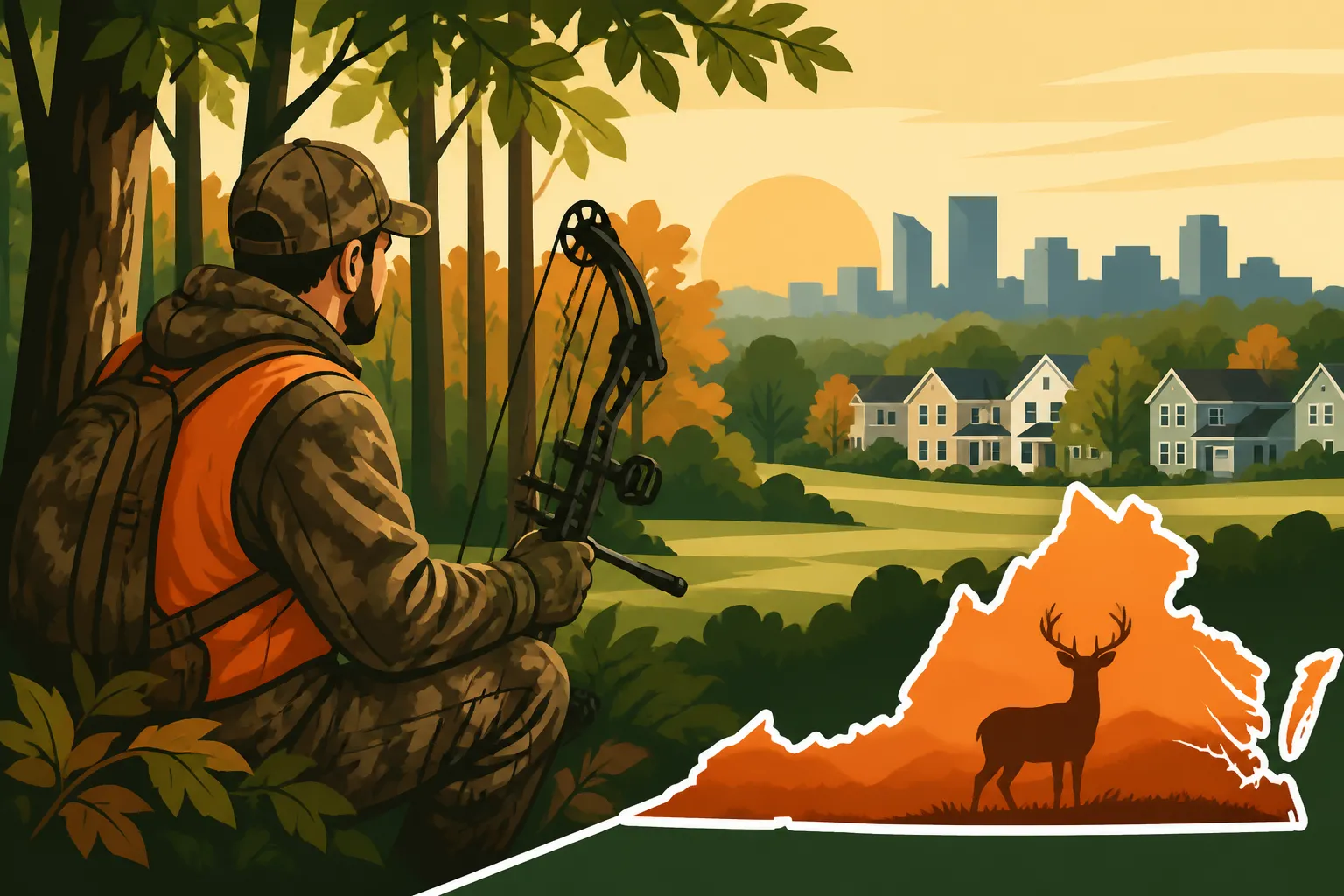
Hunting Small Woodlots Near Suburban Richmond
Finding quality hunting land near a bustling metropolitan area like Richmond can feel like an impossible task. The sprawl of subdivisions, busy roads, and constant human activity often discourages hunters from even trying, leading to the frustration of limited access. But don't despair! This comprehensive guide will equip you with the knowledge and tactics to successfully navigate and hunt the often-overlooked small woodlots nestled within suburban Richmond, transforming seemingly impossible spots into productive hunting grounds.
Understanding the Unique Dynamics of Suburban Woodlots
Hunting small parcels of land on the fringes of a major city isn't like heading into the deep wilderness of the George Washington National Forest. These are entirely different environments with their own set of rules, challenges, and surprisingly, unique advantages. You're dealing with deer that are accustomed to human presence but are also highly sensitive to direct pressure.
The Double-Edged Sword of Proximity and Pressure
The close proximity to homes, parks, and busy roads might seem like a deterrent, but for deer, it often translates into a sense of security from traditional hunting pressure. These urban and suburban deer learn very quickly that the woodlot behind Mrs. Johnson's house is a safe haven compared to the larger tracts of timber that see more orange during gun season. They adapt their movements, often becoming almost entirely nocturnal, especially outside of the rut. This doesn't mean they're unhuntable, but it demands a different strategy.
Think about a small, crescent-shaped woodlot tucked between a subdivision and a commercial park in, say, Midlothian or western Henrico. Deer will use these seemingly insignificant patches for bedding during the day, feeling secure from vehicular traffic and most human interference. Their travel corridors might be incredibly narrow – a fencerow leading to a garden, a small creek bottom winding through backyards, or even a line of overgrown cedars bordering a bike path. The challenge isn't just finding deer; it's understanding how they use these miniature habitats and when they move within them, often under the cover of darkness. The constant presence of dog walkers, joggers, and kids playing means deer are always on high alert, even if they appear calm from a distance. Any deviation from their routine, like a hunter's presence, is immediately registered.
Reading the Landscape: Micro-Habitat Analysis
In these small woodlots, every single tree, every subtle contour, and every dense thicket becomes critically important. You're not looking for vast expanses of oak flats or miles of ridge lines. Instead, you're performing a detailed, almost forensic, analysis of a tiny parcel. Identifying pinch points and funnels might mean a gap in a chain-link fence, a culvert under a road, or a narrow strip of unkempt woods between two neatly mowed lawns. Bedding areas could be as small as a dense patch of honeysuckle or briars, just big enough for a single deer to lie down, completely out of sight.
Food sources are often diverse and seasonal. While they might include natural browse, deer in these areas frequently supplement their diets with ornamental plants from gardens, acorns from isolated oak trees, or even leftover crops from small community gardens or agricultural remnants. A few old apple trees on a forgotten homestead, a small patch of persimmons, or even a standing patch of unharvested soybeans in a narrow field can become major attractants. Escape routes are equally crucial – a dense swampy area bordering a subdivision, a steep bank leading to a creek, or a thick pine plantation offering immediate concealment. You'll need to use tools like aerial maps and property line overlays, which GoHunt's mapping features excel at providing, to understand every boundary and potential travel lane within and around these micro-habitats. Even a fallen log across a small ditch can become a preferred crossing point for a wary buck.
Strategic Scouting and Gaining Access to These Hidden Gems
The biggest hurdle for hunting small suburban woodlots isn't necessarily finding deer (they're often abundant), but gaining legal and ethical access. This requires a different approach than traditional public land hunting.
The Art of the Knock-and-Talk: Securing Private Land Permission
This is where the rubber meets the road. In suburban Richmond, almost all huntable small woodlots are on private property. Securing permission is paramount. You need to be prepared, polite, and persistent. Start by thoroughly researching parcels that look promising using online county GIS maps, which can show property lines, ownership details, and even aerial photos. Tools like GoHunt can be invaluable here, allowing you to easily identify landowners and visualize the terrain without ever setting foot on the property initially. Once you have a target parcel, prepare a clear, concise, and professional pitch.
When you knock on a door, dress presentably, be respectful, and clearly state your intentions. Emphasize that you are a responsible hunter interested in deer management and that you would only use archery equipment (if that's your plan, and it's highly recommended for suburban settings). Highlight the potential benefits to the landowner, such as reducing deer browse on their landscaping, mitigating deer-vehicle collisions, or even simply enjoying fresh venison. Offer to provide references if you have them, and make it clear you understand the importance of safety and privacy. Be ready to explain "Do You Need Written Permission in Virginia?" and assure them you will follow all state and local laws. Sometimes it takes multiple attempts or offering to help with other tasks around their property, but building trust is key to securing that invaluable permission slip. Remember, a "no" is not personal; it just means finding the next opportunity.
Intelligent Scouting for Minimal Impact
Once you have permission, your scouting strategy needs to be subtle and low-impact. These deer are already accustomed to human presence, but direct, intrusive scouting can quickly turn them nocturnal or push them out of the small area. The off-season, when deer activity is less pressured and vegetation provides more cover, is your best friend. Look for subtle signs: faint trails, rub lines on small saplings, fresh droppings, and feeding areas. Pay close attention to wind currents and thermals in these tight spaces, as they can behave differently than in open country.
Trail cameras can be incredibly effective for understanding deer movement patterns without constant physical presence. Place them discreetly, angled away from public view, and set to record for minimal disturbance. Wireless cameras that send images directly to your phone can be a game-changer, allowing you to monitor activity from afar. Use these to pinpoint travel times, preferred entry/exit points, and the specific deer (bucks, does, fawns) using the woodlot. This knowledge will help you plan your hunts with surgical precision. Remember to use tools like the Scouting With the Virginia DWR App to double-check boundaries and regulations, even on private land, as some areas may have specific ordinances. Reading aerial photos for Piedmont deer can give you an edge in identifying subtle terrain features and bottlenecks.
Effective Hunting Tactics for Tight Quarters
Hunting small woodlots is a chess match against highly adaptable, pressured deer. Your success hinges on precision, patience, and a deep understanding of minimalist tactics.
Mastering Entry and Exit Routes
In small woodlots, your entry and exit routes are arguably more critical than your stand location. A single careless approach can blow out the entire area, rendering your hunt useless for days. Plan your routes meticulously, always considering the wind direction and thermals. Your goal is to get to and from your stand without deer ever knowing you were there. This might mean taking a circuitous path through thicker cover, utilizing a ditch line, or even walking a paved road or driveway for a portion of the way if it keeps you out of the deer's primary travel corridors.
For morning hunts, try to enter before first light, giving the woods time to settle before deer start moving. For evening hunts, plan to be in your stand at least an hour before deer activity typically begins. Exiting is just as important. If you can wait until total darkness, or even come back in the morning for a retrieved deer, that's often best. This prevents disturbing deer that may be moving into the area after dark. If you absolutely must exit while deer are still active, do so slowly, quietly, and with the wind in your favor. Sometimes, having a partner drop you off and pick you up can minimize impact, especially if you're Hunting a Funnel Between Two Hollows where deer movement is concentrated.
Stand Placement and Low-Impact Hunting
With limited acreage, your stand placement needs to be perfect for the specific conditions of that day. You're typically not looking for long shots, but rather close-range engagements with bow or crossbow, given that "Crossbow Rules During Virginia Archery Season" allow them. Consider a small, portable lock-on stand, or even a saddle hunting setup, which allows for extreme mobility and minimal setup noise. Tree selection is key; choose a tree that offers good cover and a clean shot lane, but also one that allows for a silent ascent.
Ground blinds can also be incredibly effective, especially if you can brush them in naturally against a thicket or fencerow, creating a sense of permanence that deer will grow accustomed to. Using a Ground Blind on Virginia Public Land is common, and the principles translate perfectly to private woodlots. The goal is to hunt transition zones – where bedding areas meet food sources, or where deer funnel through a narrow strip of cover between two open areas. You're waiting for a deer to make a mistake, not actively calling them in, so patience is paramount. Focus on maximizing your concealment and minimizing your silhouette against the sky. A good pair of binoculars, even 8×42, can help you pick apart dense cover for a glimpse of movement.
Scent Control and Quiet Movement
In these small, high-pressure environments, scent control isn't just a suggestion; it's an absolute necessity. Deer in suburban woodlots are hypersensitive to human odor. Treat every hunt as if you're hunting the most wary buck on earth. This means using full scent-elimination routines: scent-free laundry detergent, showers with scent-free soap, and wearing Scent Control Gear for Urban Archery Hunts. Store your hunting clothes in airtight containers.
Beyond eliminating scent, conscious quiet movement is vital. Every rustle of leaves, every branch broken underfoot, or every clink of gear can alert deer and ruin your hunt. Practice walking silently, picking up your feet, and avoiding unnecessary noise. Opt for quiet fabrics, silent zippers, and padded straps on your pack. If you're Bowhunting Virginia's Statewide Archery Season, pay extra attention to ensuring your bow and arrows are completely silent. The less you disturb the environment, the more likely deer are to feel comfortable moving naturally through their small sanctuary, increasing your chances of success.
| Aspect | Wilderness Hunting (e.g., National Forest) | Suburban Woodlot Hunting (near Richmond) |
|---|---|---|
| Land Size | Large tracts, thousands of acres | Small parcels, often 1-10 acres |
| Deer Behavior | Wild, less accustomed to human presence | Acclimated to humans, often nocturnal |
| Access | Primarily public land, self-serve | Almost exclusively private land, permission-based |
| Hunting Pressure | Variable, can be high in popular areas | High "human presence" pressure (non-hunting) |
| Scouting | Extensive tracking, large area coverage | Micro-habitat analysis, subtle signs |
| Primary Challenge | Finding deer in vastness | Gaining access & managing human activity |
| Gear Focus | Durability, range, extended stay | Stealth, concealment, quick setup/teardown |
| Weapon Choice | Rifle, shotgun, muzzleloader, bow | Primarily archery (bow/crossbow) |
Navigating Regulations and Ethical Considerations
Hunting in suburban settings means you're not just adhering to state wildlife laws, but also local ordinances, homeowner expectations, and a higher standard of ethical conduct.
Virginia's Urban Archery Zones and Beyond
A significant advantage for hunters targeting deer in suburban Richmond lies in Virginia's robust Urban Archery Season. This extended season, typically running from early September through late March, offers greatly increased opportunities to hunt before and after the general firearms seasons. It’s designed specifically to help manage deer populations in areas where traditional firearms hunting is impractical or restricted. The Virginia Urban Archery Season Rules often allow for increased antlerless deer harvests, which is crucial for controlling burgeoning suburban deer numbers.
It’s vital to know if your specific hunting spot falls within a designated urban archery zone. Localities like Henrico, Chesterfield, and Hanover counties, which border Richmond, have areas that qualify. Even if you're outside a formal urban archery zone, the principles apply. Archery equipment (bows and crossbows) is generally quieter and has a shorter effective range, making it ideal for hunting closer to homes and mitigating concerns about projectile travel. Always be aware of any local discharge ordinances that might restrict even archery hunting in specific residential areas. Understanding the rules for "Hunting a Virginia Urban Archery Zone" is the first step to leveraging these unique opportunities.
Ethical Hunting in a Populated Setting
When you're hunting in close proximity to residences, your actions directly reflect on all hunters. This means holding yourself to the highest ethical standards. Prioritize shot selection above all else. Only take shots at close range (typically 20-30 yards for archery), when you have a clear, unobstructed path to the vital organs, and are absolutely confident in your ability to make a clean kill. Avoid quartering-to or extreme quartering-away shots that increase the risk of wounding.
Retrieving a deer in a suburban setting requires careful planning. Always have a plan for how you will discreetly remove a harvested animal, especially if it drops near a property line or residential area. It's good practice to inform the landowner if you harvest a deer and to coordinate its removal. If a deer crosses onto an adjacent property where you don't have permission, you will need to understand Virginia's laws regarding "Retrieving Game From Private Land in Virginia" before attempting recovery. In some cases, approaching the neighboring landowner respectfully and explaining the situation can yield permission for retrieval. Always represent hunters positively; a bad experience for one landowner or neighbor can close doors for many hunters in the future.
Disclaimer
Hunting is an inherently dangerous activity. This guide is for informational purposes only and does not substitute for official regulations, hunter education, or personal judgment. Always consult the latest Virginia Department of Wildlife Resources (DWR) regulations, local ordinances, and landowner permissions before engaging in any hunting activities. Safety should always be your top priority.