When Virginia Coyotes First Arrived
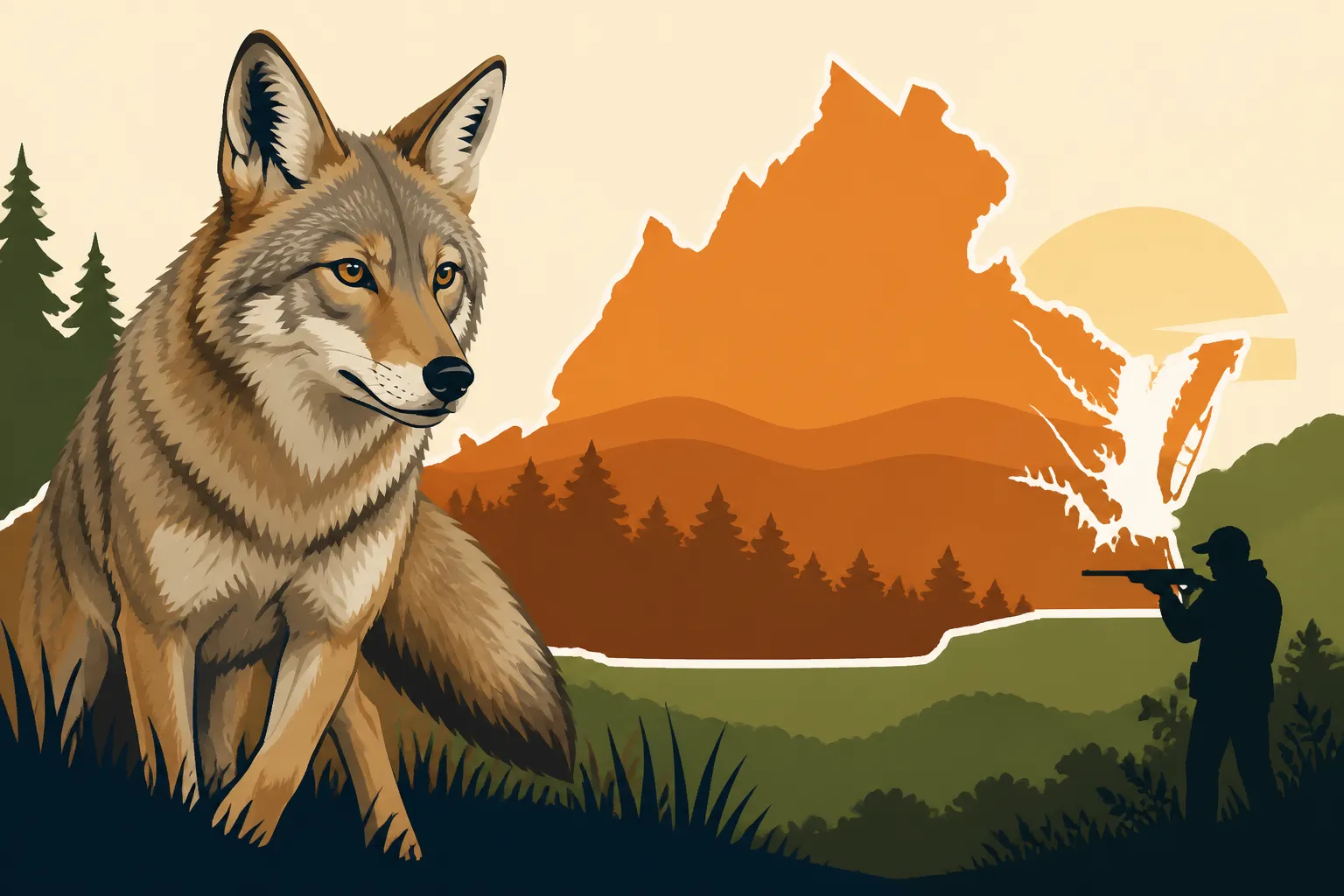
For many years, Virginia hunters and landowners have witnessed a noticeable shift in our wildlife landscape, particularly with the increased presence of coyotes. It's a common question I hear on deer drives or around the fire: "When did these critters even get here?" It often feels like one day they just appeared, and suddenly, our traditional understanding of local wildlife was turned on its head. This guide will delve into the fascinating and often debated history of coyote arrival in the Old Dominion, tracing their remarkable journey and how they came to be such a ubiquitous part of our Virginia ecosystems.
The Great Eastern Expansion: Coyotes on the Move
Coyotes, originally creatures of the American West, didn't just parachute into Virginia overnight. Their presence here is the culmination of a slow, steady, and incredibly successful eastward expansion that has spanned more than a century. This wasn't a planned migration, but rather a natural progression fueled by a combination of environmental changes and their incredible adaptability.
For generations, the eastern United States was largely free of coyotes. Our native top predators were the wolves – both gray and red – and they kept the ecosystem in balance. But as European settlers pushed westward, the wolves, unfortunately, became targets, often eradicated to protect livestock and enable agricultural expansion. This created a massive ecological vacuum, especially in the East, where abundant prey and suitable habitat lay wide open. The adaptable coyote, a species less specialized and more resilient to human presence than wolves, was perfectly poised to fill that void.
They moved across the continent with remarkable speed, following river drainages, forest edges, and even human-made corridors like highways. Their journey wasn't a straight line; it involved various routes, including a northern push through the Great Lakes region and Canada, and a southern trajectory through the southern states. As they encountered different environments, they adapted, becoming larger and more varied in their diets than their western counterparts, sometimes even interbreeding with residual wolf populations, which may have contributed to their robust size and cunning here in the East. This grand migration is one of the most significant wildlife success stories of the last century, profoundly reshaping predator-prey dynamics in states like ours.
First Footprints: Documenting Coyote Arrival in Virginia
Pinpointing the exact moment a coyote first crossed into Virginia is tricky, akin to trying to remember the precise minute a new neighbor moved in years ago—you notice them, and then suddenly they're just there. However, wildlife biologists and anecdotal evidence give us a pretty clear picture of their gradual establishment in the Commonwealth.
The earliest verified reports of coyotes in Virginia began surfacing in the late 1960s and early 1970s. These initial sightings were often in the far western and southwestern parts of the state, bordering states like West Virginia and Tennessee, which had already seen their arrival. Think of those wilder, more remote corners of Lee County or Buchanan County, where the mountains meet the borders. These pioneering coyotes were likely individuals or small groups pushing the edges of their expanding range. It wasn't a sudden, widespread invasion, but rather a trickle, then a steady stream.
By the 1980s, their presence was more firmly established across the mountainous regions Hunting West of the Blue Ridge and began to be noticed in the western Piedmont. I remember old-timers talking about hearing strange new howls in the woods, different from the foxes they were used to. It wasn't until the 1990s and into the early 2000s that coyotes became truly widespread across the entire state, reaching the eastern Piedmont Hunting the Virginia Piedmont and even the more developed coastal plain and Eastern Shore. Today, you'd be hard-pressed to find a county in Virginia that doesn't have a resident coyote population. It's a testament to their incredible ability to colonize and adapt to vastly different habitats, from dense mountain forests to suburban woodlots and agricultural fields. Their arrival marked a significant turning point in Virginia's wildlife history, forever altering the balance of predator and prey.
Here’s a general timeline of how coyotes are believed to have established themselves across Virginia:
| Period | Region of Virginia | Key Observations |
|---|---|---|
| Late 1960s – Early 1970s | Far Southwest & Northwest Mountainous Counties | First verified sightings, scattered individuals. |
| Mid-1970s – 1980s | Appalachian Mountains, Western Piedmont | Established breeding populations in mountainous areas, expanding east. |
| 1990s – Early 2000s | Central & Eastern Piedmont, Northern Virginia | Widespread establishment, sightings becoming common. |
| Mid-2000s – Present | Coastal Plain, Eastern Shore, Urban Edges | Present in virtually all counties, adapting to human-dense areas. |
The Recipe for Success: Why Coyotes Thrived in Virginia
The rapid and successful colonization of Virginia by coyotes wasn't just a matter of showing up; it was about finding a perfect storm of conditions that allowed them to flourish. They are truly master opportunists, and Virginia offered them an ideal environment.
One of the most significant factors was the abundance of prey. Virginia boasts healthy populations of white-tailed deer White-Tailed Deer Across Virginia, particularly fawns, which are a prime food source for coyotes. But it's not just deer; rabbits, squirrels Squirrel and Small Game Hunting in Virginia, Wild Turkeys in Virginia, and even feral hogs Hunting Virginia's Year-Round Feral Hogs provide a smorgasbord. On top of that, smaller mammals like rodents, and opportunistic scavenging of carrion, ensure a consistent food supply. Their diet is incredibly varied, making them less susceptible to fluctuations in any single prey species.
Beyond food, the lack of dominant natural predators was a huge advantage. As we discussed, Virginia's native wolf populations were long gone, leaving no significant competition for a medium-sized canine predator. While black bears Virginia's Black Bear Population and bobcats Virginia's Recovering Bobcat Population exist, they generally occupy different niches or don't exert the same kind of top-down predatory pressure on coyotes that wolves once did. This allowed coyotes to reproduce and expand without significant checks on their population growth.
Finally, their incredible adaptability to human-modified landscapes played a crucial role. Coyotes aren't just wilderness dwellers; they thrive in fragmented habitats—the patchwork of forests, farmlands, and even suburban areas that characterize much of Virginia. They can den in old culverts, dense brush, or forgotten corners of industrial parks. They learn to navigate roads and human activity, becoming largely nocturnal in areas with heavy human presence. This allows them to persist and even thrive right under our noses, making them a permanent fixture in our Virginian wilds. When you're trying to figure out where they might be, using a mapping tool like GoHunt can really help you visualize those diverse habitat types, from thick creek bottoms to field edges, where coyotes prefer to travel and hunt.
Living with the New Neighbor: Managing Coyotes in Virginia
The arrival and establishment of coyotes have undeniably reshaped Virginia's ecosystems, presenting both challenges and opportunities for wildlife management, hunters, and landowners. For many hunters, the biggest frustration is seeing a noticeable impact on deer fawn survival or wild turkey poult numbers, especially in areas with high coyote densities. It changes how we think about hunting and conservation, pushing us to adapt our strategies and understanding.
Virginia's approach to coyote management reflects their status as a naturalized, though non-native, part of the ecosystem. Unlike deer or turkey, coyotes generally have no closed season and no bag limits on private land. This means that hunters and landowners have significant flexibility in managing their populations. Many landowners engage in year-round hunting or trapping to reduce numbers, especially if they are experiencing livestock depredation or feel their deer or turkey populations are suffering. Predator calling has become a popular pursuit, particularly in farm country where coyotes can be a nuisance Predator Calling Virginia Farm Country.
For hunters, understanding coyote behavior can even be an advantage. Their presence often means deer are more vigilant and pattern differently. Some hunters have found success in "predator control" on their hunting grounds, believing that reducing coyote numbers can lead to healthier prey populations. Others simply enjoy the challenge of hunting such an intelligent and elusive animal.
It’s also important to remember that coyotes, like all wildlife, can carry diseases, and knowing how to report sick animals is part of being a responsible steward Virginia Wildlife Disease Monitoring. For those who hunt private land, understanding the landscape and common travel corridors is key to success, whether you're hunting deer or coyotes. Tools like GoHunt can be invaluable for identifying potential dens, travel routes, and pinch points where coyotes might be active, giving you an edge in understanding their local movements. While coyotes are here to stay, informed management and adaptation can help us coexist and even thrive alongside these clever predators.
Disclaimer
This article is for general informational purposes only and does not constitute professional advice. Laws, prices and regulations vary by location and change over time. Consult a qualified professional for guidance on your specific situation.