Virginia Red Wolf Recovery Program History
Oh, the whisper of the wild, the truly wild, can sometimes feel a little fainter these days, can't it? For many of us who cherish Virginia's natural heritage, there's a longing for what once was, a time when our forests held not just deer and bear, but also the ghosts of apex predators like the red wolf. It's a poignant thought, realizing a piece of that wild mosaic is missing. This isn't just about a creature; it's about the intricate balance of an ecosystem, and the journey of trying to reclaim that balance is a fascinating, if sometimes heartbreaking, part of Virginia's conservation story. We're going to dive deep into the history of the red wolf in our state, the ambitious recovery efforts, and why, despite all the hope, their return to the Old Dominion remains a dream.
The Red Wolf's Original Domain in Virginia
It's hard to imagine now, with our bustling interstates and growing towns, but Virginia was once home to the elusive red wolf. These weren't the massive gray wolves of the northern forests, but a leaner, more reddish-brown canine perfectly adapted to the varied landscapes of the southeastern United States, including a good portion of our own state. Their historical range touched almost every corner of Virginia, from the dense mountain forests of the Blue Ridge to the swampy lowlands near the coast, before human encroachment began to squeeze them out.
A Keystone Predator's Historical Footprint
Historically, the red wolf was a keystone predator in Virginia, meaning its presence had a disproportionately large impact on its environment. They kept populations of white-tailed deer, rabbits, raccoons, and other small game in check, which, in turn, helped maintain healthy plant communities and balanced ecosystems. Think about it: without a top predator, prey animals can sometimes overgraze, leading to a cascade of negative effects on everything from forest regeneration to bird nesting sites. The red wolf was a natural, silent manager of Virginia's wild spaces. They were part of a complex web, and their removal created a void that we're still grappling with today.
Their decline in Virginia, much like across their broader range, wasn't a sudden event but a slow, grinding process. It began with early European settlers clearing vast tracts of forest for agriculture, pushing these shy creatures into smaller, more fragmented habitats. Then came the direct persecution. Wolves, regardless of species, were often seen as threats to livestock and game animals, leading to widespread hunting and trapping campaigns. Bounties were common, accelerating their demise. By the early 20th century, the red wolf was functionally extinct in Virginia, with the last confirmed sightings fading into memory. It's a sad chapter, a testament to how quickly human expansion can alter the natural world.
Echoes in the Landscape: What We Lost
When a keystone species vanishes, the ripples spread far and wide. The absence of the red wolf undoubtedly altered the balance of Virginia's wild places. For instance, without that natural top-down pressure, local deer populations, which we know now can explode in numbers, would have faced fewer natural controls. While we certainly have other predators like bears and coyotes, the red wolf occupied a specific niche. Its absence meant less natural selection pressure on deer, potentially leading to less wary animals and different behavior patterns over generations. You can see the effects of this imbalance even today, with deer being quite comfortable in suburban areas where natural predators are scarce.
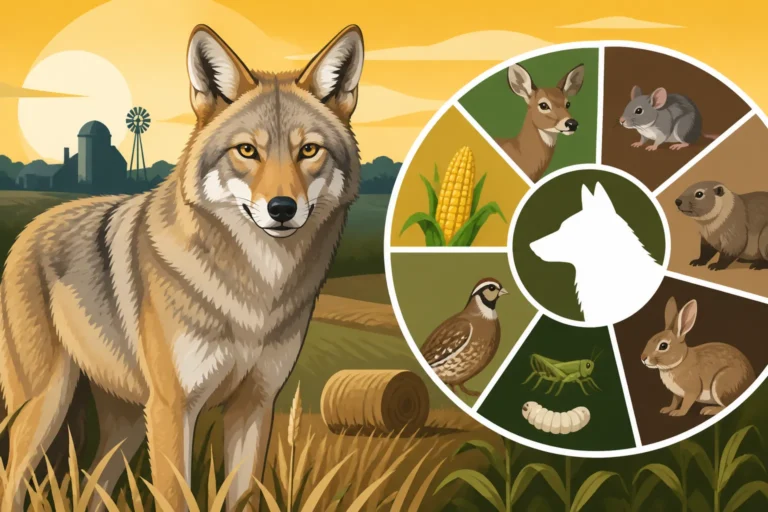
It's also worth considering the intricate competition dynamics among smaller predators. When the red wolf stepped out, it left a vacuum, and other species, particularly the highly adaptable coyote, moved in to fill that role. Coyotes and Predators in Virginia are now a common sight, but their arrival and proliferation are, in part, a direct consequence of the red wolf's disappearance. For many Virginians today, the idea of a wild wolf here sounds almost mythical, a creature from another land or time. There's a general lack of awareness that these magnificent animals once roamed our woods, a vital part of our state's biodiversity. Understanding this lost history is crucial for appreciating the efforts, however challenging, to bring them back.
Early Hopes and the Recovery Attempt
The realization that the red wolf was on the brink of extinction spurred a national conservation effort, and Virginia, with its historic range and diverse habitats, naturally became part of that conversation. The path to recovery was never going to be easy, but the passion and dedication of wildlife biologists and conservationists were palpable.
National Efforts and Virginia's Role
The U.S. Fish and Wildlife Service embarked on a groundbreaking red wolf recovery program in the late 1970s, establishing a captive breeding program with the few remaining genetically pure red wolves. The goal was ambitious: breed them in captivity and then reintroduce them into suitable wild habitats. This was one of the very first attempts to restore a large carnivore to the wild in human history, a truly pioneering effort.
Virginia, with its vast tracts of public and private forestland, particularly in the southeastern part of the state, was recognized as having potential for red wolf reintroduction. The Great Dismal Swamp, for example, bordering North Carolina, was considered a potential area that could support a wild population, offering a relatively remote and wild landscape. Discussions likely involved habitat assessments, feasibility studies, and public outreach to gauge local support and concerns. The vision was grand: imagine the thrill of knowing that an animal once driven to extinction in our state was once again roaming free. While no active reintroduction happened directly in Virginia, the proximity to the primary reintroduction site meant Virginia landowners and wildlife managers were deeply invested in the program's success or failure, as any expansion would naturally flow across state lines.
The Alligator River Experiment and Its Shadow
The flagship reintroduction site for the red wolf recovery program wasn't in Virginia, but just across the border in North Carolina: the Alligator River National Wildlife Refuge. In the late 1980s, these captive-bred wolves were released into the wilds of eastern North Carolina, marking a monumental step in wildlife conservation. This experiment became the beacon of hope for red wolf recovery, and its successes and failures cast a long shadow over any future prospects for Virginia.
From Virginia's perspective, the Alligator River population represented the most direct chance for red wolves to naturally recolonize parts of our state. If the population thrived and expanded, especially into the northern reaches of the refuge and beyond, it wasn't a huge leap to imagine wolves eventually dispersing into the wilder, less developed areas of southeastern Virginia. This included parts of the coastal plain and our own sections of the Great Dismal Swamp. However, the program faced immense challenges right from the start. Issues such as wolf-human conflicts, particularly involving livestock, and the natural tendency of these dispersing wolves to encounter and, critically, to breed with coyotes, began to complicate matters. The lessons learned, often the hard way, at Alligator River directly informed the perceived viability and immense difficulties of establishing or managing a red wolf population in any adjacent state, including Virginia. These very real issues tempered the initial enthusiasm for a broader regional recovery.
The Challenges and Eventual Retreat from Virginia's Recovery
Despite the initial hopes, the dream of a thriving red wolf population in Virginia began to recede, not due to a lack of effort or desire, but because of some truly formidable obstacles that proved incredibly difficult to overcome in a densely populated region.
Hybridization: The Silent Threat
Perhaps the most significant and insidious challenge to red wolf recovery, both in North Carolina and any potential expansion into Virginia, has been hybridization with coyotes. As red wolf populations declined drastically due to human persecution and habitat loss, a new player entered the stage: the coyote. Virginia Coyote Range and Density has exploded in recent decades, filling the ecological niche left vacant by the extirpated wolves. Coyotes are incredibly adaptable, thriving in diverse habitats from rural farmlands to suburban fringes, and they spread rapidly throughout the eastern U.S.
The problem arises because coyotes and red wolves are genetically similar enough to interbreed. When pure red wolves were released, especially as their numbers were small and scattered, they would often encounter coyotes and, lacking pure red wolf mates, would breed with them. This process creates hybrids, dilute the red wolf gene pool, and poses an existential threat to the species' genetic integrity. It's incredibly difficult to manage in the wild; how do you stop two canids from breeding? Scientists tried "coyote sterilization" in the recovery zone, where coyotes were captured, sterilized, and then released back into the wild. The idea was that these coyotes would occupy territories and find mates, but wouldn't produce offspring, theoretically reducing the pool of breeding coyotes and giving red wolves more opportunities to breed with other red wolves. It was an innovative approach, but the sheer volume and adaptability of coyotes made it an uphill battle, effectively pushing the unique red wolf lineage further towards genetic extinction in the wild. This biological reality became a massive hurdle for any expansion into Virginia, where coyote populations are well-established.
Habitat and Human Dimensions
Beyond the genetic challenges, Virginia presented its own set of practical obstacles to red wolf recovery. While we boast some beautiful wild areas, finding vast, contiguous tracts of land that could support a top predator like the red wolf, without constant human-wildlife conflict, is incredibly difficult. How Many Acres of Public Land Virginia Has offers some good opportunities, but much of it is fragmented, dissected by roads, or surrounded by private land.
Think about the density of our population, especially in the eastern and Piedmont regions. As beautiful as our farmlands are, the closer a wild carnivore lives to humans and their livestock, the higher the likelihood of negative interactions. Landowner concerns are entirely valid; nobody wants to worry about their chickens or calves. Educating the public and gaining broad social acceptance for a large predator is a monumental task, and without it, any recovery effort is doomed. The history of large carnivores in North America is rife with examples of how quickly public fear or economic concerns can undermine conservation efforts, even for iconic species. While the red wolf is shy and generally avoids humans, the perception of danger, however unfounded, is a powerful force. This meant that the logistical and social challenges of a widespread reintroduction in Virginia, or even allowing a population to naturally expand significantly, became almost insurmountable.
The Program's Fading Footprint in Virginia
Given these enormous hurdles – pervasive hybridization with coyotes and the complex human-wildlife dynamics in a fairly populated state like Virginia – a dedicated, active red wolf reintroduction program within Virginia never fully materialized or, perhaps more accurately, faded as a distinct possibility. The resources and efforts were understandably concentrated on trying to salvage the struggling population in North Carolina, where the program had already invested significant time and money.
It wasn't a failure of spirit or intent on Virginia's part, but a pragmatic recognition of the immense difficulties. The situation became one where managing a single, struggling population in its core reintroduction area was challenging enough, let alone trying to expand it into new territories with similar or even greater pressures. Therefore, while red wolf recovery remains a national conservation goal, Virginia’s role shifted from a potential reintroduction site to a state where occasional, rare dispersals from North Carolina might theoretically occur, but without a self-sustaining wild population. For all intents and purposes, the red wolf's wild footprint in Virginia remains largely a historical one, a poignant reminder of what we've lost and how hard it is to reclaim.
Lessons Learned and the Future of Virginia's Wilds
Even though the red wolf hasn't returned to Virginia's wild places in a self-sustaining way, the history of trying to bring them back offers profound lessons and continues to influence how we think about conservation in the Old Dominion.
What We Gained from the Effort
First and foremost, the red wolf recovery program, even with its immense struggles, significantly advanced the science of conservation. We learned an incredible amount about captive breeding, animal behavior, genetic management, and the complexities of reintroducing top predators. While Virginia may not have a wild red wolf population, the knowledge gained from the efforts in nearby North Carolina helps inform Virginia Wildlife Disease Monitoring and habitat management for countless other species. We understand better the need for large, connected landscapes and the crucial role that public education and landowner cooperation play in any large-scale conservation initiative. It highlighted the sheer adaptability of species like the coyote, and the profound, long-term impacts of removing an apex predator from an ecosystem.
Beyond the scientific insights, the red wolf's story sparked increased ecological awareness. Many Virginians, through this program, learned about the intricate web of life and the value of every native species. It brought to light the silent struggles of endangered wildlife and the dedication of people working tirelessly to protect them. The red wolf remains an "ambassador" species, representing the plight of many other less charismatic creatures that face similar threats of habitat loss and human conflict.
Looking Forward: Conservation in a New Era
The history of the red wolf recovery program in Virginia serves as a powerful reminder of the challenges and complexities inherent in modern conservation. It underscores that simply bringing a species back from the brink of extinction isn't enough; you need suitable habitat, a tolerant human population, and the ability to manage novel threats like hybridization. For Virginia, this translates into continued efforts to preserve and connect existing wild spaces, manage our deer populations, and foster a deeper understanding of our native wildlife. White-Tailed Deer Across Virginia are a prime example of a species whose population dynamics are heavily influenced by the absence of top predators.
While the immediate return of the red wolf to Virginia's wilds may be a distant dream, their story continues to inspire. It encourages us to protect the habitats of our existing native predators, like Virginia's Black Bear Population and bobcats, and to consider the long-term ecological consequences of our actions. The focus shifts to habitat connectivity, thoughtful land use planning, and proactive public engagement to prevent other species from facing a similar fate. The fight for biodiversity is ongoing, and the red wolf's ghost reminds us of the value of every thread in nature's tapestry. Perhaps one day, with evolving science and greater societal acceptance, the whisper of the wild will again carry the howl of the red wolf across Virginia's ancient hills and swamps.
| Factor | Historical Impact on Red Wolf in Virginia (Pre-1900s) | Challenges for Recovery Efforts (Modern Era) |
|---|---|---|
| Habitat Loss & Fragmentation | Primary driver of initial decline and extirpation | Limits large, contiguous suitable reintroduction areas |
| Direct Human Persecution | Widespread hunting, trapping, and bounties | Public perception, potential conflicts with livestock |
| Competition/Hybridization with Coyotes | Contributed to genetic dilution in declining populations | Major genetic threat to purebred red wolves in the wild |
| Prey Availability & Management | Abundant historically, but land use changes affected prey | Requires robust and managed prey populations |
| Public Land Access & Connectivity | Less critical historically, more so for secure habitat | Fragmented public lands, need for private landowner support Getting Private Land Permission in Virginia |
| Human Population Density | Lower impact historically due to sparser settlements | Increased human-wildlife interface, potential conflicts |
Disclaimer
This article is for general informational purposes only and does not constitute professional advice. Laws, prices and regulations vary by location and change over time. Consult a qualified professional for guidance on your specific situation.