Halifax County Game Land Access
Hunting public land in an area like Halifax County, nestled in the southern Piedmont of Virginia, can feel like a daunting task. You might be staring at maps, wondering where exactly you can legally set foot with your rifle or bow, and what challenges you’ll face with other hunters or even just finding decent game. It's a common frustration to feel overwhelmed by regulations and unknown territory, especially when you're used to private land or just starting out. This guide is here to break down the public hunting opportunities in Halifax County, walk you through how to access them, and give you practical strategies to make your hunt successful and enjoyable.
Understanding Public Hunting Opportunities in Halifax County
Halifax County, with its rolling hills, agricultural fields, and timber tracts, offers a quintessential Virginia Piedmont hunting experience. While the vast national forests like George Washington or Jefferson may immediately spring to mind when people think of public land, the reality for many counties in the Piedmont, including Halifax, often revolves more around Wildlife Management Areas (WMAs) managed by the Virginia Department of Wildlife Resources (DWR). These WMAs are specifically acquired and managed for public recreation, with hunting being a primary focus.
The landscape here is a mosaic of habitats. You'll find mature hardwoods, pine plantations, open fields, and often significant creek or river bottomlands. This variety means a diverse range of game animals call these areas home. For a long time, hunters relied on paper maps and word-of-mouth, but thankfully, technology has really opened up how we can scout and plan our public land excursions. It's crucial to understand that even within a WMA, habitat can vary widely, and knowing what to expect can save you a lot of legwork.
The Role of Wildlife Management Areas (WMAs)
WMAs are truly the backbone of public hunting in many parts of Virginia, including the Piedmont. These aren't just tracts of undeveloped land; they are actively managed by the DWR to enhance wildlife habitat and provide public access. This management can include timber harvests, prescribed burns, planting food plots, and maintaining roads and trails. All of these efforts are designed to create conditions favorable for game species and improve the hunting experience.
For hunters, WMAs offer a consistent, dedicated place to pursue game. However, with that dedicated access comes rules and regulations specific to each WMA, which can sometimes differ from statewide regulations. Always double-check the DWR's specific rules for any WMA you plan to visit. Accessing these areas often requires a Virginia hunting license and a WMA access permit. Without these, you might find yourself in a bind if a DWR conservation police officer checks your credentials. You can learn more about what you need to hunt in Virginia in Virginia Hunting Licenses and What They Cost.
Another aspect to consider is hunter pressure. WMAs, by their nature, are known public hunting grounds, and during peak seasons, especially opening days, they can see significant activity. Learning to navigate this pressure, whether by walking deeper, hunting during off-peak times, or focusing on overlooked areas, is a key skill for any public land hunter.
General Game Species in Halifax County Public Lands
Halifax County offers excellent opportunities for several popular game species. White-tailed deer are abundant throughout the county, thriving in the mix of agricultural fields and timber. Turkeys are also well-established, particularly in areas with mature hardwoods for roosting and open fields for strutting. Small game, such as squirrels and rabbits, can also provide enjoyable hunts, often with less competition than deer or turkey seasons.
For deer hunters, Halifax County falls within the Eastern Deer Management Region, which often has higher antlerless deer bag limits compared to the Western Region. This can be a huge advantage for filling the freezer and helping with herd management. Turkeys, both spring and fall, offer different challenges. Spring turkey hunting is a favorite for many, while fall seasons can be more about finding flocks and still-hunting. Small game, like squirrels, are often overlooked but can offer fantastic, low-pressure hunting. You can review the specifics of turkey hunting in Virginia Spring Turkey Season Rules and Virginia Small Game Season Rules.
Understanding the typical habitat preferences for each species will greatly aid your scouting. Deer will gravitate towards food sources and thick cover. Turkeys will be near water, roost trees, and fields. Squirrels will be wherever oak and hickory trees drop their mast. Knowing these patterns will help you narrow down your search on any WMA.
Key Wildlife Management Areas in and Around Halifax County
While Halifax County might not boast a national forest, it's home to some excellent WMAs that provide fantastic public hunting opportunities. The DWR manages these areas, and they are typically well-marked and maintained. The key is knowing which ones are accessible and what they offer.
Banister Lake Wildlife Management Area
Banister Lake WMA is a prime example of a public hunting area in Halifax County. It encompasses around 1,700 acres, primarily focused on forestland and open fields, with a significant portion bordering Banister Lake itself. The terrain is typical Piedmont — rolling hills, a mix of pine and hardwood forests, and bottomland along the lake and various creeks.
Access to Banister Lake WMA is generally straightforward, with designated parking areas and access roads. The DWR works to maintain these for hunter convenience. You'll often find a check-in station or kiosk where you can review specific rules for the area and potentially sign in, as required by the Virginia WMA Access Permit Sign-In Process.
Game species here include deer, turkey, and small game. The forested areas are excellent for deer and squirrel, while the field edges and open areas are appealing to turkeys and rabbits. Waterfowl hunting can also be an option on Banister Lake itself, though specific regulations and access points for waterfowl should be confirmed with the DWR for that WMA. Scouting prior to the season is paramount. I'd highly recommend walking the property lines, identifying pinch points, and looking for signs of recent animal activity, especially if you're targeting deer. Pay attention to changes in elevation, creek crossings, and areas with dense cover that provide bedding.
Staunton River Battlefield State Park (Hunting Opportunities)
Just across the Staunton River, primarily in Charlotte and Campbell counties but very accessible from Halifax, lies Staunton River Battlefield State Park. While primarily a historical site, many Virginia State Parks offer hunting opportunities, often through specific quota hunts or designated areas. It's not a WMA in the traditional sense, but it serves a similar purpose for public access.
State park hunting can be a bit more restrictive than WMAs, often requiring special permits, applications, and adherence to specific hunt dates or zones. These hunts are typically managed to control deer populations and can offer unique, less pressured experiences if you're lucky enough to draw a permit. The DWR website and the Virginia State Parks website are the go-to resources for information on these opportunities. When hunting in state parks or other managed areas, understanding the specific boundaries for hunting is absolutely critical due to the mixed-use nature of these lands.
Always check the current regulations for Staunton River Battlefield State Park. If they offer a deer quota hunt, it might be worth applying. These hunts often have good success rates because the deer population is managed and hunting pressure is controlled. The habitat, like Banister Lake WMA, is a mix of fields, woodlands, and river frontage, providing excellent cover and food for deer and turkey.
Navigating Access and Regulations for Halifax County Public Lands
Stepping onto public land, especially in a new county, can feel like you're entering a maze. But with the right tools and a solid understanding of the rules, it becomes much more manageable. Finding exactly where you can go and what you can do is the first step to a successful hunt.
Using Mapping Tools to Your Advantage
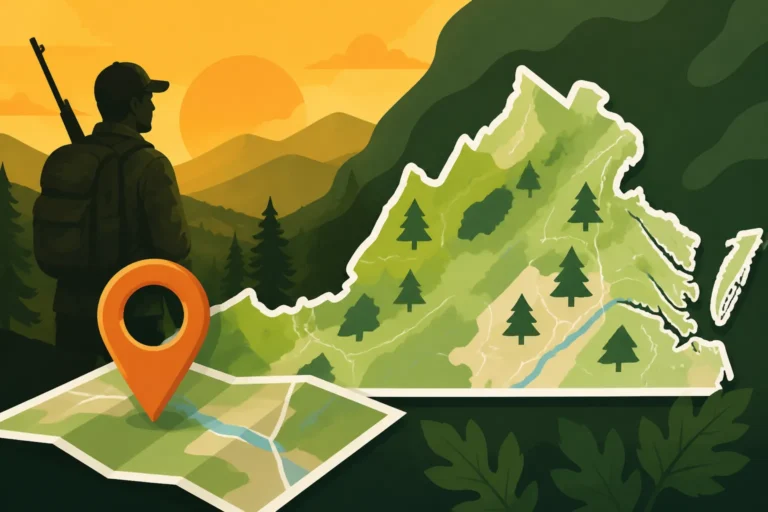
Gone are the days when you needed to rely solely on outdated paper maps. Digital mapping applications have revolutionized how hunters scout and navigate public land. Tools like onX Hunt and GoHunt provide invaluable layers that show property boundaries, public land ownership, topography, satellite imagery, and even things like timber cuts or previous burn areas.
For Halifax County, you can use these apps to clearly identify the boundaries of Banister Lake WMA or any other DWR-managed land. This is incredibly important to ensure you're not inadvertently trespassing onto private property. You can mark potential access points, parking areas, and even plot out your walking routes. OnX Hunt, for example, allows you to save offline maps, which is a lifesaver if you venture into areas with spotty cell service, which is a real possibility in some of the more rural parts of Halifax County. Layering satellite imagery with topo maps helps you visualize terrain features and potential deer travel corridors or turkey roosting areas before you even set foot on the ground. Reading Aerial Photos for Piedmont Deer can give you an edge in this digital scouting.
Understanding Virginia's General Hunting Regulations
Beyond the WMA-specific rules, you'll need to be well-versed in Virginia's statewide hunting regulations. These cover everything from season dates and bag limits to legal hunting hours, blaze orange requirements, and permissible methods of take. The DWR's annual hunting regulations digest is your bible for this information, and it's available both online and at license vendors.
Key Regulations to Remember:
- Licensing: You must have the appropriate Virginia hunting license, and if hunting a WMA, a WMA access permit is usually required.
- Season Dates & Bag Limits: These vary by game species and region. Halifax County falls within the Eastern Deer Management Region, which has its own specific antlered and antlerless deer limits. Be sure to check the current Virginia Deer Season Structure Explained before you go.
- Blaze Orange/Pink: During specific firearms seasons, hunters are required to wear blaze orange or pink. Even when not required, it's a smart safety measure, especially on public land where other hunters might be present.
- Legal Hours: Generally, hunting is allowed from half an hour before sunrise to half an hour after sunset. Check the exact times for your hunt day.
- Tree Stands/Blinds: On public land, you generally cannot leave permanent tree stands or ground blinds. Portable stands are typically allowed but must be removed after each hunt or within a specified timeframe. Using a Ground Blind on Virginia Public Land offers good advice here.
Knowing these regulations thoroughly not only keeps you legal but also contributes to safe and ethical hunting for everyone sharing the woods. It's your responsibility as a hunter to know and follow these rules.
Optimizing Your Hunt in Halifax County
Hunting public land in Halifax County can be incredibly rewarding, but it often requires a bit more strategic thinking than hunting on private, managed ground. Success often comes down to scouting, understanding animal behavior, and being adaptable.
Scouting Strategies for Public Land Deer and Turkey
Effective scouting is the bedrock of successful public land hunting. Since you can't rely on trail cameras left out for weeks on end (most public lands have rules against this, or they'll likely walk off), your physical presence in the woods and thorough digital scouting become your most potent tools.
Pre-Season Digital Scouting: Before you even lace up your boots, dive into your mapping app. Look for:
- Changes in Topography: Ridges, draws, saddles, and creek bottoms are natural travel corridors.
- Habitat Diversity: Where different timber types meet (pine plantations bordering hardwoods), old clear-cuts, or areas with thick regeneration provide bedding.
- Water Sources: Creeks, ponds, or swamps.
- Proximity to Private Land: Sometimes, the edges of public land bordering private agricultural fields can be hot spots, as deer will move between bedding cover on public land and food sources on private. Be extremely careful with boundaries here.
In-Season Physical Scouting: Once you’re on the ground, look for fresh sign:
- Deer: Scrapes, rubs, fresh tracks, and droppings. Identify common food sources like acorn flats or areas where deer are browsing on particular vegetation. Pay attention to Reading Virginia Mud for Fresh Deer Movement.
- Turkey: Tracks, droppings (especially larger gobbler droppings), strut marks, and dusting bowls. Listen for gobblers at dawn from different locations.
- Travel Corridors: Look for "deer highways" – worn trails through the undergrowth, especially leading to or from food and water. Think about Hunting a Funnel Between Two Hollows.
Always remember that other hunters are also scouting. Try to find areas that are less obvious or require a bit more effort to reach. Often, walking an extra half-mile from a parking area can get you into unpressured territory.
Tactics for Deer and Turkey in the Piedmont
The Piedmont landscape offers unique opportunities and challenges. Here are a few tactics that tend to pay off in Halifax County public lands:
Deer Hunting:
- Focus on Cover: Deer on public land often become extremely nocturnal or stick to the thickest cover available, especially after opening day. Target dense pine thickets, overgrown clear-cuts, or river bottom swamps for bedding areas. Set up on the downwind side of these areas, or on trails leading into them at dawn or out of them at dusk.
- Field Edges: Many WMAs in the Piedmont will have agricultural fields or planted food plots. These can be dynamite spots, particularly during the late afternoon. Position yourself carefully along Sitting a Field Edge in Late Season, taking into account the wind. If the fields are standing corn or soybeans, look for Entry Routes Through Standing Soybeans.
- Thermals and Wind: In the rolling Piedmont, thermals can be a factor, especially in the mornings and evenings. Warm air rises in the morning, cold air sinks in the evening. Combine this with the prevailing wind direction to plan your approach and stand placement to keep your scent out of a deer's nose. Wind and Thermals on a Blue Ridge Slope (though specific to Blue Ridge, the principle applies).
- Rattling and Grunting: During the rut, rattling antlers and using grunt calls can be effective, especially in areas with good buck-to-doe ratios. Start subtly and increase intensity. Rattling Volume in Thick Mountain Cover and Grunt Calls in Mature Virginia Timber offer good general advice.
Turkey Hunting:
- Roosting: Locating roosted birds the evening before a hunt is a classic and effective tactic. Use locator calls (owl hoots, crow calls) at dusk to try and get a shock gobble. Once you know where they're roosting, you can plan your morning setup carefully. Calling a Virginia Gobbler Off the Roost is a skill worth practicing.
- Run and Gun: Especially later in the spring season when birds are pressured or less vocal, a "run and gun" approach can work. Cover ground, calling periodically, until you get a response. Then, move quickly and quietly to set up. Run-and-Gun Turkey Tactics on Public Land details this.
- Decoys: A hen or jake decoy can be very effective, especially on vocal birds. Position your decoys where a gobbler can see them from a distance, but also where you have a clear shot. Think about Decoy Placement for Pressured Virginia Birds.
- Mid-Day Lull: Don't give up during the mid-day lull. Turkeys will often move through open fields or along timber edges looking for food. This is a good time for silent scouting or slowly still-hunting through known feeding areas.
Hunting Pressure and Finding Seclusion
Public lands, by their very nature, attract hunters. Especially during opening weekends or holidays, Halifax County WMAs can see considerable pressure. This doesn't mean you can't find success, but it means you might need to adjust your strategy.
- Walk Deeper: The vast majority of hunters don't venture far from parking areas or established trails. If you're willing to walk an extra mile or two, you significantly increase your chances of finding less pressured game. Use your mapping app to find Finding Ground Others Walk Past that's off the beaten path.
- Hunt Mid-Week: If your schedule allows, hunting on a Tuesday or Wednesday instead of Saturday or Sunday can drastically reduce the number of other hunters you encounter.
- Focus on Overlooked Features: Steep, brushy hillsides, dense swamps, or thickets that are difficult to traverse are often avoided by other hunters and can hold unpressured game.
- Hunt During Inclement Weather: A light rain or cold snap will send many hunters back to camp. If you're properly dressed for the elements, these can be some of the most productive, low-pressure hunting times. Cold-Weather Sitting Strategy in the Mountains offers good advice that can be adapted to the Piedmont.
By combining thorough preparation, smart use of modern tools like onX Hunt or GoHunt, and a deep understanding of local game behavior and regulations, your public land hunting ventures in Halifax County can be incredibly fruitful. It takes effort, but the satisfaction of tagging a deer or turkey on public ground is truly unmatched.
Disclaimer
This article is for general informational purposes only and does not constitute professional advice. Laws, prices and regulations vary by location and change over time. Consult a qualified professional for guidance on your specific situation.