Still-Hunting Jefferson Forest Ridges
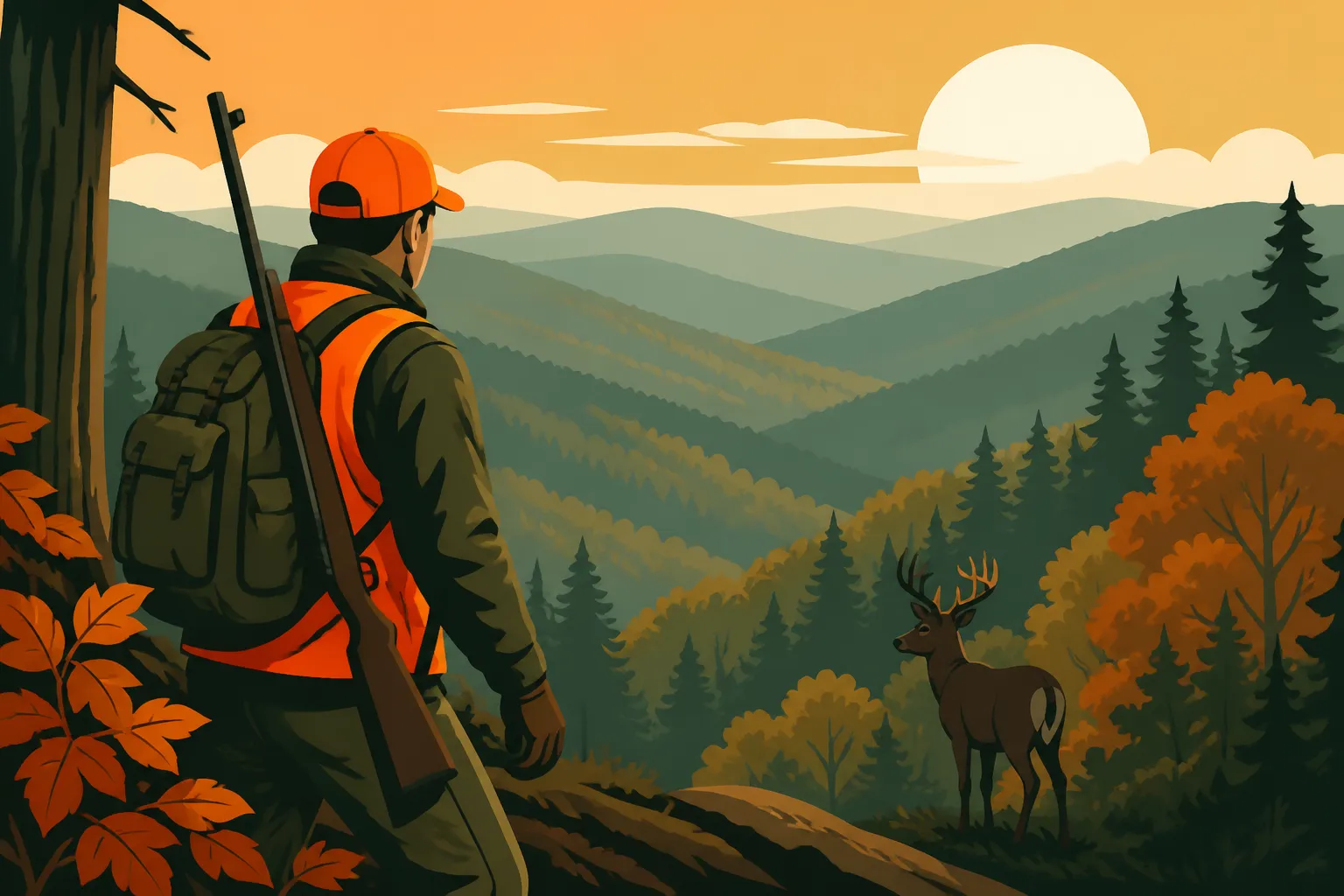
The sheer scale and rugged beauty of Virginia's Jefferson National Forest can be incredibly intimidating for any hunter. You spend hours, maybe even days, hiking those steep ridges and deep hollows, feeling like you’re just covering ground without truly hunting, and it’s easy to get discouraged when the deer seem to melt into the landscape. This guide is all about slowing down, tuning in, and mastering the art of still-hunting those vast Jefferson ridges, turning frustration into focused, effective deer pursuit.
Understanding the Jefferson National Forest Terrain
The Jefferson National Forest, part of the larger George Washington and Jefferson National Forests, is a beast of an area, covering hundreds of thousands of acres across western Virginia. It’s a completely different world from the rolling farm fields of the Piedmont or the coastal plains, presenting unique challenges and, for those who adapt, incredible rewards. The terrain here is defined by its steep, broken ridges, deep hollows, and dense forest cover, which all play a huge role in how deer move and how you should approach still-hunting.
Navigating Steep Slopes and Hollows
When you think of the Jefferson, you probably picture those iconic, long mountain ridges that seem to stretch forever, punctuated by incredibly steep slopes dropping into dark, winding hollows. These aren't just scenic features; they dictate everything about deer movement. Deer will often bed on benches or slight breaks in elevation along these slopes, seeking thermal advantages and escape routes. Understanding how to climb quietly and strategically descend these features is paramount. You'll find yourself adjusting your pace constantly, sometimes crawling on all fours up a particularly steep section, other times picking your way carefully over loose rock and leaf litter in a hollow. The challenge is not just the physical exertion but maintaining silence and observational awareness in such varied topography. The deer here are masters of using these contours to their advantage, often moving just out of sight over a ridge line or slipping into a hollow before you even know they were there.
Reading the Forest Cover and Food Sources
The Jefferson National Forest offers a diverse mix of forest types, primarily mature hardwoods like oak, hickory, and maple, interspersed with dense stands of mountain laurel, rhododendron, and often, thick young timber in old clear-cuts or storm-damaged areas. Each of these cover types presents different still-hunting opportunities and challenges. The mature hardwoods are fantastic for finding acorn crops, which are a primary food source for deer, especially in the fall. You'll want to focus your still-hunting efforts in areas with abundant mast, but be prepared for the noise of crunching leaves underfoot. Conversely, the dense mountain laurel and rhododendron thickets, while incredibly difficult to move through silently, often serve as bedding areas or security cover for deer. Learning to "edge" these thickets, moving along their periphery, can be highly productive. Recent timber cuts, often several years old, can be goldmines, providing both browse and thick cover, but navigating them requires extreme patience and slow movement. Being able to read the difference between a white oak flat and a laurel hell, and understanding how deer use each, is key to successful still-hunting in these big woods.
Essential Gear and Preparation for Still-Hunting
Still-hunting in the Jefferson National Forest is a physically demanding endeavor that requires careful preparation and the right equipment. You're often miles from a vehicle, in rugged, unforgiving terrain, and being unprepared can turn a challenging hunt into a dangerous situation. Think about every item you carry, from your boots to your binoculars, as a tool to enhance your stealth, safety, and success.
Footwear and Clothing for Stealth and Comfort
Your footwear is perhaps the most critical piece of gear for still-hunting in the mountains. You need boots that are quiet, offer excellent ankle support on uneven terrain, and provide good traction on wet leaves, rocks, and mud. A quality pair of insulated, waterproof hunting boots, broken in well before the season, is non-negotiable. Look for boots with a sole pattern that sheds mud and leaves easily and doesn't create excessive noise. As for clothing, layering is your best friend. The temperatures in the Jefferson can fluctuate wildly throughout the day, from chilly pre-dawn starts to surprisingly warm midday sun, especially when you're exerting yourself climbing those ridges. Choose quiet fabrics like wool or fleece that don't rustle or snag on brush. A good base layer to wick away moisture, a mid-layer for insulation, and a quiet, waterproof outer shell are essential. Don't forget a blaze orange vest or hat for safety during firearms season; knowing Virginia's Blaze Orange Requirements is critical. The goal is to be comfortable enough to stay out all day but also to be able to shed layers as you heat up to avoid sweating out, which can compromise your scent control and make you cold later.
Optics and Navigation Tools
In the vastness of the Jefferson National Forest, good optics are your eyes in the woods. A pair of 8×42 or 10×42 binoculars is ideal for scanning ahead, picking apart thickets for a flick of an ear or the horizontal line of a deer's back that stands out from the vertical trees. You'll be using them constantly, not just to spot deer but to identify escape routes, potential bedding areas, and subtle changes in terrain. A rangefinder is also incredibly useful, especially if you're bowhunting or using a rifle in varied topography where judging distance can be tricky. Beyond seeing, you need to know where you are and where you're going. A reliable GPS unit or a smartphone with a robust hunting app like GoHunt is absolutely essential. These apps allow you to mark your vehicle, potential deer sign, and track your movement, ensuring you can navigate back to your starting point, especially after a long day of winding through the woods. Carrying a physical map and compass as a backup, and knowing how to use them, is a smart move when hunting deep in the national forest where cell service can be non-existent. You can also utilize tools like Scouting Virginia Public Land Before Season to mark points of interest on your app long before your boots hit the ground.
Essential Survival and Recovery Gear
When still-hunting far from roads, being prepared for unexpected situations is paramount. Your pack should contain more than just lunch and water. Carry a small but comprehensive first-aid kit, a headlamp (even if you plan to be out before dark), a fire starter, and a knife. A paracord or rope can be invaluable for dragging a deer or securing gear. Speaking of gear, consider a specialized hunting pack that can comfortably carry all your essentials while remaining quiet. Brands like Mystery Ranch or Kuiu offer excellent options designed for the rigors of mountain hunting. When planning your route, use your GoHunt app to assess the terrain for potential challenges like steep ravines or cliffs, and always have a mental or marked escape route. If you're fortunate enough to harvest a deer, the work isn't over. Having a good game bag and a plan for Dragging a Deer Out of a Mountain Hollow is crucial. A basic field dressing kit and gloves are also important. The less you have to improvise in the moment, the better, especially when daylight is fading or the weather is turning.
Reading the Woods: Sign, Scrapes, and Rubs on Ridges
Successfully still-hunting the Jefferson National Forest isn't just about moving quietly; it's about interpreting the language of the forest. Every broken twig, every displaced leaf, and every mark on a tree tells a story. Learning to read these subtle signs, especially on those vast, often featureless ridges, will give you a significant advantage in predicting deer movement and finding their hidden sanctuaries.
Interpreting Deer Tracks and Trails
Tracks are perhaps the most direct sign of deer presence, but in the mountains, they can be fleeting. Focus on finding fresh tracks in softer soil, around stream crossings, or in lingering snow. Look not just for individual prints, but for patterns. Are they leading somewhere specific? Are they moving with a purpose (long strides, no meandering) or browsing (short strides, lots of turns)? Pay close attention to track size; larger, blunter tracks often indicate a mature buck, while smaller, sharper tracks are typically does or fawns. Following a fresh set of tracks can be one of the most exciting aspects of still-hunting, but it requires immense patience and skill. The challenge is that deer trails on the main ridges can be faint, often just subtle depressions in the leaf litter. However, look for "cross-trails" or "contour trails" that run along benches or just below the ridgetop. These are often used by deer to travel relatively flat while staying out of the wind or utilizing thermal currents. Understanding Reading a Ridge for Blue Ridge Deer will enhance your ability to interpret these subtle cues.
Deciphering Rubs and Scrapes on Travel Corridors
Rubs and scrapes are like neon signs in the deer world, especially during the pre-rut and rut phases. Rubs, where bucks strip bark from trees with their antlers, are indications of buck activity and territorial marking. Look for fresh rubs (light-colored wood exposed) versus older, darker rubs. A "rub line" – a series of rubs in a relatively straight line – often indicates a travel corridor a buck uses between bedding and feeding areas. On the Jefferson ridges, these rub lines often follow subtle terrain features, like the edge of a bench, a slight dip in the ridge, or the transition from open timber to thicker cover. Scrapes, patches of bare earth where deer paw away leaves and urinate, are communication hubs. Bucks will often create these under low-hanging branches, scent-checking the branch with their forehead and pre-orbital glands. Finding an active scrape, particularly a "community scrape" used by multiple deer, is a strong indicator that deer are using that area regularly. Understanding how to identify these on a Scrape Lines Along a Logging Road or a remote ridge can be invaluable for setting up an ambush or focusing your still-hunt. The fresher the sign, the closer you are to deer activity.
Executing the Still-Hunt: Stride, Pace, and Wind
Still-hunting is often misunderstood as simply walking slowly through the woods. In reality, it's a deliberate, tactical movement designed to blend with the environment and detect deer before they detect you. It's a dance between patience and purposeful progress, requiring an acute awareness of every element around you – especially the wind.
The Art of the Slow, Deliberate Stride
Forget about covering ground quickly; that's just taking a walk. True still-hunting is an exercise in extreme patience, often described as "hunting at a snail's pace." Your goal should be to take no more than a few steps, then pause and observe for several minutes. Think 10 steps, 10 minutes of watching, then repeat. This gives you time to thoroughly scan the woods, looking for any anomaly – a horizontal line in a vertical world, a flicking ear, the shadow of a deer's leg. When you do move, make each step purposeful. Before you place your foot down, look where it's going. Scan the ground for crunchy leaves, loose rocks, or sticks that could snap. Place your foot down softly, distributing your weight, testing for noise before committing. This slow, deliberate movement not only minimizes noise but also allows your eyes and ears to soak in the environment. You're trying to see the deer before it sees you, and that often means catching it moving, feeding, or just standing perfectly still. Moving too fast guarantees you'll bump deer, often without ever knowing they were there.
Mastering Wind and Thermals on Mountain Ridges
The wind is arguably the single most important factor in still-hunting. Deer have an incredible sense of smell, and if your scent drifts towards them, your hunt is over before it begins. Always hunt into or across the wind. This means constantly checking wind direction and being prepared to adjust your route accordingly. On mountain ridges, wind can be particularly tricky due to thermals. As the sun rises and warms the slopes, air currents begin to move uphill (updrafts). In the evening, as the air cools, it flows downhill (downdrafts). These thermals can override the prevailing wind, creating unpredictable swirling conditions, especially in hollows or along steep drainages.
Here's a quick reference for understanding wind and thermals:
| Time of Day | Thermal Movement | Ideal Still-Hunting Direction | Considerations |
|---|---|---|---|
| Morning | Uphill (Updrafts) | Uphill or Cross-Ridge | Your scent rises; hunt higher on the ridge, approach from below. |
| Midday | Variable/Slight Uphill | Cross-Ridge or Adjusted to Wind | Wind can be most unpredictable; constant checks needed. |
| Evening | Downhill (Downdrafts) | Downhill or Cross-Ridge | Your scent falls; hunt lower on the ridge, approach from above. |
Using a small powder bottle or a wind checker constantly will help you stay aware of these shifts. On a tricky Blue Ridge slope, where the terrain can funnel and redirect air currents, understanding Wind and Thermals on a Blue Ridge Slope is a skill that takes time to master. Don't be afraid to change your direction or even pause your hunt for an hour if the wind isn't favorable. It's better to wait for the right conditions than to spook every deer in the area with your scent. Remember, deer rely heavily on their nose, and a smart hunter respects that fact above all else. Before you head out, tools like GoHunt can provide detailed topographical maps that help you anticipate thermal drains and wind funnels.
Dealing with Hunting Pressure and Other Hunters
The Jefferson National Forest, while vast, is not a secret. During peak seasons like Virginia's General Firearms Deer Season or even during archery season, you're likely to encounter other hunters. This added pressure can significantly alter deer behavior, making still-hunting even more challenging. Learning to anticipate and react to this pressure, and to respect fellow hunters, is a crucial part of hunting public land.
Finding Unpressured Pockets of Deer
Deer quickly learn to avoid areas with high human activity. On public lands like the Jefferson, this means they often gravitate to areas that are harder to access, steeper, or simply further from roads and common trails. While everyone might be hitting the easy-access ridge lines near parking areas, often the true gems are found by putting in the extra effort. Look for drainages, small benches on steep slopes, or areas of dense, nasty cover that most hunters avoid. These can be prime spots where deer feel secure. Using GoHunt or other mapping software, identify remote areas away from designated trails, logging roads, or popular camping spots. These might require a significantly longer, tougher hike, but the reward can be an encounter with less pressured deer. Remember, deer will often "hole up" in these areas during the day, only moving during low light or when pressure forces them to relocate. Your still-hunting pace in these areas should be even slower, as deer are more likely to be bedded down and alert.
Respecting Fellow Hunters and Safety
Encountering other hunters is a reality of public land. The key is to be courteous, safe, and aware of your surroundings. If you see another hunter, acknowledge them with a friendly wave or nod, and give them ample space. Don't crowd their hunting area or try to "cut them off." If you're walking into an area and see a vehicle parked where you intended to hunt, it's often best to find an alternative spot. Communication, if appropriate and safe, can sometimes prevent conflicts.
Safety, of course, is paramount. Always be aware of your backdrop when taking a shot, and identify your target positively. This means not just "it's a deer," but "it's a legal deer, and I know exactly what's behind it." During firearms season, wearing enough blaze orange or Blaze Pink Options Under Virginia Law is not just a legal requirement but a critical safety measure. Even during archery season, many hunters choose to wear a bit of orange when walking in or out, especially during the overlap with small game seasons. Understanding and following Virginia Hunter Education Requirements is fundamental to responsible hunting on public lands. By practicing respect and safety, you contribute to a positive hunting environment for everyone.
Post-Shot Procedures and Recovery in Mountain Terrain
The moment of truth arrives, and you make a good shot. While the adrenaline is pumping, the work is far from over. Recovering a deer in the rugged, steep terrain of the Jefferson National Forest presents its own unique set of challenges. Being prepared for the recovery, and knowing the proper steps to take, is just as important as the hunt itself.
Tracking and Confirming Your Shot
After the shot, resist the urge to immediately rush to where the deer was standing. Give the animal time. For a good shot, wait at least 30 minutes, or an hour for a questionable hit. This allows the deer to bed down and expire, rather than being pushed further by your pursuit. Mark the exact spot where the deer was standing and the direction it ran. Look for initial blood, hair, bone fragments, or anything that tells you about the shot placement. A good blood trail is your best friend, but in thick mountain cover or on leaf litter, it can be sparse. Look for subtle signs: disturbed leaves, broken twigs, turned-over rocks, or even faint tracks. Use your headlamp if it's getting dark, and move slowly, grid-searching the area if necessary. If the blood trail peters out or you're unsure, back out and give the deer more time. If you suspect a gut shot, a wait of 4-6 hours or even overnight is necessary to allow the animal to expire. Consider bringing in experienced friends or a tracking dog if legal and available for difficult recoveries. Understanding Blood Trailing After Dark in Virginia can be particularly helpful, as low light often makes recovery even more complex.
Field Dressing and Extraction from Remote Areas
Once you've found your deer, congratulations! Now the real work begins. Field dressing the animal quickly is crucial, especially in warmer weather, to start the cooling process and preserve the meat. Remove the entrails, heart, and lungs. If you plan to quarter the animal to pack it out, this is the time to start. Be prepared with a sharp knife, gloves, and perhaps a game bag.
Extracting a deer from a steep hollow or a remote ridge in the Jefferson can be incredibly strenuous. You might be miles from a road, and the terrain is unforgiving. Options include:
- Dragging: The most common method, but physically taxing. Using a deer drag or a heavy-duty rope can help. Attach it to the deer's antlers or head. This is where a partner or two can make a world of difference.
- Quartering and Packing: For very long distances or extremely steep terrain, quartering the deer and packing it out in a sturdy frame pack is often the most practical, albeit messy, solution. This is where those Packs for a Jefferson Forest Day Hunt really earn their keep. Boning out the meat significantly reduces weight.
- Deer Carts/Sleds: While useful on flatter ground, deer carts can be almost impossible to use on the steep, rocky slopes and through the dense thickets of the Jefferson. Sleds can sometimes work better over snow or leaf litter on less extreme grades.
Always check Virginia Deer Reporting Requirements and complete the check-in process promptly, often through the DWR mobile app, before you leave the field. Remember, the journey doesn't end until the meat is processed and safely stored, and your gear is cleaned and ready for the next adventure.
Disclaimer
Hunting is a challenging and potentially dangerous activity. This guide provides general information and recommendations. Always consult the most current Virginia Department of Wildlife Resources (DWR) regulations, obtain all necessary licenses and permits, and prioritize safety above all else. Hunt ethically and responsibly.