Late-Season Food Sources for Virginia Whitetails
As the crisp air of early winter settles over Virginia, many hunters find themselves facing a real head-scratcher: where did all the deer go? After the intensity of the rut, whitetails seem to vanish, leaving hunters to wonder how to locate them again. The truth is, once breeding winds down, deer shift their focus almost entirely to survival, and that means finding reliable food sources. This guide will help you understand and locate the crucial late-season food deer depend on in Virginia, giving you the edge you need to fill your tags as the season draws to a close.
The Late-Season Food Challenge in Virginia
Hunting in Virginia during the late season, especially from December through January, presents a unique set of challenges that can leave even seasoned hunters scratching their heads. The landscape transforms, the weather turns fickle, and the deer, having survived months of hunting pressure and the energy drain of the rut, become incredibly focused on one thing: sustenance. Understanding this shift is paramount to your success.
Why Food Becomes Critical After the Rut
Think about what a buck goes through during the rut. He's running ragged, chasing does, fighting rivals, and barely eating. He can lose 20-30% of his body weight in a matter of weeks. Does, while not expending as much energy in direct combat, are also under significant stress, being constantly pursued and bred. Once the peak of the rut passes, usually by late November or early December in most of Virginia, both bucks and does are physiologically drained. Their bodies are screaming for calories to recover, rebuild fat reserves, and for does, to support the developing fawns they're carrying.
This isn't just about hunger; it's about survival. A deer with insufficient fat reserves going into the coldest months is a deer at high risk. They need to pack on as many calories as possible, as efficiently as possible, before the truly harsh weather sets in. This intense drive for food means that their movements, which might have been erratic and driven by breeding earlier in the season, now become predictable and directly tied to the best available nutrition. They'll travel further for good food, tolerate more pressure for it, and return to it day after day. This is the key to late-season success: finding those limited, high-value food sources.
The Impact of Weather on Availability
Virginia's late-season weather is notoriously unpredictable. One week you might have unseasonably warm days, the next a sudden cold snap with freezing rain or even a few inches of snow. These weather patterns directly dictate what food is available and how deer access it.
A prolonged cold spell, especially one with hard freezes, can quickly diminish the palatability and nutritional value of some forage. Acorns, for example, can be buried under leaf litter or frozen solid, making them harder to access. Browse, while resilient, might offer fewer digestible nutrients. Snow cover, even a few inches, can make finding low-lying food impossible and force deer to dig or seek out taller browse. I remember one year in the George Washington National Forest where an early December snow blanketed everything. Deer immediately abandoned their usual feeding areas and congregated in clear-cuts and south-facing slopes where they could find exposed browse and catch what little sun was available.
Conversely, a milder late season might mean certain mast crops last longer, or that green fields continue to offer attractive forage well into January. Hunters who understand the current weather patterns and how they affect the deer's primary food sources will be much more successful. You're constantly playing a chess game with Mother Nature and the deer, and knowing what they can eat based on recent conditions is a massive advantage.
Identifying Key Natural Late-Season Forage
While agricultural crops can be a goldmine, many Virginia whitetails, especially those on public land or in heavily wooded areas, rely heavily on natural forage. Understanding what plants offer sustenance in the leanest months is crucial for scouting and hunting. It's not just about looking for any food, but looking for the best food that nature still provides.
Persistent Mast Crops (Acorns, Beech Nuts)
Ah, the mighty acorn. It's often the king of deer food in Virginia, and even in the late season, a good acorn crop can still be a major draw. While the earliest dropping acorns (like white oak) might be long gone or rotten, red oak acorns, which tend to drop later and have a higher tannin content, often persist well into winter. These might not be as palatable as white oaks, but when other options are scarce, deer will absolutely devour them. The key is to find areas where red oaks were abundant and there was a heavy crop. Look for those dark, shiny caps and shells on the forest floor, especially around mature oak stands.
Beech nuts are another fantastic, high-fat food source that, when available, deer absolutely love. American beech trees, with their smooth, gray bark, are less common than oaks but can be found in pockets across Virginia, particularly in the western mountains. If you find a stand of beech trees that had a good mast year, the small, triangular nuts will be a magnet for deer, and often other critters too. They have a high fat content, which is exactly what deer need to put on weight for winter. The downside? Beech mast crops can be hit-or-miss, much like oaks.
When scouting for these, don't just look for trees; look for signs of feeding. Scraped-up leaves, fresh droppings, and even tracks where deer have been sifting through the litter for nuts are all tell-tale signs. Remember that a good acorn or beech flat can draw deer from a significant distance, making them excellent places to set up.
Browse That Endures Winter
When hard mast becomes scarce or inaccessible, deer turn to browse – the twigs, buds, and leaves of woody plants. While many deciduous plants lose their leaves and much of their nutritional value in winter, certain species remain palatable and provide critical sustenance. This is especially true in areas without abundant agriculture.
One of the most important late-season browse species in Virginia is honeysuckle. This invasive plant, while often a nuisance, provides evergreen leaves that remain green and nutritious throughout the winter. Deer will absolutely hammer honeysuckle thickets, especially in the Piedmont and Eastern regions. Look for chewed-off stems and the distinct browsing line on these plants. Greenbrier (or smilax) is another thorny vine that provides persistent green leaves and stems, offering both food and cover. Its tough nature makes it a good option when other, softer browse is gone.
Other key browse species include young saplings like maple, oak, and sassafras. Deer will nip off the terminal buds and tender shoots of these young trees. Clear-cuts and regenerating timber stands, even those a few years old, become vital feeding areas because they offer an abundance of young, palatable woody growth that's within reach. These areas are also fantastic for cover, which makes them prime locations for deer to both feed and bed, especially during colder periods. You might find success working a clear-cut edge or a fencerow that provides both browse and bedding, much like when Working a Fencerow for Late-Season Deer. Even pine needles, particularly from younger pines, can provide some minimal nutrition, though they aren't a preferred food source.
Agricultural Offerings and Their Appeal
For deer in agricultural areas, farm fields are often the equivalent of a year-round buffet. Even after harvest, many fields retain enough waste grain or develop palatable regrowth to keep deer coming back through the coldest months. If you're hunting in the Piedmont or other farming regions of Virginia, these agricultural goldmines are often your best bet.
Standing Row Crops and Leftovers
Even after corn and soybean fields have been harvested, they can still offer a phenomenal food source. Farmers rarely get every kernel or bean, and the residual grain left on the ground can amount to a massive number of calories. Deer will meticulously work these fields, particularly after a rain or a light snow has softened the ground, making the leftovers easier to find and digest.
Beyond the waste grain, standing row crops that weren't harvested, perhaps due to wet conditions or a farmer's management decision, become absolute magnets. A standing cornfield, for instance, offers both high-energy food and incredibly dense cover, making it a safe haven for deer. I've seen deer spend weeks inside a standing cornfield, only emerging at night or during the nastiest weather. Hunting these can be tricky, but incredibly rewarding if you get it right. Knowing how to approach and hunt in these environments is critical, similar to tactics for Hunting a Standing Cornfield in Farm Country. Even if you don't have access to the field itself, deer moving to and from these fields during low light are highly vulnerable.
Soybeans, even after the beans are picked, can sprout palatable green growth from leftover plants if conditions are mild enough. While not as calorie-dense as corn, any green forage in late winter is a bonus for deer. Always investigate harvested fields in your hunting area; you might be surprised how much food is still available.
Winter Food Plots and Cover Crops
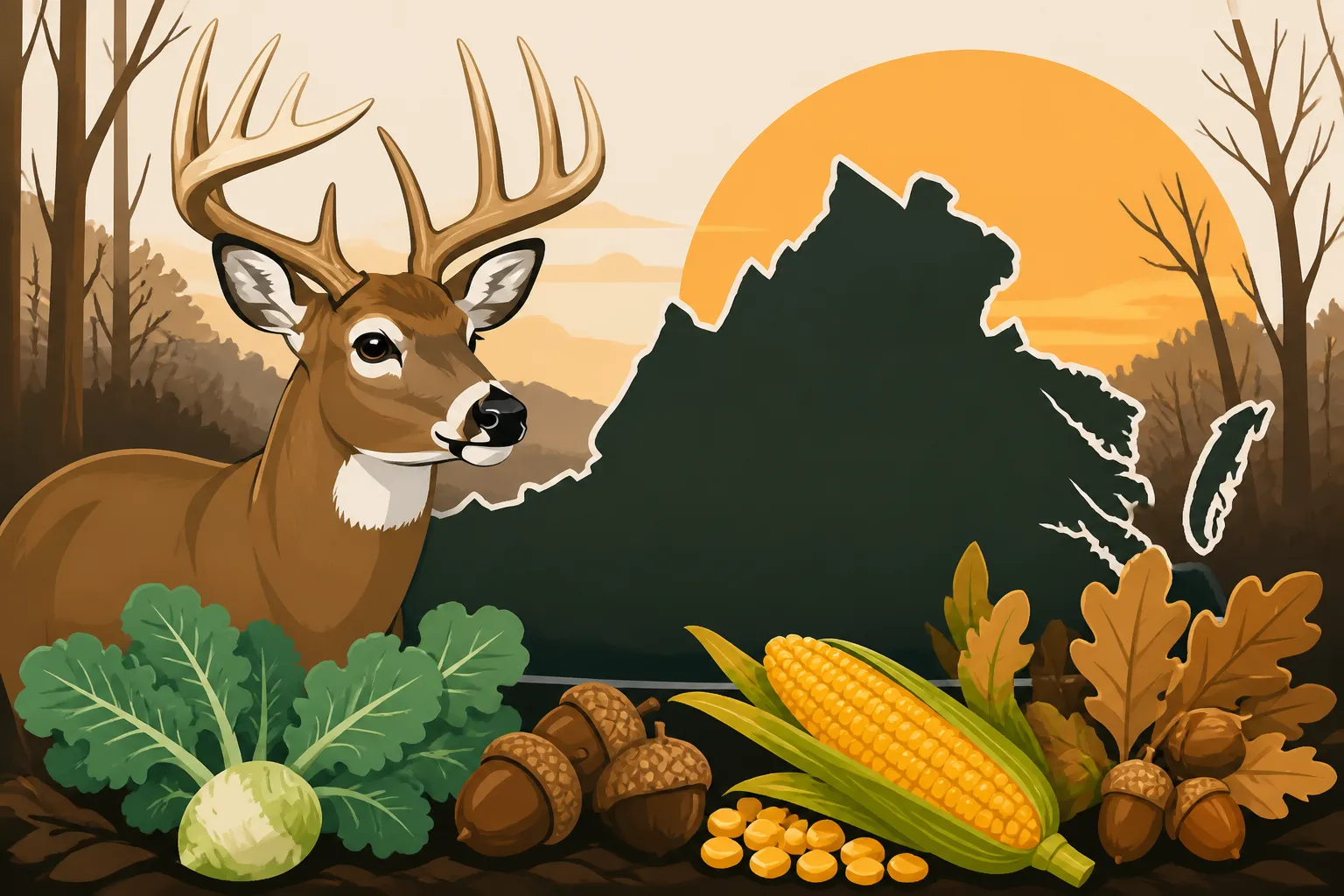
Dedicated food plots planted for deer are, by design, intended to provide late-season nutrition, and they absolutely deliver. Common winter food plot crops in Virginia include brassicas (turnips, radishes, kale), winter wheat, oats, and clover.
Brassicas are a phenomenal late-season food source. They become sweeter and more palatable after a few hard frosts convert their starches to sugars. Deer will often ignore them in early fall but will hammer them once the cold weather hits. Turnip and radish tops are readily eaten, and deer will even dig up the bulbs once the tops are gone. A good brassica plot can hold deer throughout December and January.
Winter wheat and oats, often planted as cover crops or for early forage, will continue to grow through milder winter periods, offering green shoots that are highly attractive to deer. These cereal grains are particularly effective after a light snow when they poke through, offering the only accessible green food for miles. Plots with these grains can be excellent for an early morning or late afternoon sit. Understanding how deer utilize these fields is key, much like strategies for Hunting a Green Field Planted for Deer.
Clover, while sometimes less robust in deep winter, can also offer critical forage. Perennial clover plots, if well-established, can provide green leaves even under snow cover or during mild spells. A healthy clover plot, especially one with a mix of varieties, can remain attractive. You might find deer hitting a healthy clover patch even in January, making it a great spot for an ambush, similar to strategies for Hunting a Clover Plot at First Light.
It's also worth noting that some farmers plant winter cover crops like rye or wheat to enrich the soil. While not intended as food plots, these fields serve the same purpose for deer and can be just as effective in drawing them in. Always ask landowners about their planting intentions; you might uncover a hidden gem.
Scouting and Hunting Late-Season Food
Finding late-season food is one thing; effectively hunting it is another. The deer are wiser, the weather is tougher, and pressure can be high. This is where strategic scouting and smart hunting tactics come into play, helping you capitalize on those vital food sources.
Using Technology to Pinpoint Sources
In today's hunting world, technology is your friend, especially when scouting for those elusive late-season food sources. Aerial photos and mapping apps are indispensable tools. Programs like GoHunt allow you to meticulously analyze satellite imagery, identifying potential food sources before you even step foot in the woods. Look for patches of oaks, clear-cuts, old fields, and especially agricultural fields. You can often spot the difference between harvested rows and standing crops, or even identify the distinct patterns of food plots.
Beyond simply locating fields, these apps help you find the best routes to and from these food sources. Deer will almost always take the path of least resistance, seeking cover on their way to eat. Look for drainages, fencerows, heavy timber edges, and topographical features that provide natural travel corridors. Understanding these patterns is like reading a deer's playbook, making your approach much more effective. For example, learning to read features in aerial photos to predict deer movement is a skill you can hone, similar to Reading Aerial Photos for Piedmont Deer.
The Virginia DWR app is another fantastic resource. It can help you locate public lands and WMAs, which might have managed food plots or areas known for good mast crops. Knowing what the DWR is planting or managing in specific areas can give you a significant leg up, acting as a crucial tool for Scouting With the Virginia DWR App. Combine these digital tools with on-the-ground scouting to confirm food availability and fresh sign. Don't be afraid to put in the miles.
Here's a quick comparison of natural vs. agricultural late-season food sources:
| Food Source Type | Examples | Late-Season Availability | Deer Preference (Relative) | Best Location Type | Notes |
|---|---|---|---|---|---|
| Natural Mast | Red Oak Acorns, Beech Nuts | Moderate to Low | High (Fat/Carbs) | Mature Timber, Mountain | Can be buried by snow; varies yearly. |
| Natural Browse | Honeysuckle, Greenbrier, Saplings | High | Medium (Protein/Fiber) | Clear-cuts, Thickets, Edges | Evergreen browse is key; good in heavy cover. |
| Standing Crops | Corn, Soybeans | Low (Uncommon) | Very High (Carbs/Protein) | Agricultural Fields | Best option when available; offers food and cover. |
| Waste Grain | Corn, Soybeans | Moderate | High (Carbs/Protein) | Harvested Agricultural | Relies on harvest efficiency; often picked clean quickly. |
| Food Plots | Brassicas, Winter Wheat, Clover | High | High (Tailored Nutrition) | Private Land, WMAs | Designed for late season; can hold deer all winter. |
| Cover Crops | Winter Rye, Wheat | Moderate | Medium (Protein) | Agricultural Fields | Offers some forage; generally less preferred than dedicated plots. |
Tactics for Hunting Food Source Locations
Once you've identified a prime late-season food source, the next step is to hunt it effectively. This often means adjusting your typical rut-hunting strategies. Deer are now heavily focused on survival, which makes them much more cautious.
- Patience and Stealth: Late-season deer are jumpy. They've been hunted for months and are wary. Long, patient sits are usually more productive than still-hunting, though still-hunting can be effective on those super cold days when deer are forced to move to eat. When you do still-hunt, move incredibly slowly and quietly, focusing on areas with a high density of browse.
- Stand Placement: Position your stand for visibility over the food source, but also consider the deer's approach. They'll almost always approach from the thickest cover, moving under the cloak of darkness or low light. Set up on the downwind side of the trail they're using to enter the field or browse area. Always prioritize wind direction, as a busted deer near a late-season food source will likely move on to another.
- Entry and Exit Routes: Your approach and departure from your stand can make or break a hunt. Use concealed routes, like ditches, ravines, or thick woods, to get in and out undetected. Avoid walking across open fields. Dawn and dusk are prime times for deer movement to and from food sources, but during colder periods, deer may feed throughout the day, so an all-day sit might be warranted. A solid plan for Cold-Weather Sitting Strategy in the Mountains can be beneficial, regardless of terrain.
- Hunting Pressure: Be mindful of hunting pressure. If a popular food plot or oak flat is getting hammered by other hunters, deer will go nocturnal or find less pressured areas. Sometimes, the best strategy is to find a less obvious, secondary food source that other hunters overlook. Learning to find these untouched spots is a skill, much like Finding Ground Others Walk Past. If you are hunting public land, remember that high pressure around prime food can push deer into unexpected places, requiring you to adapt your approach to Hunting Pressure on Virginia Public Land.
- Ground Blinds: For late-season hunting, particularly near field edges or in areas lacking suitable trees for treestands, a well-brushed-in ground blind can be incredibly effective. It offers concealment, a comfortable sit, and protection from the elements, which is invaluable on cold, windy days. Consider utilizing a ground blind, especially when hunting close to fields, which is often discussed in guides like Using a Ground Blind on Virginia Public Land.
The late season can be incredibly challenging, but for those willing to adapt their strategies and focus on the primary driver of deer movement – food – it can also be one of the most rewarding times to be in the Virginia woods.
Disclaimer
Please be aware that hunting regulations and seasons in Virginia can change. Always consult the most current Virginia Department of Wildlife Resources (DWR) regulations before heading into the field. This guide is for informational purposes only and does not supersede official DWR publications.