Virginia’s Recovering Bobcat Population
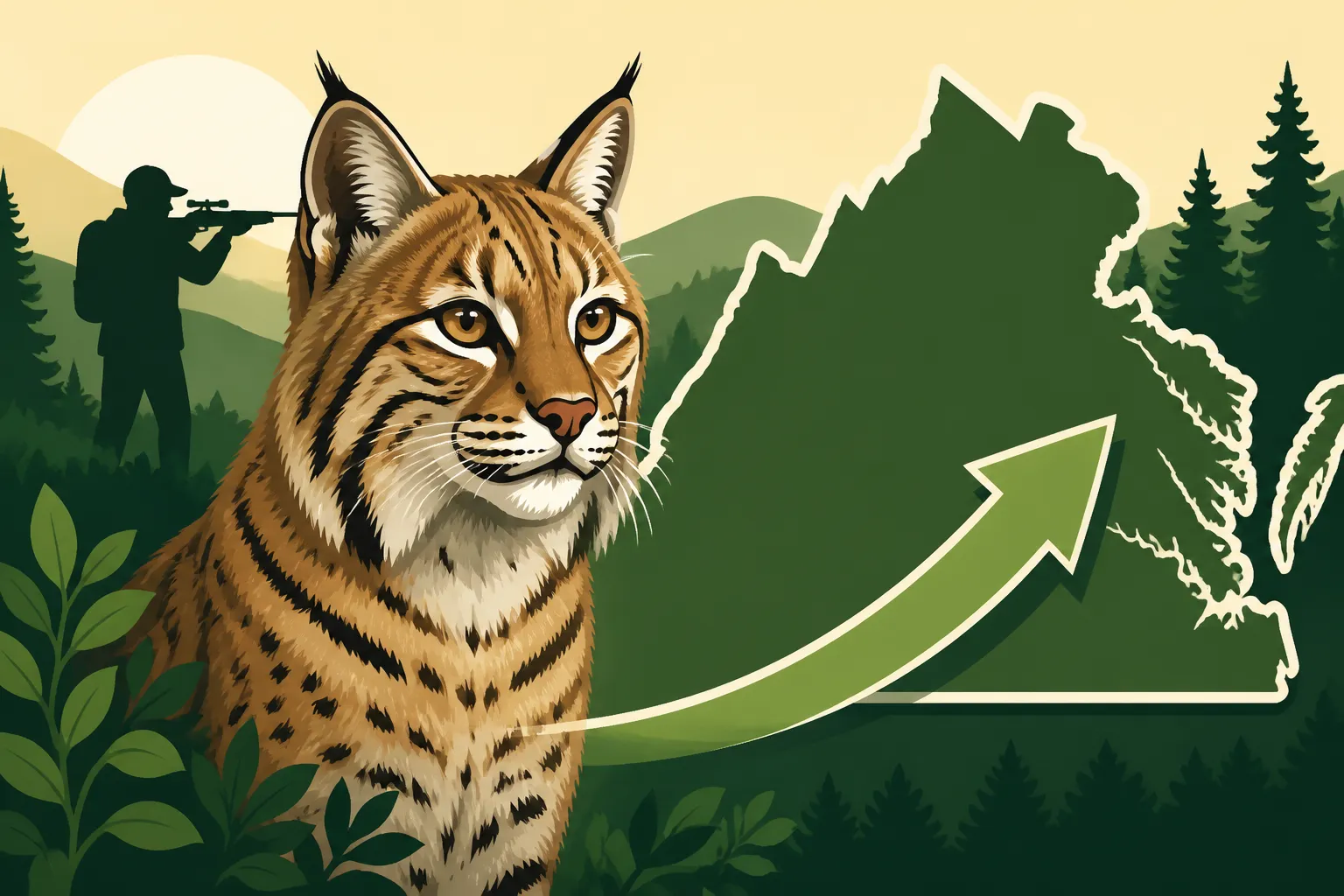
For many years, spotting a bobcat in Virginia was like catching a glimpse of a ghost – a fleeting shadow in the deepest woods, a rare and cherished memory. It was a clear sign of their struggles after historical declines, leaving many to wonder if these elusive predators would ever truly thrive again in the Commonwealth. But the good news is, our wild bobcat population is on a remarkable journey of recovery, and understanding this comeback, their biology, and how we interact with them is crucial for their continued success.
Historical Decline and the Road to Recovery
It’s easy to forget that not all that long ago, the presence of bobcats in Virginia was far from guaranteed. Their history in our state is a real testament to how human activity and changing landscapes can profoundly impact even the most resilient species.
Early Virginia Populations and Near Extirpation
Back in the colonial days and through the early periods of settlement, bobcats (Lynx rufus) were a common sight across most of Virginia. They roamed freely, playing their role as apex predators in diverse ecosystems. Their diet primarily consisted of small game like rabbits, squirrels, and various birds, but they weren't shy about taking fawns or other larger prey when the opportunity arose. However, as human populations expanded, so did the pressure on these wild cats. Farmers and settlers viewed them as a threat to livestock, and their fur was highly prized, leading to extensive hunting and trapping with little regulation. This era saw a significant reduction in their numbers, pushing them out of many populated areas and fragmenting their habitat.
By the mid-20th century, the bobcat population in Virginia was in a perilous state. Habitat loss due to widespread deforestation for agriculture and timber, coupled with unregulated hunting and predator control programs, had pushed them to the brink in many areas. Their range had shrunk dramatically, largely confined to the most remote, rugged, and unpopulated parts of the western mountains and some of the deepest swamps in the southeast. It truly felt like Virginia might lose one of its most iconic native wild cats. It was a frustrating time for anyone who valued the natural balance of our forests and fields, witnessing such a beautiful and important animal struggle to maintain a foothold.
Factors Contributing to Their Comeback
Thankfully, the tide began to turn. Several key factors contributed to the bobcat's impressive recovery across Virginia, transforming them from a rare sight to a more common, albeit still elusive, resident. One of the most significant changes was a societal shift in how we viewed predators, moving away from eradication to conservation. The enactment of stricter hunting and trapping regulations, coupled with more scientific wildlife management by the Virginia Department of Wildlife Resources (DWR), played a pivotal role. Limiting harvest numbers, establishing specific seasons, and requiring proper licenses helped take immense pressure off the dwindling populations.
Beyond direct protection, Virginia's landscapes themselves underwent a dramatic transformation. Much of the agricultural land that had replaced forests in the past was abandoned in the mid-20th century, especially in the Piedmont and western regions. These abandoned fields slowly reverted to secondary forest, providing vast tracts of new, dense cover and crucial habitat for bobcats and their prey. This natural reforestation created ideal conditions for bobcats to expand their territories and establish new populations. The growth of suburban areas, paradoxically, also played a part; as large rural properties were broken up, many retained significant wooded buffers and green spaces that, while close to humans, could still support a bobcat or two, especially if ample prey was available.
Another crucial element was the rebounding populations of their primary prey species. White-tailed deer, rabbits, squirrels, and wild turkeys all saw significant increases in their numbers across the state due to effective management and habitat improvements. With an abundant and stable food source, bobcats had the necessary resources to survive and reproduce more successfully. This interconnectedness of species is a beautiful thing to witness – when one part of the ecosystem thrives, it often creates a ripple effect benefiting others. Programs focused on habitat restoration and preservation, championed by organizations working with the DWR, further solidified their recovery by ensuring quality spaces for these cats to live, hunt, and raise their young.
Understanding Bobcat Biology and Virginia Habitat
To truly appreciate the bobcat's comeback, it helps to understand a bit about these fascinating felines themselves. They're incredibly well-adapted to a variety of environments, making them suitable for many corners of our diverse state.
Physical Characteristics and Adaptations
Virginia bobcats are medium-sized wild cats, much larger than a housecat but considerably smaller than a mountain lion (which, by the way, are not considered to have a breeding population in Virginia, despite occasional unconfirmed sightings). An adult bobcat typically weighs between 15 and 30 pounds, though some larger males can tip the scales closer to 40 pounds. They stand about 18 to 24 inches at the shoulder and measure 2 to 3.5 feet in length, including their distinctive short, "bobbed" tail, which is usually only 4 to 7 inches long and often has a black tip.
Their coat color can vary quite a bit, ranging from yellowish-brown to reddish-brown or grayish, often with dark spots or streaks, especially on their legs and undersides. This mottled pattern provides excellent camouflage, allowing them to blend seamlessly into the dappled light of the forest floor or thick underbrush. They have prominent tufts of fur on their ears, which enhance their hearing, and short, dense fur perfect for navigating our temperate climate. Their strong, muscular legs and sharp retractable claws make them incredibly agile hunters, capable of quick bursts of speed and impressive jumps, whether pouncing on a rabbit or scaling a tree to escape danger. Even the most seasoned hunter, relying on tools like a GoHunt app to scout terrain, knows how easily these animals can disappear into the landscape.
Diet, Hunting Behavior, and Home Range
Bobcats are opportunistic and highly efficient predators, and their diet reflects whatever is most abundant in their territory. In Virginia, their primary food sources are rabbits and hares, followed closely by squirrels, mice, voles, and various ground-dwelling birds. However, they are perfectly capable of taking larger prey, including young white-tailed deer fawns, adult deer that are sick or injured, and even wild turkeys, especially during the nesting season. They might also consume insects, reptiles, and amphibians, particularly during lean times. This adaptability in their diet is a significant factor in their success across varied habitats.
They are primarily nocturnal or crepuscular (active during dawn and dusk), though it's not uncommon to see them during the day, especially in less disturbed areas or when food is scarce. Bobcats are solitary hunters, relying on stealth and surprise. They typically stalk their prey, using dense cover to approach unseen, then pounce with powerful, quick movements. Their excellent vision, hearing, and keen sense of smell make them formidable predators. After making a kill, they often cache excess food by covering it with leaves or snow, returning later to feed.
A bobcat's home range can vary considerably depending on prey availability, habitat quality, and gender. Male bobcats typically have much larger ranges, sometimes covering 20 to 30 square miles, while females tend to occupy smaller territories of 5 to 10 square miles, especially when raising kits. These ranges often overlap with other bobcats, but direct encounters between adults are generally avoided outside of breeding season. They mark their territories using scent markings, urine, feces, and scratch marks on trees, communicating their presence to other bobcats in the area. Understanding these behaviors can sometimes help hunters using advanced tools like Scouting Virginia Public Land Before Season to identify potential travel corridors or bedding areas, even if they aren't directly targeting bobcats.
Reproduction and Lifespan
Bobcats in Virginia typically breed from late winter to early spring, usually between February and April. Females reach sexual maturity around one year of age, while males are generally two years old before they begin breeding. After a gestation period of about 60 to 70 days, a litter of 1 to 6 kits (typically 2 to 3) is born in a den, which could be a hollow log, a rock crevice, an abandoned burrow, or a dense brush pile. The female bobcat is solely responsible for raising her young.
The kits are born blind and helpless, weighing only about 10 to 12 ounces. They begin to open their eyes after about 10 days and are weaned from milk at around two months of age. The mother teaches them essential hunting skills, and they usually stay with her until they are 9 to 12 months old, at which point they disperse to establish their own territories. This dispersal period is a critical time, as young bobcats face significant challenges in finding new territory and avoiding other predators. In the wild, bobcats typically live for 6 to 8 years, though some individuals can live longer, up to 10-12 years. Their survival is often linked to the availability of healthy prey populations, which is why sound wildlife management, especially for species like the White-Tailed Deer Across Virginia, is so vital.
Monitoring and Management Efforts by Virginia DWR
The incredible recovery of Virginia's bobcat population isn't just a happy accident; it's the result of dedicated effort and careful planning by the Virginia Department of Wildlife Resources (DWR) and its partners. Their work is essential for ensuring that these fascinating felines continue to thrive.
DWR Surveys and Data Collection
The DWR employs various methods to monitor bobcat populations across the Commonwealth. This isn't as simple as counting every cat, as their elusive nature makes direct censuses practically impossible. Instead, biologists rely on a combination of indirect survey techniques and harvest data. One crucial source of information comes from mandatory reporting of harvested furbearers. When hunters and trappers take a bobcat, they are required to report it to the DWR, often through the same online system used for Virginia Deer Reporting Requirements. This provides valuable data on harvest numbers, geographic distribution, and age and sex ratios of the taken animals.
Additionally, the DWR utilizes scent station surveys, trail cameras, and even scat analysis in specific study areas. Scent stations, often involving a lure to attract bobcats, help determine presence and relative abundance in a given region. Trail cameras, strategically placed along game trails or in known bobcat habitat, provide non-invasive opportunities to photograph and identify individual animals over time, offering insights into population density, movement patterns, and reproductive success. These methods, while time-consuming, provide a clearer picture of population health and distribution. Without this continuous data collection, making informed management decisions would be incredibly difficult.
Habitat Management Practices and Research
Beyond direct monitoring, the DWR is deeply involved in habitat management that benefits bobcats and a host of other wildlife. While bobcats are adaptable, they still need specific types of habitat: dense cover for denning and stalking prey, and a healthy population of small game. The DWR works with landowners and manages state-owned Wildlife Management Areas (WMAs) to promote these conditions. This might involve prescribed burns to create early successional habitat, timber management practices that leave varied age classes of trees and brush, or protecting riparian corridors that provide travel routes and water sources.
For example, on WMAs like the Amelia Wildlife Management Area, efforts to manage forest stands and provide diverse cover also create excellent habitat for rabbits and squirrels, which directly benefits bobcats. Research is also a continuous process. DWR biologists and academic partners often conduct studies on bobcat movements, genetics, disease prevalence, and interactions with other predators like coyotes. This ongoing research helps refine management strategies, ensuring they are based on the latest scientific understanding. If you're using a GoHunt subscription, you might find articles or resources from the DWR detailing these studies, which can be invaluable for understanding local populations.
Research and Conservation Partnerships
The DWR doesn't work in a vacuum; successful bobcat recovery and ongoing management rely heavily on partnerships. They collaborate with federal agencies like the U.S. Forest Service on properties within the George Washington National Forest Hunting and the Jefferson National Forest, where large tracts of suitable bobcat habitat exist. These collaborations ensure consistent management practices across vast landscapes. Universities and conservation organizations also play a critical role, conducting specialized research, providing volunteer support, and advocating for policies that benefit bobcats and their ecosystems.
Local landowners are perhaps the most vital partners. A significant portion of Virginia's bobcat habitat exists on private land. The DWR provides resources and expertise to private landowners interested in managing their property for wildlife, offering advice on creating and maintaining suitable habitat. This holistic approach, integrating data collection, direct habitat work, and widespread collaboration, is what has allowed Virginia's bobcat population to not only recover but to expand into areas where they were once absent. It’s a powerful example of how sustained, science-based conservation can truly make a difference.
Hunting and Trapping Regulations for Bobcats in Virginia
For those interested in hunting or trapping furbearers, including bobcats, understanding and adhering to Virginia's regulations is paramount. These rules are carefully crafted to allow for recreational opportunities while ensuring the continued health and sustainability of the bobcat population.
Season Dates and Bag Limits
Virginia's bobcat season generally runs concurrently with other furbearer seasons, typically from early November through late February or early March. The exact dates can shift slightly from year to year, so always consult the most current Virginia Hunting & Trapping Regulations digest published by the DWR. There is typically no statewide bag limit for bobcats, meaning hunters and trappers can harvest multiple animals during the season, provided all other regulations are followed. However, specific local restrictions or changes may apply, so checking the DWR website or a tool like the Virginia DWR App for county-specific rules is always a good idea.
Legal Methods and Equipment
Bobcats can be harvested through both hunting and trapping in Virginia. For hunting, legal methods typically include firearms (rifles, shotguns, handguns), archery equipment (bows and crossbows), and muzzleloaders. When hunting bobcats, hunters often use predator calls, either mouth-blown or electronic, to mimic distress calls of prey animals or the sounds of other bobcats. This can be an exciting and challenging way to pursue these intelligent predators. Remember that if you're using a rifle for bobcats, the legal firearms for deer hunting also apply, meaning certain minimum calibers are required for big game, though bobcats fall under furbearer rules.
Trapping is also a legal and effective method for harvesting bobcats. Approved traps generally include foothold traps and body-gripping traps of specific sizes, as well as live traps. There are strict regulations regarding trap placement, trap checks, and the use of snares, all designed to ensure ethical practices and minimize incidental catch of non-target species. All traps must be checked daily, and proper identification tags are required. Before heading afield, always ensure your Virginia Trapping License Requirements are met, and that you understand the intricacies of trap types and placement. It’s a very different skillset than general firearms hunting.
Ethical Considerations and Reporting
Responsible hunting and trapping are about more than just following the law; they’re about ethical conduct and respect for the animal. This includes ensuring quick, humane kills, using appropriate equipment for the species, and properly managing any harvested animals. If you're a bobcat hunter or trapper, it's crucial to understand the reporting requirements. All harvested bobcats must be reported to the DWR, which helps biologists gather vital data for population management. This reporting is often done online through the DWR's Go Outdoors Virginia system, similar to how deer harvests are reported. The data helps the DWR track population trends and ensure that harvest levels are sustainable.
Beyond individual reporting, responsible furbearer management contributes to the overall health of the ecosystem. Bobcats play an important role in controlling populations of small mammals, helping to maintain balance within our wild spaces. Participation in hunter education courses and staying informed about current regulations are excellent ways to uphold these ethical standards. Using resources like GoHunt can also help you stay up-to-date on regulatory changes and best practices, making sure you’re always hunting and trapping responsibly.
Population Status and Future Outlook for Virginia Bobcats
Virginia's bobcat recovery is a significant conservation success story, but it doesn't mean the work is over. Understanding their current status and the challenges they face helps us plan for their long-term future.
Current Distribution and Population Density
Today, bobcats are found across virtually all of Virginia, from the Blue Ridge Mountains to the Coastal Plain. While they are more abundant in areas with extensive woodlands, dense cover, and healthy prey populations, such as the western mountains and the Piedmont, they have also successfully re-established themselves in many parts of eastern Virginia, including swampy areas and even some suburban fringes with ample green space. Their adaptability means they can make a living in surprisingly close proximity to human development, as long as they have access to food, water, and cover.
According to DWR estimates, the bobcat population is robust and healthy across the state, a stark contrast to their near extirpation just a few decades ago. While specific population numbers are hard to pin down due to their elusive nature, harvest data and field surveys consistently indicate a stable to increasing trend. This widespread presence means that while they might still be challenging to spot, they are a vital and active part of Virginia's diverse wildlife tapestry. When you're out Hunting East of the Blue Ridge or in the deeper woods of the west, the chance of encountering one of these incredible animals is higher than it’s been in a century.
Here's a simplified look at the relative population density of bobcats across Virginia's main physiographic regions:
| Region | Habitat Characteristics | Relative Bobcat Density | Key Prey Species |
|---|---|---|---|
| Appalachian Mountains | Rugged, heavily forested, dense undergrowth, large tracts of public land. | High | Rabbits, squirrels, mice, small birds, deer fawns. |
| Piedmont | Mix of forests, agricultural fields, suburban woodlots, strong prey base. | Moderate to High | Rabbits, squirrels, voles, deer fawns, wild turkeys. |
| Coastal Plain | Pine forests, swamps, dense thickets, river bottoms. | Moderate | Rabbits, marsh birds, rodents, muskrats, small deer. |
| Urban Fringe | Scattered woodlots, greenways, abandoned lots, often surprising prey abundance. | Low to Moderate | Rodents, rabbits, domestic cats (rarely, but happens). |
This table illustrates how their populations vary, but they're truly established throughout the Commonwealth.
Challenges and Ongoing Conservation Needs
Despite their impressive recovery, Virginia's bobcats still face challenges that require ongoing conservation efforts. Habitat fragmentation remains a significant concern. As development continues, large contiguous blocks of forest are broken up by roads, housing, and commercial areas. This can isolate bobcat populations, making it harder for them to find mates and disperse, and increasing their risk of road mortality. Maintaining and connecting large tracts of wild land, especially through conservation easements and smart land-use planning, is critical.
Human-wildlife conflict is another area of concern. While bobcats typically avoid people, their expanding range means they occasionally venture into suburban or even urban areas, sometimes preying on small domestic animals. Education is key here, teaching residents how to coexist with wildlife by securing pets, removing attractants, and understanding bobcat behavior. The DWR provides resources for addressing these situations. Diseases, though less of a major threat than for some other species like raccoons or bears (see Virginia's Mange-Affected Bear Counties), also require monitoring, as a widespread outbreak could impact populations. Regular Virginia Wildlife Disease Monitoring is crucial for all furbearers.
The Importance of a Thriving Bobcat Population
A healthy bobcat population is a strong indicator of a healthy ecosystem. As effective predators, they play a vital role in regulating populations of small mammals, helping to prevent overpopulation and disease among prey species. They are also an integral part of the natural food web, contributing to biodiversity and ecological balance. For hunters and trappers, they represent a challenging and rewarding pursuit, contributing to Virginia's rich heritage of furbearer management. Their presence in our forests, swamps, and even our more wild suburban spaces reminds us of the power of nature to reclaim and thrive, and the importance of our ongoing efforts to protect these magnificent animals.
As we look to the future, continued monitoring, habitat preservation, and public education will be essential to ensure that Virginia's bobcats not only maintain their recovered status but continue to thrive for generations to come. Their story is one of resilience and a powerful example of what dedicated conservation can achieve.
Disclaimer
This guide is intended for informational purposes only and should not be considered legal advice. Hunting and trapping regulations in Virginia are subject to change. Always consult the most current Virginia Department of Wildlife Resources (DWR) regulations manual or visit their official website before participating in any hunting or trapping activities. It is the individual hunter's or trapper's responsibility to know and follow all applicable laws and regulations.