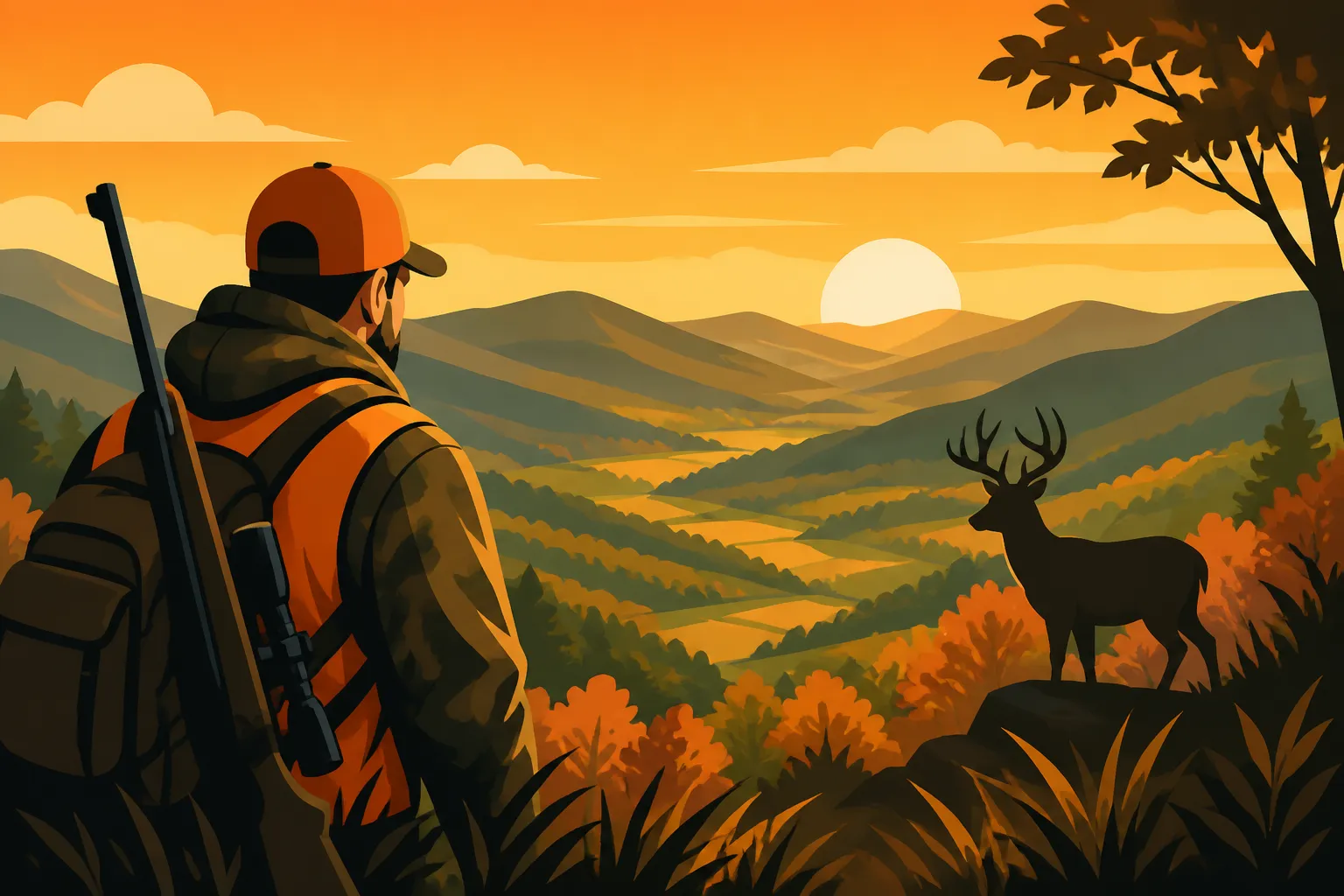
Hunting the Shenandoah Valley
The Shenandoah Valley, with its picturesque farmlands nestled between the towering Blue Ridge and Allegheny Mountains, presents a hunting landscape that is as beautiful as it is challenging. Many hunters, myself included, have felt the frustration of trying to decipher deer movement between agricultural fields and vast national forest land, or locating a gobbler in the dense mountain hollows. This guide aims to cut through that complexity, offering a deeply informed look at how to successfully hunt the Shenandoah Valley, from understanding its unique habitats to mastering the strategies for its abundant game.
The Unique Hunting Terrain of the Shenandoah Valley
Hunting the Shenandoah Valley isn't a one-size-fits-all endeavor; it's a tapestry woven from diverse habitats, each demanding a different approach. The valley itself acts as a massive funnel, influencing game movement and hunter access. Understanding these distinct zones is the first step to unlocking success here.
Valley Floor and River Bottoms
Imagine standing at the edge of a sprawling cornfield or a lush hay pasture, a ribbon of mature timber and thick briars following a winding creek bottom. This is the heart of the valley floor, where private land dominates and agricultural practices heavily influence deer, turkey, and small game behavior. These areas are characterized by nutrient-rich soils, abundant food sources, and often dense cover along waterways and property lines. The sheer amount of food, from standing crops to spilled grain, means game animals often don't have to travel far, leading to different patterns than you'd find in the mountains.
For a hunter, this terrain means focusing on transition zones – the edges where fields meet woods, the thickets along river bends, and the overlooked patches of cover near old homesteads. Deer will often bed in these dense creek bottom thickets during the day, emerging into fields to feed under the cover of darkness or during low-light hours. Turkeys might roost in tall hardwoods along the river, then pitch down into fields to strut and feed. The challenge here often isn't finding game, but accessing it, as much of this productive land is privately owned. It requires a keen eye for subtle sign and, more often than not, a respectful conversation with a landowner.
Foothills and Blue Ridge Slopes
As you move away from the valley floor, the terrain gradually begins its ascent into the rolling foothills, eventually meeting the steep, timbered slopes of the Blue Ridge Mountains to the east. This transition zone is a fascinating blend of habitats, often featuring a mix of mature hardwoods, younger clear-cuts, and rocky outcroppings. The hunting here is different yet again. Deer, bear, and turkey frequent these areas, utilizing the varied cover for bedding and the mast crops – acorns, hickory nuts, beechnuts – as critical food sources, especially in the fall.
The topography here creates natural funnels and travel corridors that are key for strategic stand placement. Saddles, benches, and points on ridges often concentrate deer movement, particularly during the rut. Reading a Ridge for Blue Ridge Deer becomes an invaluable skill. Game animals here might move more extensively than their valley floor counterparts, especially when pressured or seeking mast. The slopes can be steep, demanding good physical conditioning and the right footwear. You'll find more public access in these foothills compared to the valley floor, often in the form of national forest lands or state forests, but even then, private parcels can be intertwined. Understanding wind and thermals is paramount when hunting these varied elevations; a thermal rising in the morning can quickly switch to a downdraft in the afternoon, carrying your scent directly into a feeding area below.
Allegheny Mountain Frontages
To the west, the Shenandoah Valley is bordered by the rugged, vast expanse of the Allegheny Mountains. This is a very different world from the fertile valley floor. Here, public land, primarily the George Washington National Forest and Jefferson National Forest, dominates. The terrain is steeper, wilder, and often features denser, unbroken timber. Elevations climb significantly, and the cover can be incredibly thick, making scouting and still-hunting a true test of patience and skill.
Game animals in the Alleghenies, particularly deer and bear, adapt to this environment by utilizing the vastness for security and natural food sources. You'll find deer bedding on high benches and thick side-hills, often far from roads and trails. Bear populations thrive in these expansive, forested tracts, relying on mast crops and berries. Hunting these mountain frontages requires a different mindset: longer hikes, more aggressive scouting, and often a willingness to get deep into remote areas. Treestand Setups in George Washington National Forest requires a careful analysis of the contours, game trails, and prevailing winds to be effective. The rewards, however, can be substantial, offering a truly wild hunting experience away from much of the typical pressure found closer to population centers. Knowing how to use digital mapping tools like onX Hunt can be a game-changer for navigating the vastness and identifying potential hotspots.
Deer Hunting in the Shenandoah Valley: Strategies for Whitetails
Deer are the undisputed kings of Virginia hunting, and the Shenandoah Valley offers diverse opportunities for pursuing them. However, what works in the valley fields might not work on a mountain ridge, and understanding the nuances is crucial for success.
Hunting the Valley's Agricultural Lands
The agricultural lands of the Shenandoah Valley are prime deer habitat, offering abundant food sources year-round. From standing corn and soybean fields to lush alfalfa and winter wheat, deer have a buffet at their hooves. This means that patterns can revolve heavily around these food sources. Early archery season, when crops are still standing or recently cut, often sees deer moving to and from bedding areas in thick creek bottoms or woodlots to these fields. Entry Routes Through Standing Soybeans can be tricky, requiring careful attention to wind direction and a stealthy approach to avoid spooking game.
The challenge on private agricultural land is gaining access. Building a relationship with a landowner is often the most effective strategy. Once you have permission, focus on pinch points and funnels, like narrow strips of timber connecting two larger woodlots, or the edges of dense swampy areas adjacent to fields. Ground blinds can be highly effective here, especially if brushed in well along a field edge. During the rut, bucks will cruise these field edges, checking for does, making them hot spots for encounters. Late season, after crops are harvested and cold weather sets in, deer will often concentrate on remaining food sources, such as clover plots or acorn flats, making these critical areas to scout.
Tactics for Mountain Deer on Public Ground
The public lands of the Shenandoah Valley's surrounding mountains, primarily the George Washington and Jefferson National Forests, offer a completely different deer hunting experience. Here, deer densities might be lower than in the fertile valley, but the opportunity for a truly wild hunt, and potentially an older, larger-racked buck, is very real. Success hinges on finding areas with less pressure and understanding how deer use the rugged topography.
Still-hunting is a highly effective tactic in the dense mountain timber. Moving slowly, using the contours of the land, and stopping frequently to glass and listen can put you in front of deer that other hunters walk past. Focus on high-elevation benches, saddles between ridges, and thick draws that offer both cover and travel routes. Where George Washington Forest Bucks Bed often correlates with areas of dense cover on north-facing slopes, providing escape routes and thermal regulation. During the rut, bucks will travel these ridge-top saddles in search of does. Don't be afraid to walk further than most; often, the biggest reward comes from getting deep into the backcountry, away from easy road access. Hunting West of the Blue Ridge often means dealing with steeper terrain and more mature timber, requiring good conditioning and a solid understanding of how thermals influence scent.
Understanding Regional Buck Limits and CWD Zones
Before you even step foot into the woods, it's critical to understand Virginia's deer season structure, especially the differences in bag limits and the implications of Chronic Wasting Disease (CWD) zones within the Shenandoah Valley. The valley itself straddles regions with different regulations. Generally, west of the Blue Ridge, where much of the valley lies, hunters might face different antlered buck limits than to the east. East Versus West of the Blue Ridge Bag Limits explains these differences in detail. For example, the Western Region traditionally has stricter buck limits, often focusing on promoting older age class bucks.
More importantly, the Shenandoah Valley is home to Virginia's most concentrated CWD management areas, particularly DMA1, which covers counties like Frederick, Clarke, Shenandoah, and Warren. These areas have specific rules regarding deer feeding, carcass transportation, and mandatory CWD testing. DMA1 Shenandoah Valley Rules are in place to monitor and attempt to control the spread of this fatal neurological disease. As a hunter, you have a responsibility to be aware of these regulations, especially if you harvest a deer in a CWD-positive county. This might mean getting your deer tested, adhering to carcass movement restrictions, and avoiding the use of natural urine lures or supplemental feeding. Always check the Virginia DWR website for the most current regulations for the specific county you plan to hunt.
Pursuing Wild Turkeys Across the Valley's Diverse Habitats
Spring gobbler season in the Shenandoah Valley is an absolute blast, but fall turkey hunting offers a different, equally rewarding challenge. Whether you're chasing a thunderous longbeard or trying to break up a flock of fall birds, the valley's varied habitats dictate your approach.
Spring Gobblers in Farmland Woodlots
The farmland woodlots and creek bottoms of the Shenandoah Valley's floor are fantastic places to hunt spring gobblers. These birds have access to abundant food from agricultural fields and often use the mature hardwoods along riparian corridors for roosting and strutting. The trick here is often patience and precision. Turkeys on private land might be less pressured than those on public, but they're still wary.
Early morning, setting up close to a known roost site, is a classic and often effective strategy. Using soft tree yelps and fly-down cackles as the birds descend can bring a gobbler right into your setup. Calling a Virginia Gobbler Off the Roost requires a keen ear and careful positioning. As the morning progresses, gobblers will often work fields, strutting for hens. Finding a good setup along a field edge where you can intercept them is key. Decoy placement, especially a lone hen or a jake/hen combination, can be very effective in these more open settings. Just be aware of property lines and other hunters, as these areas can see a fair amount of activity.
Fall Turkey Hunting in Mountainous Terrain
While spring sees birds focused on breeding, fall turkey hunting is all about finding flocks that are feeding and ranging. The mountainous terrain surrounding the Shenandoah Valley offers excellent fall turkey opportunities, particularly in areas rich with mast crops. When acorns or beechnuts are abundant, turkey flocks will move into these areas to feed, often covering a lot of ground as they forage.
The "locate and scatter" method is a time-honored fall turkey tactic. This involves finding a flock, often by spotting them feeding or listening for their yelps and clucks, then busting them up. Once scattered, wait for things to calm down, then use assembly calls – usually a series of lost yelps – to call individual birds back in. This can be very effective for breaking up older, wary hens and their poults. In the mountains, look for sign like scratched leaves, droppings, and dusting bowls. Turkeys often frequent ridge tops and benches, moving through mature timber. Run-and-Gun Turkey Tactics on Public Land can be exhausting but highly rewarding, as you cover ground until you find birds.
Roosting and Calling Strategies
No matter the season or specific location in the valley, understanding turkey roosting behavior and mastering various calling strategies are fundamental. Turkeys typically fly up to roost in tall, sturdy trees at dusk, often along creek bottoms in the valley or on prominent ridge lines in the mountains. Scouting to locate these roost sites can give you a significant advantage for a morning hunt.
For spring gobblers, knowing exactly where a bird is roosted allows for a silent, pre-dawn approach and a strategic setup before they fly down. Locator calls, such as owl hoots or crow calls, can often get a shock gobble from a bird on the roost, revealing its position without alerting it to your presence. Once on the ground, a variety of calls – yelps, clucks, purrs, cuts – are used to mimic a hen and entice a gobbler. For fall hunting, calls are more about bringing scattered birds back together. Using soft yelps and clucks to imitate a contented hen, or sharper "kee-kee" runs to imitate lost poults, can bring birds within range. Practice is key, and having a variety of calls (mouth calls, slate calls, box calls) can help you adapt to different situations and weather conditions. Decoy Placement for Pressured Virginia Birds can also make or break a hunt, especially in open settings where a visual cue complements your calls.
Black Bear Hunting Opportunities in the Shenandoah Valley
Virginia's black bear population has exploded over the past few decades, and the Shenandoah Valley, especially its mountainous flanks, offers fantastic bear hunting opportunities. These intelligent, powerful animals present a unique challenge and require specific strategies.
Mountain Bear Hotspots and Natural Mast
The vast public lands of the George Washington and Jefferson National Forests, which form the western and eastern borders of the Shenandoah Valley, are primary bear country. Bears thrive in these expansive, heavily timbered areas, relying heavily on natural food sources like acorns, hickory nuts, beechnuts, and various berries. When these mast crops are abundant, bears will concentrate in specific areas, sometimes traveling significant distances to find them.
Scouting for natural mast is paramount to bear hunting success in the mountains. Look for disturbed leaves, droppings with berry seeds or nut fragments, and claw marks on trees. Areas with dense rhododendron thickets or mountain laurel patches provide excellent bedding and escape cover. Hunters often find success still-hunting through these food-rich areas or setting up stands on travel corridors between feeding and bedding zones. Hunting Mountain Bears in November can be very productive, as bears are actively feeding to pack on calories before denning. Patience, a keen eye for subtle sign, and a willingness to cover rugged ground are essential.
Piedmont Bear Encounters Along the Valley Edge
While the mountains are classic bear habitat, black bears are increasingly being seen and harvested in the rolling foothills and even on the fringe of the Shenandoah Valley's agricultural Piedmont areas. As bear populations expand, individuals, particularly younger males, venture into new territories in search of food and mates. These bears might utilize smaller woodlots, dense creek bottoms, and even suburban green spaces, often moving between natural cover and agricultural fields at night.
Hunting these valley-edge bears can be unpredictable, but opportunities exist, especially during deer season. Farmers who experience crop damage sometimes obtain depredation permits, and general bear seasons allow for harvests when a bear presents itself. Success in these areas often comes down to opportunism while deer hunting, or targeted scouting of overlooked pockets of thick cover adjacent to food sources. Be aware that state regulations regarding bear hunting in the Piedmont can vary, and not all counties might have the same season dates or methods. Always consult the current Virginia DWR regulations for the specific county you intend to hunt. Hunting Bears Over Natural Mast in the Mountains is a more traditional approach, but adaptability is key when bears move into new territories.
Bear Season Specifics and Hound Hunting Considerations
Virginia's bear season structure varies by region and even by county, so understanding the specific regulations for the Shenandoah Valley is non-negotiable. Some areas might have an early archery or muzzleloader bear season, while others restrict bear hunting to the general firearms deer season. Virginia Bear Season Rules provides a comprehensive overview of these regulations. It's crucial to check the Virginia DWR website or digest for the specific county you plan to hunt, as dates and methods can differ.
In some parts of the Shenandoah Valley's mountainous regions, bear hunting with hounds is a popular and effective method. This involves using trained dogs to track, pursue, and tree bears, allowing hunters to approach for a shot. Hound hunting requires specialized equipment, extensive dog training, and a deep understanding of the terrain. If you're interested in this method, it's best to join an experienced local bear hunting club. Keep in mind that not all counties permit hound hunting, and there are specific regulations regarding dog training seasons and GPS collar use. Regardless of the method, shot placement on a black bear is critical for a quick, ethical harvest, and proper recovery planning, especially in rugged terrain, is essential.
Small Game and Other Hunting Pursuits in the Shenandoah Valley
While deer, turkey, and bear often get the spotlight, the Shenandoah Valley also offers rewarding opportunities for small game hunters and those interested in predator control. These pursuits can provide excellent off-season enjoyment or complement a big game hunt.
Squirrels in Oak and Hickory Stands
For many, squirrel hunting is how they got their start, and the Shenandoah Valley offers abundant gray and fox squirrels. The hardwood ridges and creek bottoms, particularly those dominated by oak and hickory trees, are prime habitat. When mast crops are plentiful, squirrels will be active, providing fast-paced action. Early season, when leaves are still on the trees, can be challenging due to visibility, but as the leaves fall, it becomes easier to spot these bushy-tailed critters.
A quiet still-hunt through a mast-rich woodlot with a .22 rifle or a small-gauge shotgun is a classic method. Look for freshly cut nuts on the ground and listen for the chatter of squirrels or the sound of falling nut fragments. Sitting quietly against a large tree and waiting for them to emerge from their nests or dens can also be very effective. Squirrel Hunting a Virginia Oak Ridge provides detailed tactics. These hunts are a great way to introduce new hunters to the woods, teach gun safety, and hone stalking skills. Plus, squirrel meat, when properly prepared, is absolutely delicious.
Rabbit Hunting in Brushy Cover and Fencerows
Rabbit hunting, particularly for cottontails, is another cherished tradition in the Shenandoah Valley. These fast-moving bundles of fur thrive in brushy cover, overgrown fields, fencerows, and thickets—precisely the kind of habitat often found bordering agricultural lands and along the edges of woodlots in the valley. A good cold spell or a fresh dusting of snow can make for excellent rabbit hunting, as the animals will be more active and their tracks easier to follow.
The most common and effective method for hunting rabbits in the Shenandoah Valley is with a pack of beagles. These dogs are specifically bred to trail rabbits by scent, baying excitedly as they push the rabbit in a circle, often bringing it back past the hunter's position. This is an incredibly social and exciting form of hunting. For solo hunters or those without dogs, systematically working through thick cover with a shotgun, kicking brush piles, and checking fencerows can also yield results. Rabbit Hunting Thick Virginia Brush takes patience and a willingness to get into some nasty cover, but the reward of a cottontail for the stew pot is worth it.
Predator Hunting for Coyotes and Foxes
Coyotes are now firmly established throughout the Shenandoah Valley, and while often viewed as a nuisance to deer and livestock populations, they also offer a challenging hunting opportunity. Red and gray foxes are also present, though often in lower densities. Predator hunting can be done year-round on private land in Virginia, making it a great way to stay active in the woods outside of traditional big game seasons.
Calling is the most popular and often most effective method for coyotes. Using an electronic caller or mouth calls to mimic injured prey (rabbit, fawn distress) or coyote vocalizations can draw them in. Set up with the wind in your face, and choose a location that offers good visibility, such as a field edge or a high point overlooking a clear-cut. Be patient; coyotes can be wary and might circle downwind before committing. Night hunting for coyotes is also legal on private land in Virginia with the proper lights, offering a unique and intense experience. Night Hunting Rules for Virginia Coyotes details the specific regulations. For foxes, calling can also work, but traplines are often a more consistent method, targeting their travel routes along creek bottoms or field edges.
Navigating Public and Private Land Access in the Shenandoah Valley
Access is often the biggest hurdle for hunters, especially in a region like the Shenandoah Valley with its mix of private farms and vast public forests. Understanding how to legally and ethically access land is paramount.
Making the Most of National Forest Land
The George Washington National Forest (GWNF) and Jefferson National Forest (JNF) flank the Shenandoah Valley, offering millions of acres of public hunting ground. These vast tracts are a tremendous resource, but they come with their own set of challenges. The sheer size can be intimidating, and game densities are often lower than on private land, requiring more effort. However, they also offer the chance for a truly remote and wild hunting experience, often with less competition once you get away from the roads.
Successful national forest hunting requires thorough scouting, often using digital mapping apps like onX Hunt or GoHunt to identify potential access points, terrain features, and remote pockets of cover. Look for overlooked areas that require a longer walk or have challenging topography. Focus on natural funnels, benches, and saddles on ridges where deer and bear might travel. Still-Hunting Jefferson Forest Ridges can be an incredibly effective strategy. Be aware of national forest regulations regarding camping, ATVs, and treestand placement; typically, screw-in steps are prohibited, and stands must be removed at the end of the season. Always carry a physical map and compass in addition to your digital devices, as cell service can be spotty in remote mountain hollows.
Hunting Virginia Wildlife Management Areas
Virginia's Department of Wildlife Resources (DWR) manages numerous Wildlife Management Areas (WMAs) across the state, and several are located within or adjacent to the Shenandoah Valley. These WMAs are explicitly managed for wildlife habitat and public recreation, including hunting, and can offer excellent opportunities, particularly for deer, turkey, and small game. Unlike the vastness of the national forests, WMAs are often smaller and more intensely managed.
However, WMAs also tend to see higher hunting pressure, especially on opening days and weekends. To succeed, you often need to scout thoroughly during the off-season to find less-pressured pockets, or be willing to walk further than other hunters. Look for areas with dense cover, difficult access, or specific habitat features that attract game, such as clear-cuts or swampy areas. Some WMAs may have specific regulations or quota hunts, so always check the individual WMA's rules on the Virginia DWR website before planning your trip. A Virginia WMA Access Permit Sign-In Process is often required, which might involve signing in at a kiosk or online before your hunt. Understanding these local rules is crucial to avoid any unwelcome surprises.
Building Relationships for Private Land Access
For many hunters, gaining access to private land in the Shenandoah Valley, especially the rich agricultural fields and woodlots on the valley floor, is the key to consistent success. While public land offers adventure, private land often holds higher deer densities and can offer a more controlled hunting experience. The biggest frustration is often just knowing where to start.
The most effective strategy is to build relationships with landowners. This usually involves polite, face-to-face requests, often months before the season. Offer to help with chores, assist with nuisance wildlife issues, or simply provide a contact number if they ever need help. Respect is key; always be courteous, clean up any trash, close gates, and stick to the agreed-upon hunting areas. Knowing What Virginia Trespass Law Requires – which specifies that you typically need permission to hunt on private land – is fundamental. Digital tools like onX Hunt are incredibly valuable here, allowing you to identify property lines and landowner names, giving you a starting point for making those crucial connections. A simple knock on the door, even if it leads to a "no," opens a dialogue and shows respect. Sometimes, offering to help with Virginia Deer Damage Permits for Farmers can be an excellent way to gain access.
Essential Scouting and Gear for Shenandoah Valley Hunting
Success in the diverse landscapes of the Shenandoah Valley hinges on thorough preparation. This means not only pre-season scouting but also selecting the right gear to tackle everything from steep mountain slopes to muddy river bottoms.
Pre-Season Reconnaissance and Digital Tools
Before hunting season even opens, your most powerful tool is your feet and your eyes. Pre-season scouting allows you to understand game movement, identify food sources, locate bedding areas, and pinpoint pinch points and funnels. In the Shenandoah Valley, this is particularly important due to the varied terrain. Walk creek bottoms on private land (with permission, of course) for fresh deer sign, explore ridge lines in the national forest for bear activity, and pinpoint turkey roosts.
Digital mapping tools like onX Hunt or GoHunt are absolutely indispensable for scouting the Shenandoah Valley. They allow you to overlay property lines, topo maps, and satellite imagery, helping you find those hidden pockets of public land or identify potential private land access points. Scouting With the Virginia DWR App can provide valuable information on regulations and public land boundaries. Use these apps to mark potential stand sites, bedding areas, water sources, and mast crops. When scouting, pay close attention to old logging roads, distinct terrain features like rock outcroppings, and subtle changes in vegetation that might funnel game. Even without leaves on the trees, you can pick up on old rubs, scrapes, and well-worn game trails.
Optics, Footwear, and Clothing for Varied Terrain
The Shenandoah Valley's diverse hunting environments demand versatile gear. Optics are crucial. A good pair of 8×42 or 10×42 binoculars will serve you well, whether you're glassing a distant mountain slope for bear or scanning a field edge for deer. Binocular Power for Mountain Hunting needs to balance magnification with a steady image, especially when hand-holding. A reliable rangefinder is also a must-have, helping you confirm distances in varied terrain, from dense timber to open fields. For rifle hunting in the mountains, a scope with good low-light performance will be invaluable during dawn and dusk.
Footwear is another critical consideration. For the steep, rocky slopes of the Alleghenies and Blue Ridge, sturdy, ankle-supporting boots with good traction are essential. You'll be doing a lot of walking, often on uneven ground. For the wet creek bottoms and potentially swampy areas of the valley floor, waterproof rubber boots are often a better choice, keeping your feet dry and scent-free. Layered clothing is the key to comfort, as temperatures can fluctuate wildly, especially during the shoulder seasons. Start with a moisture-wicking base layer, add insulating layers, and top with a waterproof/windproof outer shell. Wool Versus Synthetics in Mountain Cold is a constant debate, but both have their merits depending on your specific needs. Don't forget your blaze orange or pink during firearm seasons; How Much Blaze Orange Virginia Requires is a legal and safety necessity.
Understanding Wind and Thermals in Valley Country
Perhaps the most overlooked, yet critical, aspect of hunting the Shenandoah Valley is understanding wind and thermals. Your scent is your biggest giveaway, and both wind and thermals will carry it directly to game animals if you're not careful. In the valley floor, the prevailing wind is often the primary factor. Always try to hunt with the wind in your favor, positioning yourself downwind of where you expect game to appear.
In the mountains, it gets more complex. Thermals, which are localized air currents caused by temperature changes, play a huge role. As the sun rises and warms the earth, air typically rises up the mountain slopes. As the sun sets and the air cools, it often flows back down into the hollows. This means that a morning setup might have your scent rising, but an afternoon setup could have it dropping directly into a bedding area below you. Wind and Thermals on a Blue Ridge Slope are dynamic and require constant attention. Use a wind checker (a small bottle of scent-free powder) frequently to monitor changing conditions. Plan your entry and exit routes to minimize scent contamination, and always be prepared to adjust your stand location or hunting strategy based on the wind and thermals.
Disclaimer
This article is for general informational purposes only and does not constitute professional advice. Laws, prices and regulations vary by location and change over time. Consult a qualified professional for guidance on your specific situation.