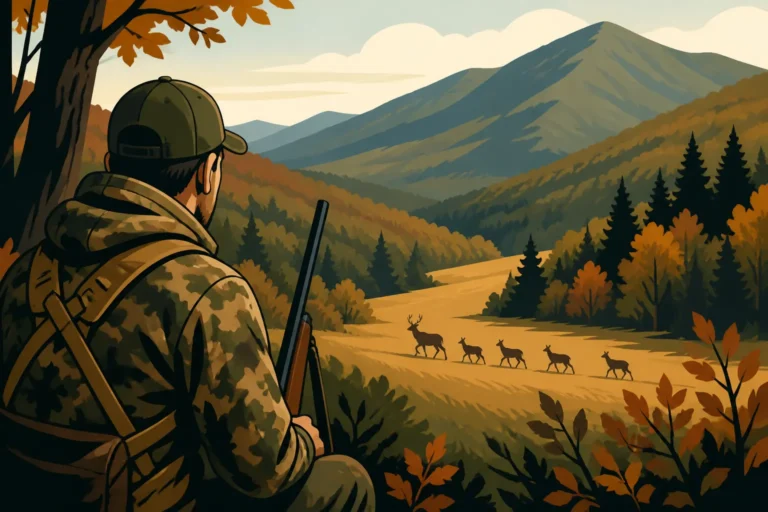
Hunting West of the Blue Ridge
Many Virginia hunters, particularly those accustomed to the gentler rolling hills and farmlands east of the Blue Ridge, can feel a bit overwhelmed when they first venture into the rugged, sprawling territory to the west. The steep mountains, vast timber tracts, and often remote public lands present a completely different set of challenges and opportunities. This comprehensive guide is designed to equip you with the knowledge and strategies needed to successfully pursue game in this unique and demanding landscape, helping you navigate the terrain, understand local game behavior, and make the most of your hunting season.
Understanding the Landscape and Its Influence on Game
West of the Blue Ridge, Virginia transforms into a tapestry of parallel mountain ridges and deep valleys, a region often referred to as the Ridge and Valley Province. This dramatic topography, carved by millennia of geological forces, dictates everything from weather patterns to how wildlife moves and where it finds sustenance and sanctuary. It's a world apart from the eastern counties, demanding a different kind of preparation and a deeper understanding of mountain ecology.
Geographical Overview The Ridge and Valley Province
The sheer scale and elevation changes west of the Blue Ridge are the first things that strike most hunters. Imagine mile after mile of continuous forest, broken only by winding rivers, isolated clearings, and narrow valley bottoms that might contain small farms or communities. The ridges run predominantly northeast to southwest, creating natural funnels and travel corridors for deer, bear, and other game. Understanding these geographical features – the steepness of the slopes, the orientation of the ridges, and the presence of saddles and benches – is paramount. These subtle breaks in terrain act as highways and resting spots for animals traversing the challenging landscape. When you're looking at a topo map, those tight contour lines aren't just lines; they represent the kind of leg-burning ascent that will test your physical limits, but also the kind of cover that provides excellent thermal regulation for bedding deer.
Habitat Types and Food Sources
The dominant habitat west of the Blue Ridge is mature hardwood forest, primarily composed of various oak species, hickory, and other mast-producing trees. This abundance of mast, particularly acorns, forms the backbone of the diet for deer, bear, and turkeys, making these areas highly attractive during fall. Beyond the mature timber, you'll find areas of regenerating clear-cuts, often a result of timber harvesting, which provide thick browse and cover for deer. Dense laurel and rhododendron thickets are also common, offering impenetrable bedding areas and thermal cover, especially during harsh winter weather. In the valley bottoms, where the land flattens out, you might encounter small agricultural fields of corn, soybeans, or winter wheat, which can be critical food sources, especially in late season or during poor mast years. Unlike the Piedmont, where agricultural fields are ubiquitous, these valley farms are often isolated pockets within vast forest, making them hotspots for game feeding.
Key Game Species and Their Distribution
While white-tailed deer are present across Virginia, their density west of the Blue Ridge is generally lower than in the fertile eastern regions. Here, you'll find "big woods" deer – often leaner, rangier, and incredibly cagey, having adapted to the rugged terrain and widespread hunting pressure. These deer typically have larger home ranges and often utilize steep, remote areas that are difficult for hunters to access. However, the true king of the western Virginia woods is arguably the black bear. The vast expanses of forest provide ideal habitat for a thriving bear population, making this region a prime destination for bear hunters. Wild turkeys also flourish here, with mountain gobblers known for their challenging nature and incredible vocalizations echoing through the hollows. Other game species include the elusive ruffed grouse, though their numbers have faced challenges in recent decades, and abundant gray squirrels, providing excellent small game opportunities.
Adapting Your Deer Hunting Strategies West of the Blue Ridge
Hunting deer in the mountains isn't just about walking further; it's about fundamentally rethinking how deer live and move. The terrain dictates everything, from how deer escape pressure to where they find food and cover. If you approach it with the same mindset as hunting a small woodlot in the flatlands, you're likely to come home empty-handed and exhausted.
Scouting and E-Scouting for Mountain Whitetails
The sheer scale of public land west of the Blue Ridge means that physical scouting can be incredibly time-consuming, but it's absolutely vital. This is where e-scouting becomes your best friend. Start by spending hours on mapping applications, looking for terrain features that concentrate deer movement. Key features to identify include saddles (low points on a ridge where deer often cross), benches (flat or gently sloped areas on a steep hillside where deer travel or bed), and natural funnels created by converging drainages or changes in vegetation. Tools like GoHunt or similar robust mapping platforms allow you to overlay topo maps with aerial imagery, helping you visualize the terrain in three dimensions. You can mark potential bedding areas on leeward (downwind) sides of ridges, preferred travel corridors along benches, and transition points between feeding and bedding. I've spent countless evenings pouring over these maps, identifying remote pockets that might hold unpressured deer. Understanding how to interpret these subtle indicators on a map is a skill that directly translates to success on the ground. For more on this, you'll find invaluable insights in our guide to Reading a Ridge for Blue Ridge Deer.
Stand Placement and Still-Hunting Tactics
Once you've identified promising areas through e-scouting and a bit of physical reconnaissance, the next step is deciding how to hunt them. Treestand placement in the mountains is heavily influenced by thermals, which are air currents that rise and fall with temperature changes. In the mornings, air typically flows downhill into the valleys, while in the evenings, it rises up the slopes. Ignoring thermals is a quick way to spook deer. Look for trees on benches or points that offer good shot lanes and allow your scent to be carried away from expected deer travel routes. For example, setting up on a bench about two-thirds of the way up a ridge in the afternoon might work well if you expect deer to be moving up from the valley to bed higher, with thermals carrying your scent upwards.
Still-hunting is also an incredibly effective tactic in the steep terrain, allowing you to cover ground slowly and methodically, adapting to fresh sign or unexpected deer encounters. It's about taking a few steps, pausing, observing, and listening. The natural folds and contours of the mountains provide excellent cover for the still-hunter. Focus on moving into the wind or with a crosswind, always paying attention to thermals. Target benches, ridge lines, and the edges of thickets. Our detailed guide on Still-Hunting Jefferson Forest Ridges dives deep into mastering this art.
Understanding Deer Behavior in Mountainous Terrain
Deer in western Virginia exhibit different behaviors than their eastern counterparts. They are masters of using the terrain to their advantage, often bedding on steep slopes with a commanding view of their backtrail and the prevailing wind at their nose, ensuring they can detect threats from multiple directions. During the rut, bucks will still cruise ridge lines and check saddles, but they might also move through incredibly steep and dense areas that flat-land deer would avoid. Look for rub lines and scrape lines along these travel routes, especially on benches and subtle changes in elevation that make for easier walking. These mountain deer are also much more accustomed to pressure, and will quickly move into the thickest, nastiest cover once the season opens. Understanding Where George Washington Forest Bucks Bed can give you a significant edge in finding these elusive animals. They often favor the leeward side of a ridge on windy days, as the wind is somewhat mitigated there, but still provides them scenting advantage.
Public Land Access and Navigation
Virginia's western counties are a public land hunter's paradise, offering vast opportunities that are simply not available in many other parts of the state. However, this vastness comes with its own set of challenges, particularly when it comes to access and safely navigating remote areas. Don't underestimate the sheer size and wildness of these lands.
George Washington and Jefferson National Forests
These two national forests, often collectively referred to as GWNF, are the crown jewels of public land hunting in Virginia, encompassing over 1.6 million acres across Virginia, West Virginia, and Kentucky. In Virginia alone, they provide hundreds of thousands of acres of accessible hunting ground. The scale is immense, and it's easy to get lost or disoriented if you're not prepared. Access is typically via forest service roads, many of which can be rough, unpaved, and seasonally closed. Some of the most productive hunting areas are miles from any paved road, requiring significant walking. Always check the GWNF and Jefferson National Forest websites for road closures and specific regulations before heading out. Camping is generally permitted in designated campgrounds or dispersed camping areas, making multi-day hunts deep in the woods a real possibility. However, you'll need to be self-sufficient. For a deep dive into these opportunities, our article on George Washington National Forest Hunting is a must-read.
Wildlife Management Areas (WMAs) in the West
In addition to the national forests, western Virginia boasts several excellent Wildlife Management Areas managed by the Virginia Department of Wildlife Resources (DWR). These WMAs, while generally smaller than the national forests, are often actively managed for wildlife habitat, which can translate into better game populations and specific hunting opportunities. Examples like Clinch Mountain WMA in Southwest Virginia, known for its rugged terrain and bear hunting, or Gathright WMA near Covington, which offers challenging deer and turkey hunting, are worth exploring. Some WMAs may require a DWR Access Permit, which can be purchased through the Go Outdoors Virginia system. It's crucial to check specific WMA regulations, as some may have unique season dates, lottery hunts, or restrictions on vehicle access and stand placement. These areas are often more accessible than deep national forest tracts, but can also see higher hunting pressure, especially on opening days.
Navigating and Safety in Remote Areas
The vast, rugged nature of western Virginia's public lands means that navigation and safety are paramount. Cell phone service is often non-existent in the deep hollows and on many ridge tops, so relying solely on your phone's GPS is a recipe for trouble. A dedicated GPS unit is highly recommended, along with physical paper maps as a backup. Before you head out, download offline maps to your phone (many apps, including GoHunt, offer this feature) and mark your intended route, potential egress points, and safety zones. Always tell someone where you are going and when you expect to return.
Beyond navigation, physical safety is a major concern. The weather can change rapidly in the mountains, so a layered clothing system is essential, allowing you to adjust to fluctuating temperatures and sudden rain or snow showers. Carry plenty of water, high-energy snacks, a first-aid kit, a headlamp, fire-starting materials, and a whistle. Remember, help can be a long way off. Being prepared for an unexpected night out or a minor injury is not just good practice; it's a necessity in these remote hunting grounds. Our guide on Scouting Virginia Public Land Before Season offers further tips on preparedness.
Beyond Deer: Hunting Other Game
While deer hunting is a popular pursuit, the diverse habitats west of the Blue Ridge offer fantastic opportunities for other game species, often providing a more unique and challenging experience. Diversifying your hunts can also extend your season and hone your skills in different ways.
Black Bear Hunting in the Mountains
Western Virginia is undoubtedly bear country, and the region holds a robust and growing black bear population. Hunting black bears here is a truly exhilarating experience, demanding patience, keen observation, and often considerable physical exertion. Bears are highly dependent on mast crops like acorns and hickory nuts, so scouting for these food sources is crucial. During years of abundant mast, bears may be widely dispersed, feeding throughout the forest. In lean mast years, they'll concentrate around more limited food sources, such as persimmons, wild grapes, or even agricultural fields in the valley bottoms.
Hunting methods vary; many hunters still-hunt or spot-and-stalk the mountainsides, looking for feeding bears or fresh sign. Still-hunting along benches and through thick cover can be particularly effective. Another popular method, where permitted, involves hunting with hounds, a tradition deeply embedded in mountain culture. If you plan to hunt with hounds, ensure you understand the specific regulations for hound hunting in Virginia, as rules can vary by county. Bears are intelligent and powerful animals, and a successful bear hunt in this rugged terrain is a true accomplishment. For those interested, Bear Hunting Virginia's Mountains and Piedmont provides an in-depth look at this thrilling pursuit.
Wild Turkey Tactics for Mountain Gobblers
Spring turkey hunting in western Virginia offers a challenging but incredibly rewarding experience. These mountain gobblers are notoriously wary, with keen eyesight and excellent hearing, often using the steep terrain to their advantage. They love to gobble from high ridgetops, their calls echoing through the valleys, only to pitch down into seemingly impenetrable hollows.
Successful tactics often involve a lot of walking and listening. Locating roosted birds the evening before a hunt can be a game-changer. Then, the real challenge begins: getting into position undetected on often steep, noisy slopes before the birds fly down at first light. Once on the ground, mountain turkeys are masters of keeping obstacles between themselves and calling hunters. Expect to do a lot of "run-and-gun" hunting, meaning you'll move often, calling sparingly, trying to elicit a response from a distant gobbler. Once a bird is located, a strategic setup considering terrain and thermals is vital. Patience is key, as is the ability to adapt your calling and setup to the specific situation. Our article on Run-and-Gun Turkey Tactics on Public Land is an excellent resource for honing these skills.
Small Game Opportunities
While often overshadowed by big game, western Virginia also offers good opportunities for small game hunters. Gray squirrels are abundant throughout the hardwood forests, providing fast-paced action and excellent table fare. They are particularly active during early morning and late afternoon, often found foraging for nuts in oak and hickory trees. Squirrel hunting can be a great way to introduce new hunters to the woods, teaching valuable woodcraft and tracking skills.
The region also harbors the elusive ruffed grouse, though their populations have faced a significant decline in recent decades due to habitat changes. Grouse prefer young, regenerating forest stands, dense thickets, and areas with good understory cover. Hunting grouse is a challenging endeavor, requiring a good bird dog (if you have one) and a willingness to push through dense cover. It's often more about the experience of walking the beautiful mountain woods and the thrill of an explosive flush than it is about filling a bag. For those looking to explore this, Squirrel and Small Game Hunting in Virginia covers the basics of pursuing these smaller, but no less exciting, species.
Essential Gear and Logistics for Western Hunts
Hunting west of the Blue Ridge isn't just a physical challenge; it's also a gear test. The remote nature, steep terrain, and unpredictable weather demand specific equipment choices that prioritize durability, functionality, and comfort. Skimping on gear here can turn a memorable hunt into a miserable, even dangerous, experience.
Footwear and Layering for Mountain Terrain
Your feet are your most important asset when hunting the mountains, so sturdy, waterproof, and comfortable boots are non-negotiable. Look for boots with aggressive tread for traction on steep, often wet, or leaf-covered slopes. Good ankle support is crucial to prevent twists and sprains on uneven ground. Brands like Kenetrek, Crispi, or Schnee's are popular among serious mountain hunters for their durability and performance. Consider breaking them in thoroughly before your hunt.
Layering is equally important due to the rapid temperature fluctuations that are common in the mountains. A good system starts with a moisture-wicking base layer to manage sweat, followed by insulating mid-layers (fleece, wool, or synthetic puffies), and an outer shell that is both waterproof and windproof. This allows you to add or shed layers as you climb, descend, or sit, preventing overheating and chilling. Avoid cotton at all costs, as it retains moisture and loses its insulating properties when wet. Our guide on Boots for Virginia Swamps and Ridges offers a deeper dive into footwear considerations, adaptable to the mountain environment.
Optics and Navigation Tools
High-quality optics are not a luxury but a necessity in the expansive western landscape. Binoculars (8x or 10x magnification) are vital for glassing distant ridges, spotting subtle deer movement, or identifying game in dense cover. A rangefinder is also essential for accurately judging distances on uneven terrain, where typical ground-level estimation can be wildly off. Brands like Vortex, Leupold, and Zeiss offer reliable performance for various budgets.
For navigation, a dedicated GPS unit is still the gold standard, providing reliable service even without cell signal. However, modern smartphone apps like GoHunt can be incredibly powerful when used correctly. Crucially, download offline maps of your hunting area before you leave home. This ensures you have detailed topo maps, aerial imagery, and property boundaries even when your phone has no service. Always carry a compass and a physical map as a backup, and know how to use them.
Game Retrieval and Meat Care
Successfully harvesting an animal in the mountains is only half the battle; getting it out is often the harder part. A deer dropped deep in a hollow can present a monumental retrieval challenge. For smaller deer, a game sled or sturdy drag can help on relatively flatter (but still steep) ground. For larger deer or remote kills, consider the gutless method and boning out the animal to pack it out in a frame pack. This significantly reduces weight and allows you to make multiple trips if necessary.
Meat care is critical, especially during warmer early seasons. Get the animal field-dressed and cooled as quickly as possible. If packing out in pieces, consider game bags to protect the meat and allow it to breathe. In extremely warm weather, it might even be necessary to place ice in the body cavity or pack out smaller sections quickly to preserve the quality. Our article on Dragging a Deer Out of a Mountain Hollow offers practical advice for these challenging retrievals.
Understanding Western Virginia's Unique Regulations
While many general hunting regulations apply statewide, the DWR often implements specific rules and seasons for different regions of Virginia, particularly between the eastern and western sides of the Blue Ridge. It's critical to be aware of these regional differences to ensure compliance and avoid potential violations.
Regional Bag Limits and Season Dates
One of the most significant differences for deer hunters is the antlered buck bag limit. West of the Blue Ridge, hunters are typically limited to two antlered bucks per license year, with a further restriction of only one antlered buck per day. This contrasts with the eastern region, where the limit is often higher. This lower limit is a direct response to lower deer densities and aims to manage the herd for health and quality in the mountainous habitat.
While statewide archery, muzzleloader, and general firearms seasons largely align, specific county or WMA regulations might slightly alter these dates or weapon restrictions. Always consult the current Virginia DWR Hunting & Trapping Regulations booklet for the exact dates and rules for the specific county or public land you plan to hunt. Ignoring these local nuances can lead to citations, so a quick check before each season is always a good idea. For a more detailed breakdown, refer to our guide on Western Region Antlered Buck Limits.
CWD Considerations and Testing
Chronic Wasting Disease (CWD) is an ongoing concern in Virginia, and several counties west of the Blue Ridge are designated as Disease Management Areas (DMAs). As of recent updates, parts of the Shenandoah Valley, including counties like Frederick, Clarke, Shenandoah, and Warren, are within DMA boundaries. In these DMAs, specific regulations regarding carcass movement and mandatory CWD testing often apply.
Hunters harvesting deer in DMA counties may be required to submit their deer heads for CWD testing at designated sampling stations. There are also strict rules about transporting deer carcasses out of a DMA to prevent the spread of the disease. For instance, only deboned meat, clean skull plates, hides, or taxidermy-ready skulls are typically allowed to leave a DMA. It's crucial to check the DWR website or the GoHunt app's regulation section for the most current CWD information, including DMA boundaries and testing requirements, before and during your hunt.
Blaze Orange Requirements and Safety
Hunting safety is always paramount, and west of the Blue Ridge, where public lands can see significant pressure, especially during firearms season, understanding blaze orange requirements is vital. In Virginia, during the general firearms season for deer, and for bear, hunters (and those accompanying them) on public or private land must wear blaze orange or blaze pink. This typically means wearing at least 100 square inches of solid blaze orange or blaze pink above the waist, visible from 360 degrees. A vest or hat often fulfills this requirement.
While archery-only seasons do not typically require blaze orange, it is always a good practice to wear it when moving to and from your stand, especially if you are hunting in an area that might overlap with other activities like hiking or small game hunting. The rugged terrain and dense cover can make visibility challenging, so anything that increases your profile to other hunters is a good idea. Reviewing Virginia Hunter Education Requirements can also reinforce safe hunting practices in crowded areas. Always identify your target and what is beyond it, and assume any movement could be another hunter.
Disclaimer
Hunting is an inherently dangerous activity. The information provided in this guide is for informational purposes only and should not be considered legal advice or a substitute for personal responsibility and adherence to all applicable laws and regulations. Always consult the official Virginia Department of Wildlife Resources (DWR) regulations for the most current and accurate information regarding seasons, bag limits, and safety requirements. Hunt safely, ethically, and responsibly.