Deer Drives With Three or Four Hunters
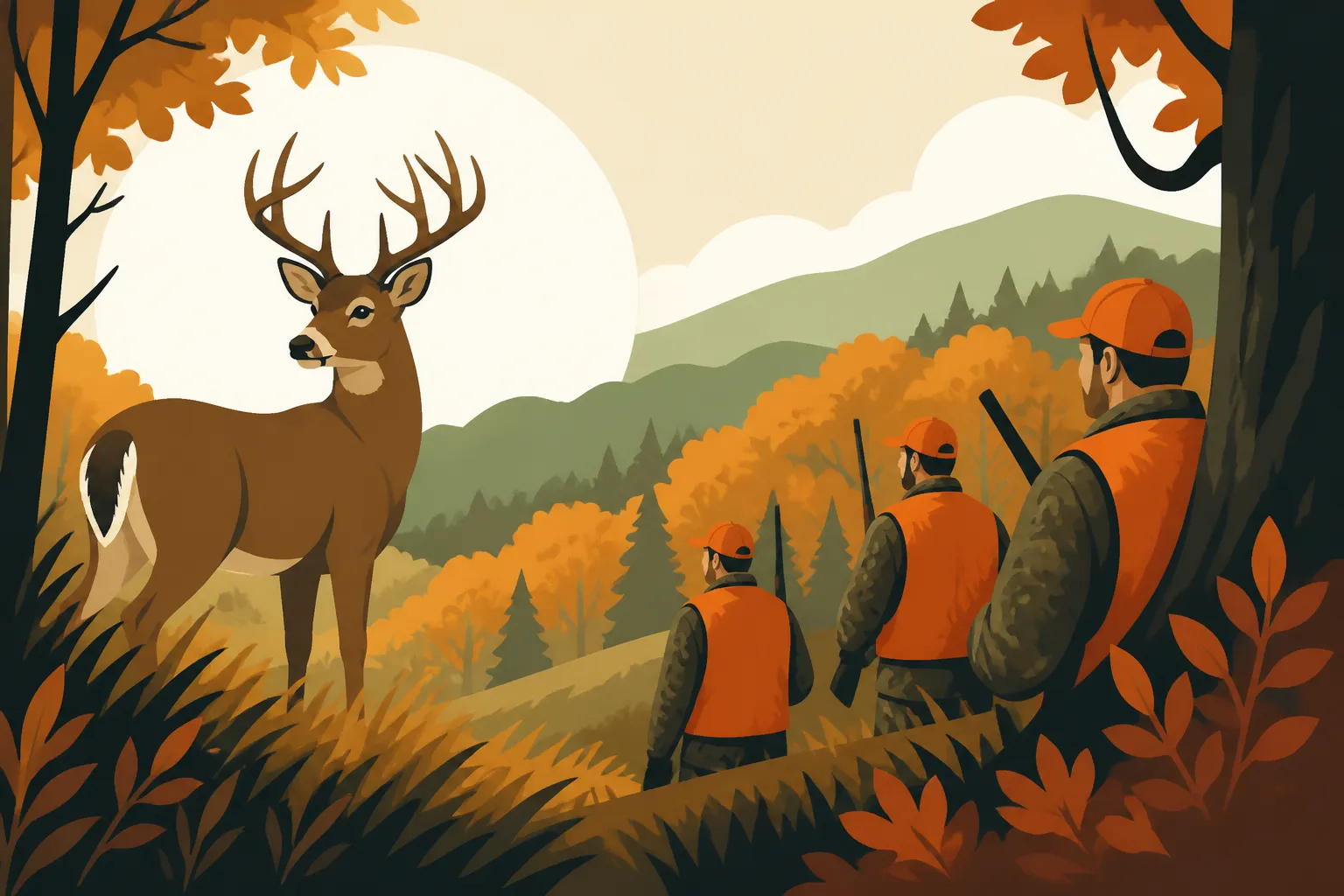
Trying to effectively move deer, especially on larger tracts of public land or even dense private woodlots, can feel like an impossible task when you’re hunting solo or with just one other person. It often leaves you frustrated, wondering if you just pushed deer to the next county without anyone getting a shot. This guide is here to unravel the complexities of executing successful deer drives with a small, manageable team of three or four hunters right here in Virginia, offering actionable strategies to maximize your chances.
The Why and Where of Small Deer Drives in Virginia
Let's face it, we don't all have a hunting club with a dozen guys ready to orchestrate a massive deer drive across a thousand-acre property. For many of us, it's just a few close friends or family members who share a passion for the outdoors. And honestly, a smaller group can be incredibly effective when applied to the right situations and terrain.
When Small Drives Shine: Situations for 3-4 Hunters
Small deer drives aren't about recreating those chaotic, large-scale pushes you might see on TV. Instead, they’re precision operations. They really shine in specific scenarios where you want to influence deer movement in a controlled manner, often pushing them towards strategically placed standers. Think about those frustrating patches of thick cover that deer always seem to disappear into – a gnarly pine thicket, a dense clear-cut that's grown up, or a tangled creek bottom. These are the places where a small, coordinated push can be incredibly productive.
If you’re hunting public land, like sections of the George Washington National Forest or one of Virginia's Wildlife Management Areas, you’re often dealing with varying terrain and other hunters. A small drive allows you to be nimble and target smaller, overlooked pockets where deer might be bedding down to avoid pressure. It's not about driving deer miles, but rather bumping them a few hundred yards from their sanctuary to a waiting gun or bow. This kind of nuanced approach is particularly useful during Virginia's General Firearms Deer Season, when deer are already on high alert due to increased pressure.
Ideal Virginia Terrain for Small Drives
Virginia offers a fantastic diversity of landscapes that lend themselves well to small deer drives. You need to identify areas where deer naturally funnel or hold tight.
- Creek Bottoms and River Eddies: These areas are often choked with thick brush, honeysuckle, and downed timber, providing excellent bedding cover. Deer will naturally follow the contours of the creek, and a drive along one side can push them across to standers on the opposite bank or up a small rise. Many public lands along rivers, like parts of the James River Wildlife Management Area, offer perfect setups for this.
- Pine Thickets and Regenerating Clear-cuts: Young pine plantations or clear-cuts that are 5-15 years old are deer magnets. The dense cover provides security, and the browse is abundant. A line of drivers can push through these areas, forcing deer out the other side. This is particularly effective in the Piedmont region, where such habitat is common.
- Small Woodlots and Fencerows: For those hunting smaller private tracts, even a five or ten-acre woodlot bordered by fields can hold a surprising number of deer. A couple of drivers walking the length of the woods, parallel to a fencerow, can push deer out into a field where a stander is positioned.
- Ridge-Top Saddles and Benches: In mountainous areas, deer often travel along benches and through saddles to avoid climbing unnecessary elevation. A small drive can push deer along a ridge or from a thick hollow up towards a stander positioned on a saddle. This requires a good understanding of the local topography, something an app like GoHunt can help immensely with, allowing you to visualize terrain features and potential escape routes. Knowing how to predict deer movement through features like a ridge-top saddle for rutting bucks can make all the difference.
When scouting these areas, whether with your boots on the ground or digitally with tools like GoHunt, look for pinch points, natural funnels, and dense cover. These are the places where deer feel secure, but also where their escape options can be limited, making them prime candidates for a small, effective drive.
Essential Roles and Responsibilities for 3-4 Hunters
Success in a small drive hinges entirely on clear communication and each hunter understanding their precise role. It's not just about walking through the woods; it's a coordinated effort where everyone contributes to the overall strategy.
The Drivers: The Movers
In a three- or four-person drive, you'll typically have two or three individuals acting as "drivers." Their primary job is to walk through a designated area, systematically moving deer out of cover towards the standers.
- Pacing and Spacing: This is critical. Drivers need to maintain a consistent pace and stay in a relatively straight line, spaced appropriately for the cover. In thick Virginia woods, 30-50 yards between drivers might be ideal, allowing them to cover the ground effectively without letting deer slip back between them. If the cover is thinner, they can spread out a bit more. The goal is to create just enough pressure to make deer uncomfortable and encourage them to move, not to full-on panic and bust out in unpredictable directions.
- Noise Level: The type of "noise" drivers make is crucial. It's not about yelling and screaming like a madman. Instead, a consistent, rhythmic sound is generally more effective. This could be footfalls, occasional soft calls, or tapping a stick against a tree. The aim is to make deer aware of your presence and push them gently. Too much frantic noise can make them unpredictable.
- Awareness: Drivers need to be highly aware of their surroundings – looking for fresh tracks, understanding wind direction, and being mindful of where the standers are positioned. They should also be on the lookout for other game, including turkeys or bears, and adapt if necessary. Using a good mapping app can help drivers stay on course and ensure they don't veer off, leaving gaps for deer to escape.
The Standers: The Receivers
The standers are the crucial component for sealing the deal. They are positioned to intercept deer that the drivers push out of cover.
- Strategic Positioning: Standers should be placed at known escape routes, pinch points, or where terrain naturally funnels deer. This might be a narrow saddle between two hills, a crossing point on a creek, or a field edge bordering a thicket. The goal is to anticipate where deer will go when pressured. Often, this means being set up before the drive even begins, quietly and discreetly, potentially using a ground blind on Virginia public land or a mobile treestand for elevation.
- Shot Lanes and Backdrops: Safety is paramount. Standers must identify clear, safe shooting lanes with a solid backdrop before the drive starts. They need to know what's beyond their target and ensure that any shot taken will be safe. This means considering the trajectory of the bullet or arrow and avoiding shooting towards other hunters or populated areas.
- Patience and Stealth: Once in position, standers need to be absolutely still, quiet, and ready. Deer often try to sneak out ahead of the drive, so early detection is key. They should be scanning constantly, not just directly ahead, but to the sides and even behind them, as deer can be crafty.
The "Floater" or Flanker: The Funneler (for 4 Hunters)
If you have four hunters, the fourth person often takes on a valuable "floater" or "flanker" role. This can be a game-changer for tightening the drive and directing deer.
- Adaptive Positioning: The floater doesn't necessarily walk in the main driver line. Instead, they might move along one side of the drive, slightly ahead or behind, to cut off potential escape routes that deer might try to take around the main driving line. They act as an extra "wall" or a funnel, gently nudging deer back into the desired path.
- Reading Deer Movement: This role requires an excellent ability to read deer behavior. If deer start to break out one side, the floater can quickly move to intercept them or apply pressure to redirect them. They need to be agile and able to move quietly and quickly.
- Communication Hub: Often, the floater can also serve as a key communication link between the main drivers and the standers, especially if using two-way radios. This person can relay real-time information about deer movement or the progress of the drive, making adjustments on the fly. This kind of dynamic communication is invaluable and far surpasses just relying on instinct.
Crafting Your Drive Strategy: Terrain and Deer Behavior
A successful drive isn't just about showing up and walking. It’s about planning, understanding the landscape, and anticipating how deer will react. This requires a good bit of homework before you even step foot in the woods.
Scouting the Route and Escape Cover
Before you even think about putting boots on the ground for a drive, you need to scout the area thoroughly. This can be done digitally and physically.
- Digital Scouting with Mapping Tools: Start with satellite imagery and topographic maps. Tools like GoHunt are fantastic for this, allowing you to identify key features such as dense cover, elevation changes, creek beds, logging roads, and potential pinch points. Look for areas where thick cover meets more open timber, or where a ridge narrows into a saddle. These are natural funnels. You can use these maps to pre-plan the drivers' path, the standers' positions, and even alternative escape routes for deer. This foresight helps you anticipate deer movement patterns and where you should place your hunters. Understanding the lay of the land, whether it's hunting west of the Blue Ridge or dealing with the rolling hills of the Piedmont, is critical.
- Boots-on-the-Ground Reconnaissance: Nothing beats walking the area. Look for fresh sign – tracks, rubs, scrapes, and bedding areas. Identify the densest cover where deer are likely to be holed up. Pinpoint trails deer are using to enter and exit these areas. These are your most likely escape routes, and thus, prime stander locations. Also, note any obstacles for drivers, like thick briar patches or steep ditches, so you can plan around them. Remember to be stealthy, as you don't want to alert deer to your future intentions.
- Planning Entry and Exit: Consider how drivers and standers will quietly get to their positions without disturbing the area. This is especially important for the standers, who need to be in place well before the drive begins. Plan routes that use natural cover or terrain features to mask movement.
Understanding Deer Movement Patterns in Virginia
Deer are creatures of habit and survival. Understanding their instincts is key to predicting their behavior during a drive.
- Wind and Thermals: Deer rely heavily on their sense of smell. Always factor in wind direction. Drivers should ideally move with the wind or cross-wind to push deer into the wind towards the standers. Deer will often try to circle downwind to scent-check what's behind them. In mountainous regions, thermals play a significant role, especially in the mornings and evenings. As the sun rises, thermals rise, and as it sets, they fall. Knowing how wind and thermals on a Blue Ridge slope affect deer movement will help you position your standers and direct your drivers more effectively.
- Pressure and Escape Routes: When pressured, deer will almost always seek the path of least resistance to dense cover. They know their escape routes. These often follow topography (creek beds, ridge lines, hollows) or existing deer trails. Sometimes, they will try to slip out the back of a drive, especially if the drivers aren’t spaced effectively or moving too quickly. A good drive plans for these eventualities, positioning hunters to cut off these common escape routes.
- Bedding Areas: Identify where deer are likely bedding during hunting hours. This is the starting point for your drive. Often, these are in the thickest, nastiest cover you can find, offering security from predators and harsh weather. Knowing where deer are likely to be bedded down, such as where George Washington Forest bucks bed, helps you initiate the drive from the most strategic point.
Defining Boundaries and Safety Zones
This is arguably the most critical aspect of any deer drive, especially with a small group, where coordination must be precise.
- Clear Boundaries: Everyone involved must know the exact start and end points of the drive, as well as the lateral boundaries. This prevents drivers from veering off course and ensures standers are covering the correct areas. Using a map tool like GoHunt to mark these boundaries clearly for all participants is essential. Share the digital map with everyone involved so they can track their positions in real-time.
- Safety Zones and Fields of Fire: Before the drive, standers need to clearly define their safe shooting lanes. This includes knowing where other hunters are positioned and avoiding any shots that might put them at risk. Establish a general rule about not shooting toward the drivers, even if you see a deer going that way. For Virginia legal firearms for deer hunting, consider the range and impact zone of your chosen caliber.
- Pre-Drive Briefing: Hold a detailed briefing before every drive. Review the map, discuss roles, confirm boundaries, establish communication signals (e.g., whistle blasts, radio checks), and reiterate safety rules. Discuss potential scenarios: "What if a deer breaks left?", "What if someone gets lost?" Everyone needs to be on the same page. This level of planning, similar to what you'd see in deer drives with three or four hunters on public land, mitigates risks.
| Role | Primary Objective | Key Responsibilities | Communication Needs |
|---|---|---|---|
| Drivers | Move deer out of cover towards standers | Consistent pace, maintain line, subtle noise | Stay in contact with other drivers and standers |
| Standers | Intercept deer exiting cover | Strategic positioning, identify clear shot lanes, stealth | Know driver progress, report deer sightings |
| Floater | Funnel deer, cut off escape routes (for 4+ hunters) | Adaptive movement, read deer behavior, fill gaps | Constant communication with both drivers and standers |
Executing the Drive: Communication, Safety, and Follow-Through
The planning is done; now it's time for execution. This is where all the preparation comes together, and split-second decisions and constant awareness are key.
Communication is Key: Before, During, and After
Effective communication is the lifeblood of a successful and safe deer drive, particularly with a small team where each member's actions have a greater impact.
- Pre-Drive Briefing: As mentioned, this cannot be overstated. Before anyone moves, everyone must be clear on the plan, roles, boundaries, and safety protocols. Discuss visual and auditory signals. Are you using hand signals for "stop" or "deer spotted"? What does two whistle blasts mean versus three? Ensure everyone knows the safe zones, especially the arcs of fire for the standers.
- Radios for Real-Time Updates: For small groups, two-way radios are invaluable. They allow for silent, real-time communication that can adapt to changing conditions. Drivers can report their progress, alert standers to deer moving their way, or call for a pause if someone needs to adjust. Standers can confirm deer sightings or alert drivers if deer are attempting to break back. When considering two-way radios on a deer drive, look for models with good range, privacy codes, and sturdy construction for field use. Cellular signals can be spotty in many remote parts of Virginia, so don't rely solely on cell phones.
- Post-Shot Communication: If a shot is taken, the hunter should immediately communicate this to the group. "Shot fired, stander one." This lets everyone know what happened and that they should proceed with caution. This is also important for confirming safety before any tracking begins.
Maintaining Spacing and Pace: The Art of the Push
This is where the actual "drive" part comes into play, and it requires discipline from the drivers.
- Slow and Steady Wins the Race: Drivers should move at a slow, deliberate, and consistent pace. This isn't a race. Rushing through the cover will often cause deer to panic and blow out in unpredictable directions, or simply hold tight and let you pass. A slow, steady push makes deer uncomfortable but still allows them to feel like they have a controlled escape path, which is often right past your standers.
- Staying in Line: Maintaining a relatively straight line, especially in thick cover, is challenging but crucial. If one driver lags or pushes too far ahead, it creates a gap that deer will exploit. Use natural landmarks or GPS on your GoHunt app to help maintain alignment. If the terrain makes a straight line impossible, communicate and adjust, but try to keep the integrity of the "wall" you're creating.
- Listening and Watching: Drivers should constantly be listening for subtle movements ahead and watching for flicking ears, white flags, or dark shapes in the cover. They should also be listening for any communication from the standers. Deer often try to slip back through the drive, so paying attention to what's behind you is important too.
Post-Drive Procedures: Tracking, Checking In, and Repeating
The drive doesn't end when the deer clear the cover. There are vital steps to ensure safety and maximize success.
- Safety First After a Shot: Once a shot is fired, the stander should call it out over the radio. Everyone should remain in position until the drivers have completed their push and can safely regroup. Only then should anyone move to the shot location. This prevents accidental crossfire if deer are still moving.
- Tracking and Recovery: If a deer is hit, the entire group should assist in tracking, if safe to do so. Two sets of eyes are always better than one, especially when tracking a deer through Virginia leaf litter or dense undergrowth. Mark the last point of sign, and systematically search for blood, tracks, and disturbed vegetation. Take your time; a hasty search can easily miss vital clues. If the blood trail is sparse or the light is fading, sometimes it’s best to back out and return later with fresh eyes or even a tracking dog, if allowed in that area.
- Regroup and Debrief: After the drive, whether successful or not, always regroup. Discuss what worked, what didn't, and what could be improved. Did the drivers move too fast? Were the standers in the right spots? Did deer break out in an unexpected direction? This debriefing is crucial for learning and improving future drives. This kind of systematic reflection makes all the difference for upcoming hunts, whether you're targeting bowhunting Virginia's statewide archery season or getting ready for the late muzzleloader season.
- Repeating the Process: Don't be afraid to repeat drives in the same general area, adjusting your strategy based on what you learned. Deer patterns can change daily due to weather, pressure, and food sources. Small, adaptable drives allow you to react to these changes efficiently.
Executing deer drives with three or four hunters in Virginia isn't just a tactic; it's an art that combines knowledge of deer behavior, terrain, communication, and safety. It's a highly rewarding way to hunt, especially when you can pool resources and work as a team to achieve success.
Disclaimer
Hunting is an inherently dangerous activity. Always prioritize safety, adhere to all Virginia Department of Wildlife Resources (DWR) regulations, and ensure you have the proper licenses and hunter education. This guide provides tactical information for educational purposes and should not be taken as a substitute for official DWR guidelines, local laws, or professional safety instruction. Always hunt within your capabilities and with respect for the land and wildlife.