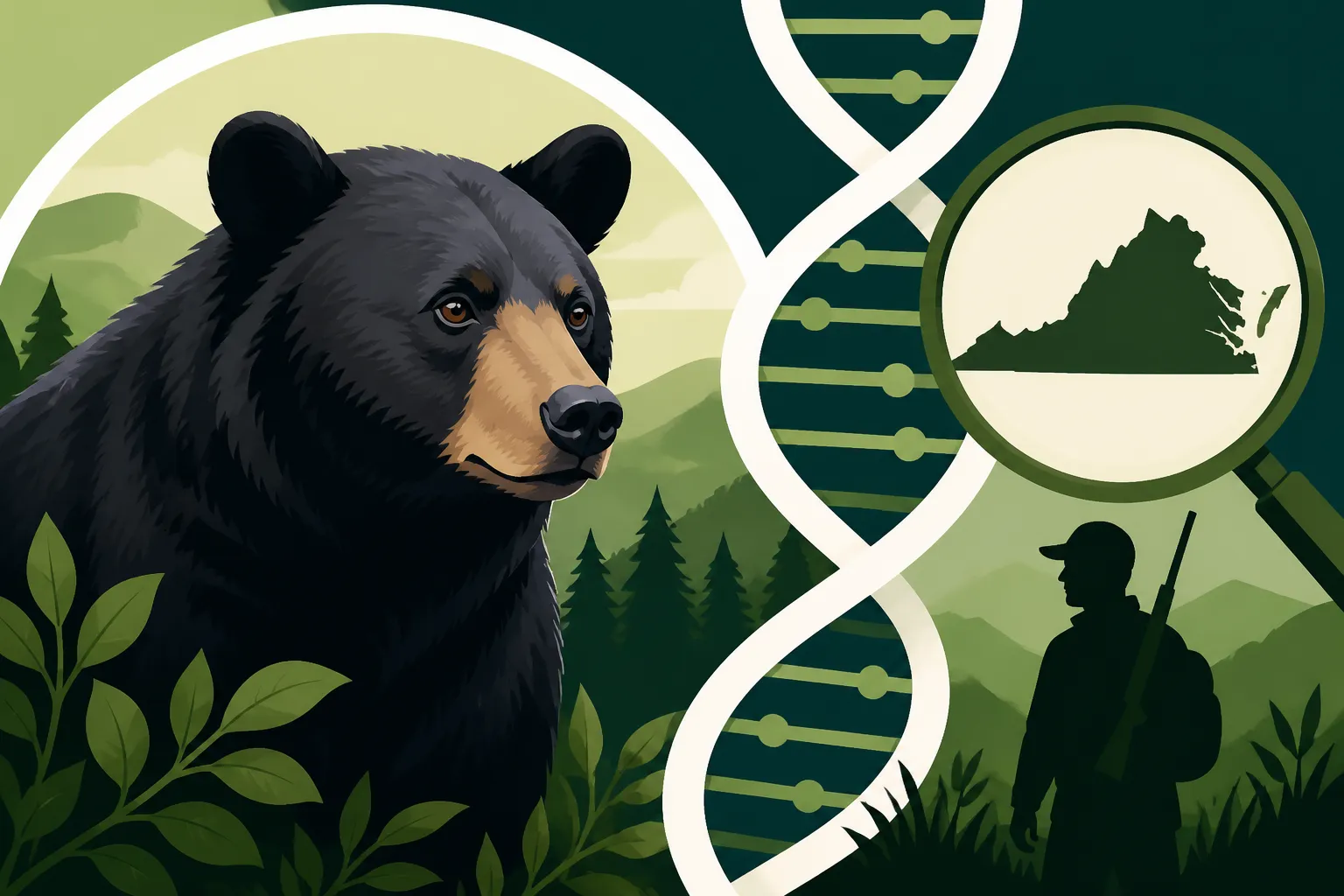
Virginia Black Bear DNA Tracking Study
It's no secret that black bears are incredibly intelligent and elusive creatures, making them notoriously difficult to count and understand in their natural habitat. For us hunters and wildlife enthusiasts in Virginia, knowing what's happening with our bear population—how many there are, where they're moving, and what health challenges they face—is crucial for effective management and future hunting opportunities. This comprehensive guide will pull back the curtain on the Virginia Black Bear DNA Tracking Study, explaining why it's so vital, how it works on the ground, what incredible insights it provides, and what it all means for the future of bear hunting in our beloved Commonwealth.
Understanding the Need: Why a DNA Tracking Study for Virginia Black Bears?
Tracking a large, wide-ranging animal like a black bear through Virginia's diverse landscapes—from the dense western mountains to the sprawling eastern farmlands—presents a unique set of challenges. Historically, wildlife biologists relied on methods like harvest data, roadkill reports, and visual sightings, but these only give us pieces of the puzzle. The Virginia Department of Wildlife Resources (DWR) launched its black bear DNA tracking study to gain a much deeper, more accurate understanding of these magnificent animals. It’s about getting granular data that traditional methods just can't provide.
The Elusiveness of Bear Populations
Imagine trying to count every individual bear in a county as vast and wild as Augusta or Rockingham. It's an almost impossible task. Bears are solitary for much of the year, move through thick cover, and have home ranges that can span dozens, if not hundreds, of square miles. They don't stand still for headcounts! This elusiveness means that simply relying on anecdotes or localized observations can lead to skewed or incomplete population estimates. A DNA study helps overcome this by identifying individual bears without ever having to see or tranquilize them, painting a far clearer picture of the actual number of animals inhabiting an area. Understanding the true Virginia Deer Herd Size is tough, and bears are even trickier.
Addressing Emerging Health Concerns Like Mange
One of the most pressing reasons for a DNA tracking study is the rise of health issues, particularly mange. This parasitic skin disease has been impacting bear populations in certain areas of Virginia, and understanding its prevalence, how it spreads, and its impact on bear health and survival is paramount. By collecting DNA samples, biologists can not only identify individual bears but also often gain insights into their health status, track the spread of diseases like mange, and assess the overall genetic health of the population. It helps answer critical questions, like how mange spreads through a population and whether certain genetic lines are more susceptible. For more context on this issue, you can read How Mange Affects Virginia's Bear Population.
Informing Management Decisions and Hunting Regulations
Ultimately, all this scientific effort boils down to one goal: better wildlife management. The insights gained from a comprehensive DNA study directly inform DWR's decisions regarding bear season structures, bag limits, and overall conservation strategies. Without accurate data on population size, distribution, and health trends, management becomes guesswork. When you have concrete evidence of how many bears are truly out there, where they're concentrated, and what challenges they face, it allows for targeted, effective regulations that ensure healthy bear populations for generations to come. This data helps shape the Virginia Bear Season Rules and ensure sustainable hunting opportunities.
The Science in Action: How Virginia Collects Bear DNA Data
So, how exactly does one "track" a bear using DNA? It's not about chasing bears with test tubes! The process involves ingenious methods of collecting biological samples in the field, often without the bear even knowing it, and then analyzing those samples in a lab. It’s a sophisticated blend of fieldcraft and cutting-edge genetics.
Non-Invasive Collection Methods: Hair Snares and Scat
The backbone of Virginia's bear DNA tracking study relies on non-invasive collection techniques. The most common method involves setting up "hair snares" or "hair traps." These are essentially bait stations—often a strong-smelling lure like fish oil or molasses—surrounded by a strand of barbed wire. When a curious bear comes to investigate and rubs against the wire, it leaves behind a few precious strands of hair. Crucially, these hairs contain DNA in their root follicles.
Another powerful, non-invasive method is scat (fecal matter) collection. Bear scat contains intestinal cells that carry the bear's DNA. Biologists and trained volunteers can collect fresh scat samples, which are then preserved and sent to the lab. These methods are preferred because they cause minimal disturbance to the bears and are cost-effective for covering large areas. Hunters, by the way, are often keen observers of scat, and many use tools like the GoHunt app to mark potential bear sign on their maps, which indirectly aids in understanding bear distribution.
Here's a quick comparison of traditional vs. DNA methods:
| Feature | Traditional Methods (e.g., harvest, sightings) | DNA Tracking Study Methods (e.g., hair, scat) |
|---|---|---|
| Accuracy of Population Count | Estimates, prone to under/overestimation | More precise individual identification, population modeling |
| Individual Identification | Difficult, relies on unique markings or tags | Identifies individual bears uniquely by genetic profile |
| Health Data | Limited (e.g., mange noted during harvest) | Can reveal genetic predispositions, pathogen presence |
| Movement Patterns | Inferred from broad ranges, sparse sightings | Tracks movement of identified individuals over time |
| Genetic Diversity | Not directly assessed | Directly assesses genetic health and relatedness |
| Invasiveness to Animals | Low (observation, harvest), higher for trapping/tagging | Very low (non-invasive collection) |
| Cost | Lower initial, less labor-intensive | Higher initial lab costs, field labor can be significant |
The Role of Hunter and Public Involvement
Hunters play an incredibly important, though often indirect, role in contributing to the broader understanding of Virginia's bear population. While the DNA study's core collection is typically done by DWR personnel and trained partners, the knowledge gleaned from hunter observations helps guide where studies might be focused. For instance, reports from hunters about increased bear activity in an unexpected area or observations of mange-affected bears during Hunting Virginia's Year-Round Feral Hogs or deer season can flag areas for biologists to investigate further. Additionally, successful bear hunters who check their harvest at DWR stations contribute vital biological samples (like a tooth for aging) and data that complement the DNA study by providing information on harvest rates and age structures. The more people out in the woods, observing and reporting, the better picture we all get.
Decoding the Data: What Bear DNA Reveals About Virginia's Population
Once those hair samples and scat droppings arrive at the lab, the real magic of genetics begins. Scientists extract the DNA, amplify specific markers, and create a unique genetic profile for each bear. This profile is like a barcode, identifying an individual bear and revealing a wealth of information about them and the broader population. It's truly fascinating what can be learned from a few cells.
Estimating Population Size and Density More Accurately
One of the primary goals of the DNA tracking study is to get a much more accurate estimate of the black bear population size and density. Because each DNA profile is unique, scientists can identify how many different bears were sampled. If they collect samples repeatedly over an area and time, they can use statistical models to estimate the total population, even accounting for bears that weren't sampled. This "capture-recapture" methodology, but with DNA, provides much more robust numbers than traditional counting methods. For example, if they get samples from "Bear A" multiple times in a specific hollow and "Bear B" once on a ridge, they know they have at least two bears, and with enough data points, can project the total number of bears in that particular region. This level of precision helps refine our understanding of Virginia Deer Population Estimate methods and applies that scientific rigor to bears.
Tracing Movement Patterns and Home Ranges
Beyond just counting bears, DNA samples allow biologists to map their movements. If "Bear A" is identified from a hair snare in one location in May and then again from a scat sample several miles away in June, researchers can track that individual's movement. Over time, with enough detections of multiple individual bears, scientists can build detailed maps of individual home ranges, migration corridors, and how bears utilize different habitats throughout the year. This information is invaluable for understanding how bears navigate human-dominated landscapes, whether they cross major highways, or how they exploit different food sources across the seasons. This helps us understand Where Mountain and Piedmont Bears Range in much greater detail.
Assessing Genetic Diversity and Overall Health
The DNA itself holds secrets about the health and genetic vigor of the bear population. By analyzing genetic markers, scientists can assess the level of genetic diversity within different bear populations. High genetic diversity is generally a sign of a healthy, robust population that can adapt to environmental changes and resist diseases. Low diversity, on the other hand, can indicate a population under stress, perhaps due to isolation or limited breeding opportunities. Furthermore, DNA analysis can sometimes identify genetic markers associated with disease resistance or susceptibility, offering critical insights into the population's resilience against threats like mange. It's a deep dive into the very blueprint of Virginia's bears, helping us with overall Virginia Wildlife Disease Monitoring.
Beyond the Study: Implications for Virginia Bear Management and Hunters
The Virginia Black Bear DNA Tracking Study isn't just an academic exercise; its findings have tangible impacts on how bears are managed in the Commonwealth and, by extension, how and where hunters pursue them. This scientific endeavor provides the foundation for sustainable bear hunting and conservation practices that ensure a healthy future for this incredible game animal.
Tailoring Management Strategies to Regional Needs
One of the most significant implications of this study is the ability to develop more localized and nuanced bear management strategies. If the DNA data reveals, for instance, that a specific mountain range has a lower-than-expected population density or a particular Piedmont county shows higher instances of mange, DWR can then tailor regulations and conservation efforts specifically for those areas. This might mean adjusting season lengths, setting different bag limits, or implementing targeted habitat improvements. It moves beyond a one-size-fits-all approach to management, allowing for more adaptive and effective conservation. Understanding these regional differences is key, whether it's for bears or for something like Hunting East of the Blue Ridge or Hunting West of the Blue Ridge for deer.
Guiding Hunter Decisions and Ethical Practices
For hunters, the findings from a DNA study can offer valuable insights, even if not directly published as a "hunting guide." Understanding general population trends—whether bear numbers are increasing, stable, or decreasing in certain regions—can help hunters make informed decisions about where to focus their efforts. If studies highlight areas of high population density, it might signal good hunting opportunities. Conversely, if an area shows stress or disease, hunters might choose to hunt elsewhere or take extra precautions with game handling. Ethical hunting also includes being aware of the health of the game you pursue, and a DNA study provides that big-picture health report. Hunters can use mapping tools, like those offered by GoHunt, to integrate their scouting observations with general knowledge of bear movement patterns and habitat use as indicated by broader DWR research. This combination of personal scouting and scientific understanding leads to more successful and ethical hunts.
Long-Term Conservation and Habitat Preservation
Ultimately, the DNA tracking study serves as a critical tool for long-term black bear conservation. By providing accurate data on population trends, genetic health, and movement, it allows DWR to identify and prioritize habitat preservation efforts. If a study reveals that a certain corridor is essential for bears to move between different populations, that area can be flagged for protection or careful development planning. This proactive approach ensures that Virginia's black bear populations remain robust and healthy for future generations, securing their place in our ecosystem and our hunting traditions. Being able to track individual bears and their genetic makeup helps immensely in understanding where future efforts, like habitat restoration or creation, should be focused.
The Ever-Evolving Picture of Virginia's Bears
The Virginia Black Bear DNA Tracking Study is an ongoing commitment, not a one-off project. Just like the deer herd, Virginia Deer Antler Growth Timeline or Virginia Turkey Population Estimate, bear populations are dynamic. Wildlife populations are constantly shifting due to environmental factors, food availability, disease, and human interaction. Therefore, these studies are often conducted in phases or as long-term monitoring programs, continually updating our understanding of the black bear population. This iterative process allows DWR to adapt management strategies as new information emerges, ensuring that Virginia remains a premier state for black bear populations and the dedicated hunters who pursue them. It's about staying ahead of the curve, using the best available science to protect and manage this incredible resource.
Disclaimer
This article is for general informational purposes only and does not constitute professional advice. Laws, prices and regulations vary by location and change over time. Consult a qualified professional for guidance on your specific situation.