Turkey Shotguns and Chokes
There’s nothing quite like the sound of a gobbler hammering on the roost in a crisp Virginia spring morning, but that excitement can quickly turn to frustration if your equipment isn't up to the task. Many hunters struggle with inconsistent patterns or feeling under-gunned when that wary tom hangs up at 40 yards. This guide is dedicated to dissecting the ins and outs of modern turkey shotguns and chokes, ensuring you have the knowledge to build a setup that delivers devastating patterns and boosts your confidence in the Virginia woods.
Understanding the Modern Turkey Shotgun
Hunting turkeys isn't like shooting clays or ducks; it demands a very specific kind of performance from your firearm. A well-chosen turkey shotgun is often the cornerstone of a successful spring season, providing the accuracy and power needed to anchor a big gobbler cleanly.
Why a Dedicated Turkey Shotgun Matters
While you can technically hunt turkeys with your trusty bird gun, a dedicated turkey shotgun truly shines because it's optimized for the unique challenges of the pursuit. These aren't just cosmetic differences; we're talking about fundamental design choices that improve your chances dramatically. For instance, many dedicated turkey guns feature shorter barrels, often in the 20-24 inch range. This isn't just for looks; it makes the gun much handier in thick cover, allowing you to maneuver swiftly if a gobbler suddenly appears off to your side or if you're trying to pivot quietly in a ground blind.
Beyond barrel length, you'll often find turkey shotguns equipped with specialized finishes that are ultra-matte and non-reflective, crucial for remaining undetected by a turkey's incredibly keen eyesight. Standard hunting shotguns might have a bit more sheen, which could easily spook a bird that's staring directly at your position. The ergonomics are also frequently tailored for sitting, with pistol grips or specialized stocks designed to provide a more stable, comfortable hold when you're hunkered down against a tree or inside a blind, waiting for that perfect shot opportunity. It’s all about minimizing movement and maximizing your ability to hold steady under pressure.
Ultimately, a dedicated turkey setup gives you an edge. It’s built from the ground up to achieve one thing: deliver a dense, consistent pattern of shot to a turkey’s head and neck at typical hunting ranges. This specialization means less compromise in the field and more confidence when the moment of truth arrives, rather than wondering if your duck gun can really cut it.
Common Gauges and Their Performance
When it comes to turkey shotguns, the market offers a variety of gauges, each with its own advantages. The choice often boils down to a balance of power, recoil, and portability. For decades, the 12 gauge has been the undisputed king of turkey hunting, and for good reason. Its larger hull capacity allows for a heavier payload of shot, translating into incredibly dense patterns and ample energy downrange. With modern tungsten-based loads, a 12 gauge can achieve patterns that were once thought impossible, extending effective range for ethical shots. The downside, of course, is the recoil, which can be stout, especially when firing heavy turkey loads from a lighter gun.
The 20 gauge has seen a massive surge in popularity, and it’s no longer considered merely a "youth" or "light recoil" option. Advances in ammunition technology, particularly with loads like TSS (Tungsten Super Shot), have transformed the 20 gauge into a legitimate turkey slayer. These smaller, denser pellets mean that a 20 gauge can carry a significant number of pellets, often rivaling or even exceeding the pellet count of a traditional lead 12 gauge load, but with far less recoil. This makes it an excellent choice for hunters who are sensitive to recoil, younger hunters, or those who simply appreciate a lighter, more maneuverable firearm when covering ground in Virginia's rolling hills or Turkey Tactics for Piedmont Field Edges.
While less common for dedicated turkey hunting, you'll also find some hunters opting for 28 gauge or even .410 bore shotguns, often for the ultimate lightweight challenge or for youth hunters. Again, the advent of ultra-dense TSS shot has made these smaller gauges viable, pushing their effective range well beyond what was conceivable with traditional lead shot. However, these smaller gauges typically require an even more precise shot placement and are best suited for experienced hunters who are confident in their patterning and shot judgment, or for specific scenarios like hunting with youth during the Virginia Youth and Apprentice Turkey Weekend. It's crucial to understand that while these smaller gauges can be effective, they demand a higher degree of proficiency and a commitment to patterning to ensure ethical performance.
The Critical Role of the Choke Tube
If the shotgun is the engine, the choke tube is the precision-tuned carburetor, dictating how that engine performs with specific fuel. For turkey hunting, the choke tube is arguably the single most important component for achieving the dense, concentrated pattern necessary to anchor a gobbler.
Choke Constriction Explained for Turkeys
A choke tube is essentially a device that fits into the muzzle of your shotgun barrel, designed to control the spread of the shot as it exits the gun. Imagine squeezing a garden hose nozzle – the narrower the opening, the more concentrated and powerful the stream. Chokes work on the same principle. For most bird hunting, you might use a "modified" or "full" choke, which provides a reasonable spread for flying targets or general small game. However, for turkeys, we're not trying to hit a large, moving target; we're trying to hit a small, static target: the turkey's head and neck.
This means you need extreme constriction. While a standard "Full" choke is a good starting point, most dedicated turkey chokes go well beyond this, often labeled as "Extra Full," "Turkey," or even specific constriction numbers like .660 or .675. These chokes squeeze the shot column much tighter, delaying the spread of the pellets for as long as possible after they leave the muzzle. The goal is to deliver a very tight, consistent "killing pattern"—a cluster of pellets dense enough to incapacitate a turkey instantly within a small circle. Without this precise constriction, your pattern will spread too quickly, resulting in too few pellets hitting the vitals, leading to wounded birds. Understanding the nuances of these extreme chokes is paramount, as a slight difference in constriction can make a big difference downrange.
Materials and Porting: What to Look For
Modern turkey chokes are a far cry from the fixed chokes of yesteryear. Today's options are precision-engineered tools, often made from advanced materials and featuring specialized designs. You'll commonly find chokes made from stainless steel, which is durable and performs reliably. However, many premium turkey chokes are crafted from more exotic materials like heat-treated steel, tungsten, or even titanium alloys, which offer superior strength and allow for even tighter constrictions without risking damage to the choke or barrel. These tougher materials are particularly important when shooting the hard, non-lead shot types like TSS, which could potentially damage softer chokes.
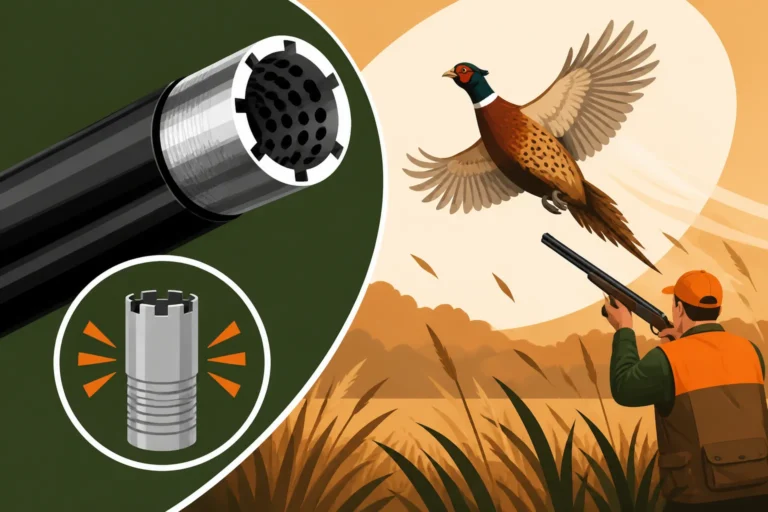
Beyond material, many turkey chokes are "ported." This means they have small holes or slots around the circumference of the choke near the muzzle. These ports serve a couple of important functions. First, they help vent gases, which can reduce muzzle jump, allowing for quicker follow-up shots if needed (though hopefully not on a turkey!). Second, and perhaps more importantly for turkey hunters, they can help reduce felt recoil. When you're shooting heavy magnum turkey loads, anything that takes the bite out of the shoulder is a welcome addition, especially if you're Hunting the Virginia Youth Deer Weekend and want to make the experience more comfortable. When you're researching which choke to pair with your shotgun and preferred ammunition, many hunters find valuable insights and recommendations by checking out community discussions or gear reviews on platforms like GoHunt. Their forums often contain detailed accounts of how specific choke and load combinations perform in the field.
It’s worth noting that some chokes are designed with internal geometries that actually strip the wad from the shot column sooner, allowing the pellets to fly truer and denser. This combination of material, porting, and internal design is what makes a specialized turkey choke a truly vital part of your setup.
Patterning Your Turkey Setup: The Non-Negotiable Step
You wouldn't drive a car without checking the tires, right? Well, taking your turkey shotgun into the woods without patterning it is even riskier. This step is absolutely, unequivocally non-negotiable for any serious turkey hunter in Virginia. Skipping it is asking for trouble, and potentially a wounded bird.
The Importance of Patterning at Different Ranges
Patterning your shotgun isn't just about ensuring your gun shoots straight; it's about understanding precisely how your chosen choke and ammunition combination performs at various distances. Every single shotgun is unique, and when you combine that with different choke tubes and various brands and types of turkey loads, the results can be wildly different. What patterns perfectly in your buddy's identical shotgun might throw a terrible pattern in yours. You might have a great choke, a great shotgun, and great ammo, but if they don't work together, you're in for a disappointment.
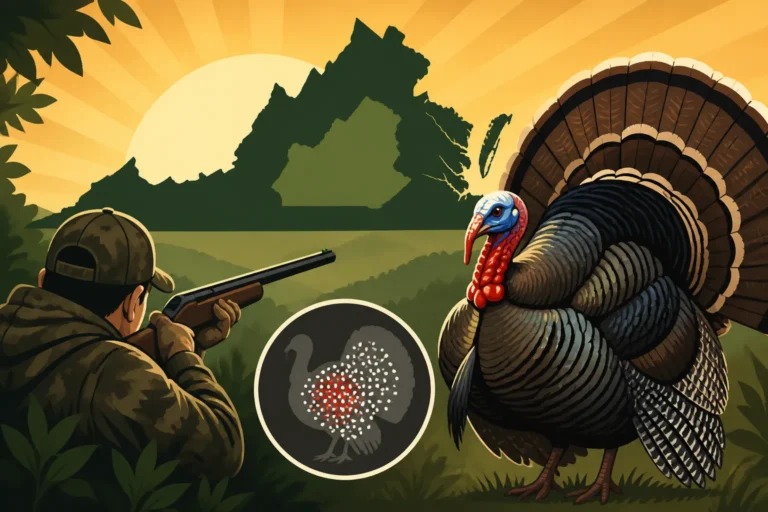
You need to test your setup at realistic hunting ranges. Start at 20 yards, then move to 30, and most importantly, to 40 yards. Some highly optimized setups might even warrant testing at 50 yards, but always remember that 40 yards is often the practical maximum for many ethical shots on a turkey. At each distance, shoot at a turkey head target or a piece of paper with a marked vital zone (about a 3-inch circle for the head and neck). The goal is to see how many pellets consistently hit that critical area. A "killing pattern" means you have enough pellets in the head and neck to ensure a quick, humane kill. There's no magic number, but generally, you want a minimum of 8-10 pellets of heavier-than-lead shot (like TSS) or 15-20 pellets of lead shot within that 3-inch circle. This diligent patterning will reveal your setup's true capabilities and, more importantly, its limitations. It prevents the heartbreaking scenario of a gobbler walking away after what felt like a perfect shot.
Ammunition Selection for Virginia Gobblers
Choosing the right ammunition is just as crucial as selecting the right choke, as the two work hand-in-hand to create that optimal pattern. The world of turkey loads has advanced dramatically, giving us more options than ever before. Traditionally, lead shot has been the standard. Lead is heavy enough to carry energy and, in larger sizes like #4, #5, or #6, can be effective. However, lead is also relatively soft, meaning pellets can deform upon firing and in the choke, leading to inconsistent patterns.
The real game-changer in turkey ammunition has been the advent of heavier-than-lead shot. Tungsten Super Shot (TSS) is perhaps the most celebrated of these. TSS pellets are incredibly dense, much denser than lead, meaning smaller pellets carry more energy and maintain their velocity better. This allows manufacturers to pack more pellets into a shell, resulting in phenomenally dense patterns that significantly increase the effective range and lethality of the shot. For instance, a #9 TSS pellet carries similar energy to a #4 lead pellet, but you can fit far more #9s into a shell. Bismuth and other tungsten alloys also offer performance advantages over traditional lead, providing harder pellets that deform less and pattern more consistently.
Your choice of shot size will also depend on the material. With lead, you might stick to #4, #5, or #6. With TSS, #7, #8, or #9 are common, even tiny #9s, due to their density. When weighing your options, especially with newer, specialized loads, it's smart to consult resources that provide detailed ballistics and real-world patterning results. Websites like GoHunt often feature articles and user reviews that delve into the performance of various ammunition brands and shot types, which can be incredibly helpful in narrowing down your choices before you hit the patterning board. Remember, investing in premium turkey loads and thoroughly patterning them will pay dividends in the field.
Specialized Features and Accessories
Once you've got your core shotgun, choke, and ammunition dialed in, there are several other features and accessories that can significantly enhance your turkey hunting experience and improve your chances of success in the Virginia woods. These aren't just gadgets; they’re tools that address specific challenges of turkey hunting.
Sights: Bead, Fiber Optic, and Optics
The traditional brass bead sight has been on shotguns for generations, and it still works. However, for the precise aim required to hit a turkey's head and neck, it leaves a lot to be desired. It’s effective for broad targets but can be a bit crude for fine-tuning your point of impact. Many turkey hunters upgrade to fiber optic sights, which gather ambient light to create bright, easy-to-see aiming points, even in the dim light of dawn or dusk when gobblers are Roost Hunting Virginia Gobblers or coming off the limb. These are a significant improvement, offering better visibility and quicker target acquisition.
However, for ultimate precision, a red dot sight truly excels. A red dot allows you to focus on the target with a clear, illuminated reticle that appears to float on the turkey’s head. This eliminates the need to align a front and rear sight, reducing potential aiming errors and parallax. When that big tom is strutting at 35 yards, and your heart is pounding, a red dot sight provides a calm, precise aiming point, helping you place those dense patterns exactly where they need to go. They are particularly beneficial in low light conditions or when a bird presents an awkward shot angle, making a clean kill much more achievable.
Slings, Camo, and Comfort Considerations
Turkey hunting often involves a lot more walking and waiting than other forms of hunting. A comfortable, durable sling is absolutely essential, especially if you're practicing Run-and-Gun Turkey Tactics on Public Land in the mountains. You’ll be covering miles, often through rugged terrain, and having your shotgun securely and comfortably on your shoulder makes a world of difference. Look for a sling that’s wide, padded, and non-slip to keep your hands free for calling, glassing, or just navigating uneven ground.
Camo is another critical element. Turkeys have exceptional eyesight, particularly when it comes to detecting movement and unnatural shapes. Your entire setup—gun, clothing, and blind—needs to blend seamlessly into the Virginia environment. Patterns that mimic hardwoods, fall leaves, or green foliage are all effective, depending on the time of year and the specific habitat you’re hunting, whether you're Setting Up Against a Big Oak or against a pine sapling. Your shotgun itself should have a matte, camouflaged finish to avoid any reflective glare.
Finally, consider comfort during those long sits. Turkey hunting is often a game of patience, waiting for that bird to commit. A comfortable cushion or seat in your turkey vest, especially one with a kickstand feature, can make hours of sitting motionless much more tolerable. Good, waterproof boots are also a must, as spring weather in Virginia can be unpredictable, and you might find yourself trekking through damp leaves or crossing small creeks. Many hunters turn to trusted community resources, like those found on GoHunt, to discover what gear others are using for comfort and effectiveness during extended hunts. These small investments in comfort and stealth can drastically improve your mental game and physical ability to stay still and focused until the perfect shot opportunity arises.
Virginia Regulations and Ethical Shot Distances
Understanding the rules and exercising ethical judgment are paramount for any responsible hunter. While having the right gear is important, knowing how and where to use it legally and morally is even more critical.
Understanding Legal Requirements
Before you even step foot in the woods, it's vital to be intimately familiar with Virginia's specific regulations regarding turkey hunting firearms. The Virginia Department of Wildlife Resources (DWR) sets clear guidelines on what is permissible. Generally, shotguns are the primary legal firearm for spring turkey hunting in Virginia, and most common gauges (12, 20, 28, .410) are allowed. However, it's always wise to check the current DWR regulations pamphlet or their website for any specific restrictions or changes that might apply to shotguns, ammunition types, or even specific hunting areas. While there aren't typically limits on shotgun gauge, there can be restrictions on shot type (e.g., lead vs. non-toxic shot in certain areas, though typically not for upland turkeys).
Beyond the shotgun itself, be mindful of other regulations. For example, understanding the Virginia Early Turkey Period Closing Time versus the late period hours, or the specific bag limits for different periods, ensures you're hunting within the bounds of the law. There are also specific rules about baiting, shooting hours, and how to check in your turkey once harvested. Remember, ignorance of the law is no excuse, and responsible hunting starts with being well-informed. Always carry proof of your hunting license and any required permits, and know where your county falls within the Virginia Spring Turkey Season Rules.
The Ethical Shot and Beyond
Having a shotgun patterned for 50 yards doesn't mean you should take a 50-yard shot. Ethical hunting demands that we limit our shots to distances where we are highly confident of a clean, humane kill. For most hunters, even with a highly optimized setup and modern loads, 40 yards remains a very sensible and ethical maximum for turkey hunting. Beyond this, the margin for error increases, and the chances of wounding a bird instead of dropping it instantly rise significantly. Many factors can degrade pattern density at longer ranges, including wind, slight movement, and simply the inherent spread of shot.
It’s crucial to know your personal limits and the limits of your specific setup through thorough patterning. If your pattern board shows a sparse pattern at 40 yards, then your ethical maximum might be 30 or 35 yards. Resist the urge to "stretch" a shot, even if a magnificent gobbler is strutting just out of what you know is your reliable range. Patience is a turkey hunter's greatest virtue. Wait for the bird to come closer, or try a different calling sequence or decoy strategy (like those discussed in Turkey Decoys That Work on Pressured Birds or Calling a Virginia Gobbler Off the Roost) to draw it into your comfortable range. Prioritizing a clean kill over a long shot is a hallmark of ethical hunting. After all, the goal is a quickly recovered bird, not a tracking job. Once you’ve made that ethical shot, remember to properly tag and check your bird, following all Virginia Turkey Checking Requirements. Discussions about ethical shot distances and hunting practices are frequent among responsible hunters, and communities like GoHunt provide platforms where these important topics are regularly debated and shared, helping to foster a culture of ethical hunting.
Turkey Shotgun and Choke Comparison
Here's a quick overview of common shotgun gauges and choke types for turkey hunting to help you visualize their typical characteristics.
| Feature | 12 Gauge Shotgun | 20 Gauge Shotgun | Dedicated Turkey Choke | Standard Full Choke |
|---|---|---|---|---|
| Typical Use | General-purpose, most popular for turkey, waterfowl | Versatile, popular for turkey, small game, youth | Turkey hunting, tight patterns | Waterfowl, pheasant, longer-range general hunting |
| Pros | Max pellet count, wider ammo selection, high energy | Lighter, less recoil, effective with modern loads | Extremely tight patterns, extended ethical range | Good pattern for varied hunting, less specialized |
| Cons | Heavier, more recoil, can be bulky | Less common ammo variety, needs specific loads | May be too tight for other uses, specific ammo needs | Less effective pattern density for turkey vitals |
| Recommended Shot | Lead #4-6, TSS #7-9, Bismuth #4-6 | TSS #7-9, Bismuth #5-7 | Paired with high-density TSS or similar loads | Lead #4-6 (less ideal for turkey) |
| Recoil | Moderate to heavy (with turkey loads) | Light to moderate (even with turkey loads) | No direct impact, but can enhance recoil perception | No direct impact, but part of overall gun system |
| Cost | Variable, wide range | Variable, mid-range | Moderate to high (for specialized models) | Low to moderate (standard accessory) |
Disclaimer
This article is for general informational purposes only and does not constitute professional advice. Laws, prices and regulations vary by location and change over time. Consult a qualified professional for guidance on your specific situation.