How Many Coyotes Virginia Has
It’s a question that many Virginia hunters ponder, often with a mix of curiosity and concern: just how many coyotes are roaming our woods, fields, and even suburban fringes? Getting a precise, hard number for a creature as elusive and adaptable as the coyote is notoriously tricky, leading to a lot of speculation and frustration for those of us trying to understand their impact on our deer and small game populations. This guide aims to pull back the curtain on Virginia's coyote population, exploring why they're so hard to count, how they established themselves here, and what their presence means for the Old Dominion's ecosystem and hunting scene.
The Elusive Numbers Game: Why Counting Coyotes is So Hard
If you've spent any time hunting in Virginia, you know coyotes are out there. You’ve heard their howls at dusk, found their tracks in the snow, or perhaps even spotted one slinking through the timber. But putting an exact figure on their population? That's where things get really challenging, even for wildlife biologists. It’s not like counting deer in a food plot or turkeys on a roost; coyotes operate on a completely different level of stealth and mobility.
Their Adaptable Nature Makes Them Hard to Pin Down
Coyotes are incredibly adaptable animals. They thrive in almost any habitat, from the deep forests of the Jefferson National Forest Hunting to the open farmlands of the Piedmont, and increasingly, even close to urban areas. This wide distribution means that a single counting method won't work everywhere. What might offer a decent estimate in a wide-open agricultural area won't apply to the dense, mountainous terrain or the suburban woodlots where these animals can vanish in an instant. They’re masters of cover, making visual counts nearly impossible.
Another factor is their ability to adjust their pack size and territories based on food availability and hunting pressure. If a particular area has abundant prey, a pack might establish a smaller home range and potentially increase their numbers. Conversely, if resources are scarce or hunting pressure is high, they might spread out more, making it seem like there are fewer, when in reality, they've just shifted their patterns. This constant flux makes static population estimates quickly outdated.
Reproduction Rates and Survival Are Dynamic
Coyotes are also prolific breeders. A female coyote can have a litter of several pups each year, and in areas with low population density or abundant food, those litter sizes can actually increase as a biological response. This means their population can rebound relatively quickly, even in the face of significant harvest efforts. This rapid reproductive potential, coupled with their ability to learn and adapt to human pressure, makes managing their numbers a complex dance.
Think about it: you might have a banner year for coyote harvest in one county, feeling like you've made a dent, only to find fresh tracks and hear new howls the very next season. It's a testament to their resilience. Wildlife agencies often rely on indices like harvest data, roadkill numbers, and localized den surveys or camera trap studies to infer population trends rather than attempt a precise census. This gives them an idea of whether populations are increasing, decreasing, or stable, rather than an exact headcount, which is often the best we can hope for with such a widespread and wily predator.
The Coyote's Arrival: How They Established a Foothold in Virginia
The coyote isn't native to Virginia, or even to much of the eastern United States. Their presence here is a relatively recent phenomenon in the grand scheme of wildlife history, and it's a fascinating story of ecological expansion. Understanding this journey helps us grasp why they are such a dominant predator today.
A Natural West-to-East Expansion
Historically, coyotes were animals of the western prairies and deserts. However, as human settlement expanded and altered landscapes, and as large predators like wolves were extirpated from much of the East, coyotes began a slow but steady eastward migration. This wasn't a planned invasion, but rather a natural filling of an ecological niche that had opened up. They followed the path of least resistance, often utilizing corridors created by human development like interstate highways and power lines, or simply expanding into new territories as their populations grew in adjacent states.
For Virginia, this meant coyotes slowly filtered in from neighboring states to the west and north, likely starting in the western mountainous regions before spreading throughout the Piedmont and eventually reaching the coastal plain. It wasn't an overnight explosion, but a gradual process that unfolded over several decades, with early sightings often being isolated incidents before populations became firmly established. By the late 20th and early 21st centuries, they were a confirmed presence in every county of the Commonwealth. This expansion has led to discussions about their Virginia Coyote Range and Density across different habitats.
Adapting to Virginia's Diverse Habitats
Once coyotes arrived in Virginia, they found a smorgasbord of suitable habitats and abundant food sources. Our state offers an incredible diversity of landscapes, from the rugged mountains of the Hunting West of the Blue Ridge to the rolling hills and agricultural fields of the Piedmont, and the dense cover of the Tidewater region. Each of these environments provided ample opportunities for coyotes to find prey, establish dens, and thrive.
They quickly adapted to hunting everything from white-tailed deer fawns and small game like rabbits and squirrels to rodents, insects, and even fruits and berries. This broad diet is a key to their success; they aren't specialists but opportunistic generalists, able to switch their diet based on what's available. This means they can survive lean times or capitalize on population booms of specific prey species. Their ability to adapt, coupled with the lack of natural predators in most areas of Virginia (other than humans), allowed their populations to grow steadily. It's a prime example of how nature fills a vacuum, and the coyote was perfectly poised to do so in our changed landscape.
Virginia's Coyote Population Today: Trends and Influences
So, what does all this mean for their current numbers? While we still can't offer an exact count, we can certainly look at trends and factors that influence the coyote population in Virginia right now. It's an ongoing dynamic that every hunter and landowner should be aware of.
Current Population Status and Distribution
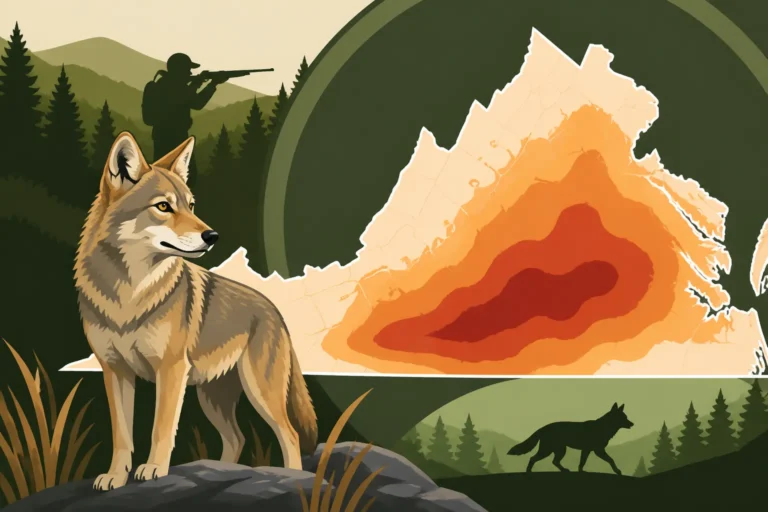
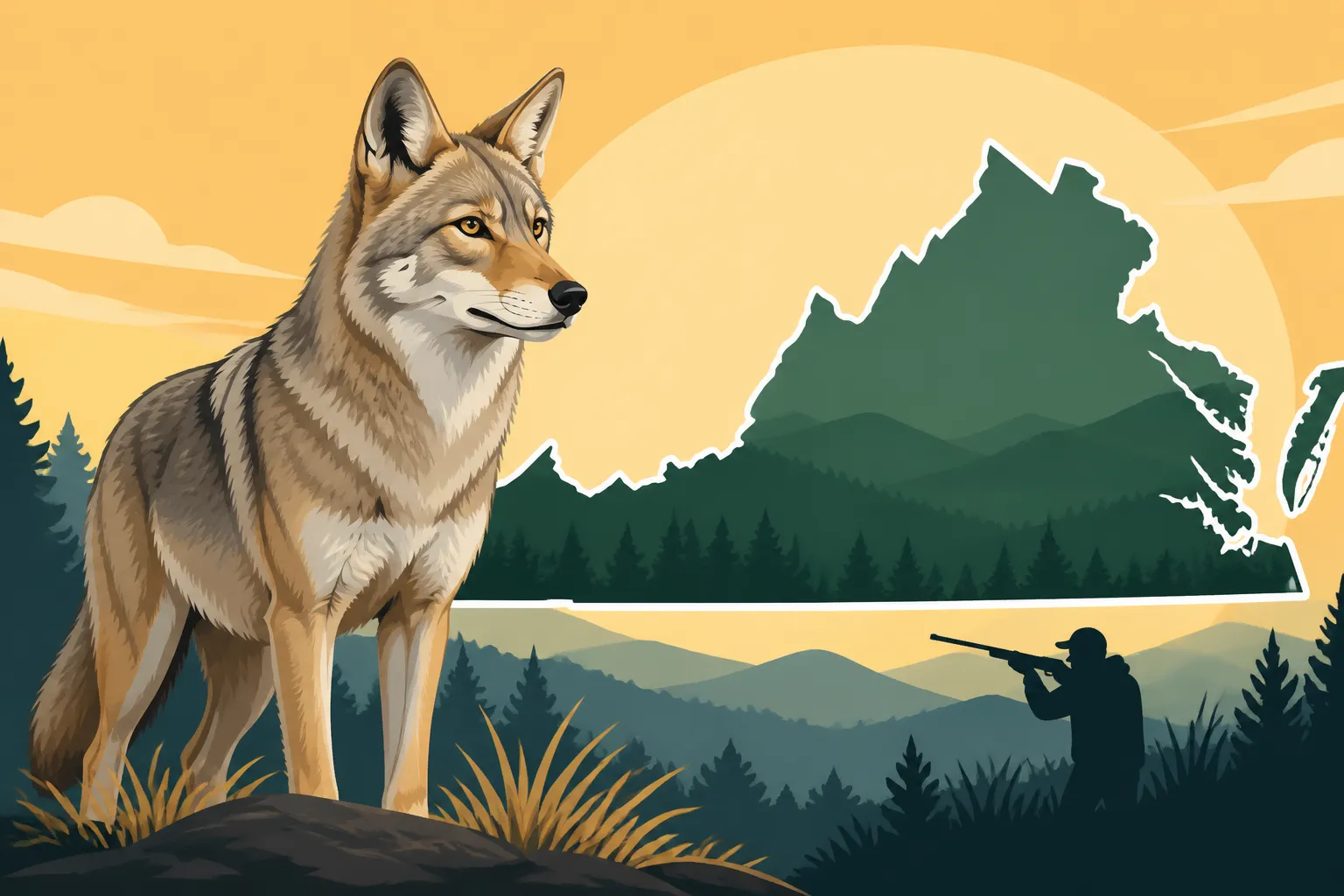
Virginia now has a well-established, widespread coyote population. There isn't a single county in the Commonwealth where you wouldn't expect to find coyotes. While some regions might have higher densities than others – often influenced by habitat, prey availability, and localized human population density – they are a permanent fixture of Virginia's wildlife.
For example, areas with a mix of dense cover and agricultural fields, particularly in the Piedmont, often provide ideal habitat and abundant food, which can support robust coyote populations. In more heavily forested mountain regions, their numbers might be slightly lower due to less diverse prey, but they are still present. Conversely, even in heavily suburbanized areas, coyotes can thrive by utilizing greenways, parks, and large private properties, often going unnoticed by residents.
State wildlife agencies, like the Virginia Department of Wildlife Resources (DWR), monitor coyote populations through harvest data, roadkill reports, and public sightings. While they don't release a specific population number, the general consensus is that coyotes are abundant and healthy across the state. They have reached a point of saturation in many areas, meaning their populations are largely stable, fluctuating based on environmental factors rather than active expansion.
Factors Influencing Coyote Numbers
Several factors continuously influence Virginia's coyote population:
- Prey Availability: This is arguably the biggest driver. Abundant deer fawns, rabbits, rodents, and other small animals mean more food, which can support larger coyote litters and higher survival rates. Conversely, declines in prey can lead to reduced coyote numbers or increased dispersal.
- Habitat: The mix of dense cover for denning and safety, along with open areas for hunting, provides ideal habitat. Fragmentation of forests by development can sometimes create more "edge" habitat that benefits coyotes.
- Human Hunting and Trapping Pressure: While hunters and trappers harvest thousands of coyotes each year, it's often a case of "density-dependent mortality." In areas with high populations, increased harvest might simply trigger higher reproductive rates (known as compensatory reproduction), making it difficult to significantly reduce statewide numbers. However, localized, sustained efforts can reduce their impact in specific areas. Many hunters engage in Predator Hunting in Virginia to help manage populations.
- Diseases and Parasites: Like all wildlife, coyotes are susceptible to diseases such as canine distemper, parvovirus, and rabies, as well as parasites like mange. While these can cause localized die-offs, they rarely impact statewide populations significantly enough to cause a long-term decline. Virginia Wildlife Disease Monitoring keeps an eye on these outbreaks.
- Interactions with Other Predators: While large predators like wolves are absent, coyotes do interact with bobcats and sometimes black bears. These interactions are generally minimal in terms of population control, but competition for resources can occur.
Understanding these dynamics is key for hunters. Using tools like the GoHunt app can help you visualize habitat types, identify potential travel corridors, and even locate areas with less human pressure where coyotes might thrive. By studying historical data and current conditions, we can make more informed decisions about our hunting strategies.
The Impact of Coyotes on Virginia's Wildlife and Hunting
The presence of a robust coyote population undeniably has a ripple effect on Virginia's ecosystems, particularly on game species that many of us cherish. This impact is a major reason why hunters are so keenly interested in their numbers.
Pressure on Deer and Small Game Populations
Perhaps the most significant impact coyotes have, from a hunter's perspective, is on white-tailed deer. While adult, healthy deer are generally safe from coyotes, fawns are incredibly vulnerable. Coyotes are efficient fawn predators, and in areas with high coyote densities, fawn recruitment (the number of fawns that survive to adulthood) can be noticeably reduced. This isn't to say coyotes are solely responsible for deer population fluctuations, as habitat, weather, and other factors play major roles, but their predation can certainly exacerbate issues, especially in areas where deer numbers are already stressed. Virginia Predator Impact on Fawn Recruitment is a topic of ongoing study.
Small game animals like rabbits and turkeys also feel the pressure. Coyotes are adept at hunting these species, contributing to overall predation rates. For spring turkey hunters, a strong coyote presence means careful consideration of decoy placement and calling strategies, as a gobbler might be more wary of approaching a setup where a coyote could be lurking. Turkey Tactics for Piedmont Field Edges often involves watching for other predators.
Managing Coyote Populations as Hunters
For many Virginia hunters, the answer to increasing coyote numbers isn't just to observe, but to act. Predator hunting has become an increasingly popular pursuit, driven by both the challenge and the desire to help balance local game populations. This can take many forms:
- Calling: Utilizing distress calls or howls to bring coyotes into range is a thrilling and effective method. This often requires specialized gear and a deep understanding of coyote behavior. Predator Calling Virginia Farm Country can be highly effective.
- Opportunistic Harvest: Many deer and turkey hunters will harvest coyotes opportunistically when they present a shot, especially on private lands where general firearms seasons might allow it.
- Night Hunting: In some areas and under specific regulations, night hunting for coyotes is permitted, often using thermal or night vision equipment. This can be a highly effective way to target these nocturnal predators. It's crucial to know the Night Hunting Rules for Virginia Coyotes for your specific area.
- Trapping: Trapping, when done legally and ethically, can be an extremely efficient way to remove coyotes from a specific area, especially around livestock or critical fawning grounds. Trapping Virginia Feral Hogs covers some similar methodologies.
It's important to remember that widespread coyote eradication is generally not feasible or even desirable from an ecological standpoint. The goal for most hunters and land managers is local control to mitigate impacts on specific game species or livestock, rather than attempting to eliminate them from the landscape entirely.
Ultimately, coyotes are here to stay in Virginia. They are a fascinating, intelligent, and highly adaptable predator that has successfully carved out a niche for themselves. Understanding their numbers, their habits, and their impact is part of being a well-rounded Virginia hunter, helping us to appreciate the complex tapestry of our state's wild places.
Coyote Population Trends vs. Impacts: A Closer Look
When we talk about how many coyotes Virginia has, it’s not just about a raw number; it’s about what that number implies for other wildlife and for hunters. It's easy to assume that more coyotes automatically means fewer deer or turkeys, but the reality is often more nuanced. While coyotes certainly play a role, it’s one piece of a much larger ecological puzzle.
The Role of Habitat and Health
A healthy ecosystem with robust habitat can often absorb the impact of a strong predator population without catastrophic declines in prey. For instance, areas with excellent deer fawning cover—thick clear-cuts, dense briar patches, or expansive bottomland hardwoods—can provide fawns with a much better chance of survival, even with coyotes present. Conversely, in areas with degraded habitat or where other factors like disease (such as EHD die-offs in deer) are at play, coyote predation can certainly amplify existing problems.
Think about the importance of diverse food sources for deer and turkeys. If mast crops like acorns are abundant, deer are healthier and fawns might be born stronger, potentially increasing their odds against predators. Similarly, good insect hatches support healthy turkey poults. It’s a holistic view of wildlife management where everything is interconnected. A tool like GoHunt can help you analyze satellite imagery to identify crucial bedding areas for deer and potential fawning cover, giving you insight into how well a particular property might be mitigating predator pressure naturally.
Understanding the Predator-Prey Relationship
The relationship between coyotes and their prey is a dynamic dance. When prey populations are very high, coyote numbers might increase to capitalize on the abundant food. As prey numbers then dip, coyote numbers might follow, or they might shift their diet to other available food sources, like rodents. It's a constant adjustment. What we, as hunters, often see is the short-term impact, like fewer fawns in a specific year, but the long-term trends are influenced by many variables beyond just coyote numbers.
For example, a localized effort to reduce coyotes on a specific private tract might temporarily boost fawn survival there. However, if the surrounding public lands or neighboring properties still hold high coyote densities, those empty territories can quickly be filled by new coyotes dispersing from other areas. This is why managing coyotes effectively often requires a broader, more consistent approach over larger landscapes rather than isolated efforts.
Table: Factors Influencing Coyote Numbers and Hunter Strategies
| Factor | Impact on Coyote Population | Hunter Strategy Implications |
|---|---|---|
| Habitat Diversity | More varied habitat (cover, food) supports higher densities. | Scout areas with mixed cover and open fields; use GoHunt to identify. |
| Prey Availability | Abundant deer fawns, rabbits, rodents increase numbers. | Focus predator hunting efforts in late spring/early summer (fawning). |
| Hunting/Trapping Pressure | Can reduce local numbers, but statewide impacts are limited due to compensatory reproduction. | Consistent, targeted efforts on specific properties are more effective than sporadic. |
| Disease/Parasites | Localized reductions can occur, but rarely affect statewide trends. | Report sick animals to DWR; practice good hygiene when handling carcasses. |
| Weather Events | Severe winters or droughts can impact survival rates and breeding. | Monitor long-term weather patterns to understand potential population shifts. |
This table shows that addressing the coyote question isn't just about how many there are, but how they interact with their environment and how our hunting efforts fit into that larger picture.
The Future of Coyotes in Virginia
So, what does the future hold for coyotes in Virginia? It's safe to say they're not going anywhere. They are a firmly established part of our wildlife heritage now, much like the white-tailed deer and wild turkey. Their numbers will continue to fluctuate based on the ecological factors we’ve discussed, but their presence is a constant.
Living with an Apex Predator
For Virginia hunters, living with coyotes means adapting. It means recognizing them as a legitimate, challenging game animal in their own right. It means understanding their role in the ecosystem, even if that role sometimes conflicts with our desire for abundant deer and turkey. It means being more diligent in our scouting, understanding Wind and Thermals on a Blue Ridge Slope to avoid detection, and being smarter about our hunting strategies.
Many of us have learned to integrate coyote hunting into our annual routines, seeing it not just as a way to potentially boost deer numbers, but as an exciting and rewarding pursuit in itself. Whether you’re calling one in close with a mouth call or picking up tracks with your GoHunt mapping tool, the coyote offers a unique challenge that adds another layer to the Virginia hunting experience. They demand respect for their intelligence and adaptability.
Ongoing Research and Management
The Virginia DWR, along with universities and other research partners, continues to study coyotes and their interactions with other wildlife. This research helps to inform management decisions and provides valuable data for hunters and landowners. Understanding Virginia Coyote Attacks on Livestock is also crucial for agricultural communities.
While there won't ever be a definitive, real-time count of every coyote in Virginia, we have a good understanding of their widespread presence and the factors that influence their numbers. This knowledge empowers us as hunters to make informed decisions, manage our properties effectively, and continue to enjoy the rich hunting opportunities that Virginia offers, even with this adaptable predator sharing the landscape.
Disclaimer
This article is for general informational purposes only and does not constitute professional advice. Laws, prices and regulations vary by location and change over time. Consult a qualified professional for guidance on your specific situation.